

Trade show organisers handling entry fees, exhibitor deposits and hired AV gear need safes built for a circuit, not a single building: something that survives being wheeled into a different convention centre every few months. This guide covers which safes suit a multi-day event schedule in 2026, from box office cash to overnight laptop storage.
- Safes for trade show organisers work best as a pair: a bolted commercial safe backstage plus a portable deposit safe at the box office.
- A safe under 50kg left unbolted in a green room walks out the loading dock as easily as a cash tin.
- The Platinum D2 Defender deposit chute safe takes ticket and vendor cash without opening the safe for every transaction.
- A dedicated key cabinet keeps exhibitor booth keys separate from cash storage during bump-in and bump-out.
- A 60-minute fire-rated document safe protects sponsor contracts and paperwork left in a locked office overnight.
Why safes matter for trade show organisers
A trade show floor is a high-traffic space staffed largely by casual crew and volunteers who don't know each other by name. Entry fee cash accumulates across a three- to four-day run, exhibitor cash deposits get handed over at odd hours, and laptops running the registration desk sit in a back office overnight with nobody watching them. None of that matches a home safe or a hotel-room box built for a single guest's jewellery.
The deposit chute safe format exists precisely for this problem: cash goes in through a slot without the safe ever being opened during trading hours, which matters when a dozen different volunteers are handling the till across a shift roster. Buy A Safe stocks this alongside fixed commercial safes and portable options, and the right mix depends on whether the venue lets you bolt anything to the floor at all.

Steps to secure a trade show event properly
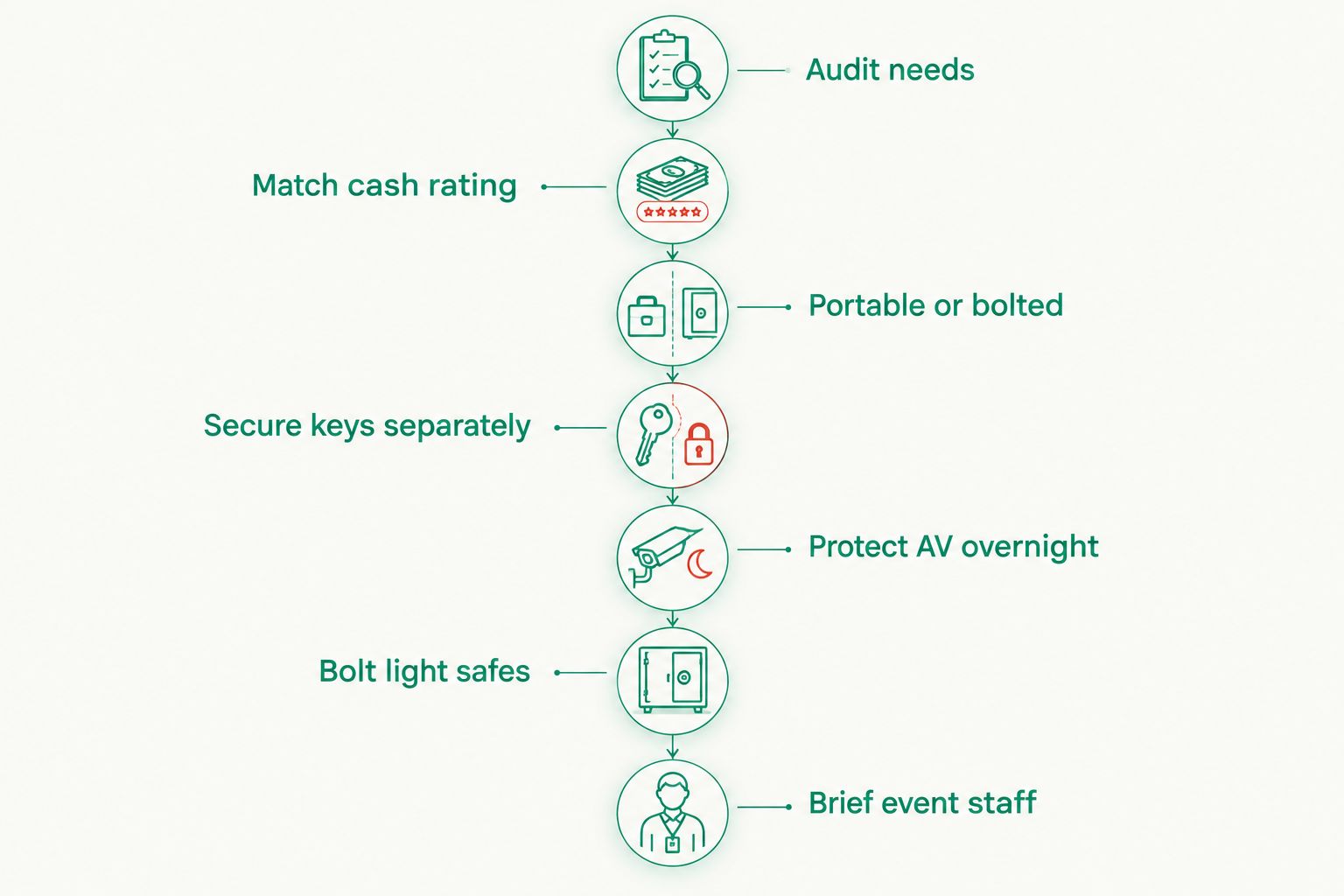
Audit what actually needs locking down
Before picking a safe, list what's moving through the event and when it's most exposed. Most organisers underestimate how much sits unguarded between sessions.
- Entry fee and box office cash
- Exhibitor stall deposits and bond refunds
- Sponsor cash prizes or raffle takings
- Laptops and tablets running registration
- Spare AV remotes, adapters and radios
- Staff bags and personal items during shifts
Match the cash rating to daily takings, not the whole event
A three-day expo doesn't need a safe rated for three days of combined cash if there's a nightly pickup or bank drop. Size the safe to the single busiest day, usually the opening day or a Saturday session, and plan a cash collection routine around that peak instead of letting the float build up unattended.
- Confirm whether security or a cash-in-transit service does nightly pickups
- Rate the safe to the single highest-volume session, not the event total
- Keep a running log of what's inside if multiple staff have access
- Separate float cash from raffle or sponsor cash in different compartments
Choose portable vs bolted-down safes for temporary venues
Convention centres rarely let organisers drill into hired flooring, which changes the calculus compared with a permanent retail fit-out. A heavier freestanding safe that resists being carried off can matter more here than a lighter one that's technically bolt-ready but has nowhere to bolt to.
- Portable deposit safes for box office desks that move between events
- Fixed commercial safes for venues with a permanent back-office space
- Drop-slot models that don't require opening the safe mid-shift
- Safes light enough for two staff to carry to a locked storeroom overnight
- Units with pre-drilled anchor points for venues that do allow fixing
Secure exhibitor and staff keys separately from cash
Loose keys are the most common way a trade show gets an after-hours incident. Booth keys, storeroom keys and vehicle keys for load-in trucks all need a system that doesn't sit in the same drawer as the day's cash. A key cabinet gives each staff member a logged, individual point of access instead of one shared set passed hand to hand across shifts.
- Assign one key cabinet slot per exhibitor hall or zone
- Log key checkout by name, not by shift
- Keep spare venue keys separate from organiser-owned equipment keys
- Never store the key cabinet combination with the cash safe combination
Protect AV gear and laptops after doors close
Registration laptops, tablets and small AV control units are the easiest overnight theft targets because they're compact and resellable. A fireproof document or media safe sized for laptops covers both theft and the risk of an overnight incident in a shared venue.
- Store registration devices in a fire-rated safe, not a locked cupboard
- Keep charging cables and dongles with the devices to avoid delays reopening the safe
- Log serial numbers before the event in case of an insurance claim
- Separate personal staff electronics from event-owned equipment
Bolt down anything under 50kg
As a general rule in the safe industry, anything under roughly 50kg can be carried out by two people in under a minute, regardless of how good the lock is. If the venue permits anchoring, bolt lighter safes through the floor or into a fixed cabinet; if it doesn't, choose a heavier freestanding option or store the safe in a locked, staffed room rather than an open back-of-house corridor.
Brief casual and volunteer staff before doors open
Most trade show incidents come from process gaps, not lock failures. A five-minute briefing before gates open closes most of them.
- Who has the combination and who doesn't
- What happens to cash between the till and the safe
- Who's responsible for locking the safe at shift changeover
- What to do if a key or access code is lost mid-event
Safe options for trade show organisers compared
| Option | Best for | Key limitation |
|---|---|---|
| Portable deposit safe (drop-slot) | Box office cash across multiple venues | Needs a secure spot to sit each event; not fixed |
| Fixed commercial safe, bolted | Recurring events at the same venue | Requires venue permission to anchor |
| Key cabinet | Exhibitor and staff key control | Doesn't protect cash or documents |
| Fireproof document safe | Sponsor contracts, registration devices | Not rated for burglary resistance alone |
| Lightweight combination safe | Small cash floats at pop-up stalls | Too light to leave unbolted overnight |
Verdict: pair a portable deposit safe at the box office with a bolted commercial safe backstage, and keep keys in a separate cabinet. That combination covers the three failure points event organisers actually run into: cash sitting in the open, keys shared too widely, and electronics left in an unlocked office.
Common mistakes trade show organisers make
- Using one safe for both cash and sponsor contracts, forcing constant traffic in and out of a room that should stay locked.
- Leaving a portable safe unbolted inside a marquee or unstaffed office overnight instead of moving it to a locked room.
- Choosing a light hotel-style safe built for guest jewellery instead of a commercial cash-rated unit for daily takings.
- Skipping anchor bolts entirely because the last venue didn't allow drilling, without checking the current venue's policy.
- Handing the same combination to the whole casual crew rather than using individual key cabinet access for accountability.
FAQ
What's the best safe for trade show organisers handling cash?
A portable deposit chute safe, like the Platinum D2 Defender, works best for box office cash because it takes deposits through a slot without opening the safe during trading. Pair it with a bolted commercial safe backstage for end-of-day totals.
Do trade show organisers need a bolted-down safe or a portable one?
Both, if the venue allows it. Bolt a commercial safe in any permanent back-office space, and use a heavier portable safe for box office desks that move between venues where drilling isn't permitted.
How much cash should a trade show safe hold?
Size the safe to the single highest-volume day of the event, not the total across all days, since most organisers run a nightly cash pickup or bank drop rather than storing the full event's takings at once.
Is a fireproof safe necessary for a trade show office?
Yes if registration laptops, sponsor contracts or exhibitor paperwork stay overnight in a shared venue. A 60-minute fire-rated document safe covers both fire and general theft risk in one unit.
How do trade show organisers manage exhibitor and staff keys?
A dedicated key cabinet, separate from the cash safe, lets organisers log who holds which key by name rather than passing one shared set around the crew across shifts.
What size safe fits under a box office counter?
Look for portable or under-counter deposit safe formats rather than full-size commercial safes, which are usually too large and too heavy to fit a standard trestle desk setup.
Should every event volunteer know the safe combination?
No. Limiting combination access to two or three shift leads and logging key cabinet checkouts for everyone else cuts most of the risk that comes from casual, short-term event staff.
Can a trade show safe be bolted into a hired venue floor?
Only with the venue's permission, which varies by convention centre. Where drilling isn't allowed, choose a heavier freestanding safe over a lighter bolt-ready one, since weight alone becomes the deterrent.
One last thing
Most organisers plan cash security around the safe and forget the corridor between the till and the safe is the actual weak point. A drop-slot deposit safe removes that gap entirely, since cash never sits loose in a drawer waiting for a break to walk it over. If there's one change worth making before the next event on the calendar, it's that.


