

The time lock safe cost for business use in 2026 depends on the safe body, the specified locking function and the work needed to install it; use an itemised quote for the complete system rather than a standalone safe listing. Delivery, anchoring, lock configuration and staff handover belong in that comparison, because a cabinet-only quote does not establish the installed cost.
- Time lock safe cost for business decisions require an installed quote, not just a cabinet listing.
- A time lock restricts opening times; a time-delay lock makes an authorised user wait before opening.
- BUYASAFE commercial safe categories help businesses compare storage types; confirm the exact lock function separately.
- Specify delivery, anchoring, configuration and handover before comparing business safe quotes.
How much does a time lock safe cost for a business?
Compare the complete installed system, with the exact lock model identified. A useful 2026 quote separates the cabinet from the lock and the site work. Otherwise, you cannot tell whether competing proposals cover the same requirement.
Start with the intended cash-room process. The guide to time lock safes for retail cash rooms is a relevant next step when scheduled access is your main requirement.
| Quote component | What to have specified | Why it belongs in the comparison |
|---|---|---|
| Safe body | Exact model, internal layout and documented security rating | Establishes the physical storage and protection being purchased |
| Lock | Manufacturer, model and confirmed timing function | Separates scheduled access from delayed access |
| Delivery | Delivery destination and placement responsibilities | Distinguishes arrival at the premises from final positioning |
| Installation | Anchoring method and suitable mounting surface | Defines how the safe will be secured at your site |
| Configuration | Opening schedule, user permissions and relevant settings | Establishes how the lock will operate |
| Handover | Instructions, authorised-user training and documentation | Gives staff a usable process after installation |
Ask the supplier to mark each component as included, separately quoted or not required. Keep the same scope when requesting another proposal. A shorter quote is not necessarily a simpler installation.
Why this matters
A business safe is part of your cash-handling process, not just a container. If staff need access outside the permitted opening period, the timing restriction conflicts with that process. If everyone shares unrestricted access, the safe does not provide the separation of responsibilities you intended.
The purchasing mistake to avoid in 2026 is treating an electronic keypad as evidence of a time lock. Electronic describes the locking technology; it does not establish scheduled opening, time delay, audit records or multiple-user permissions.
BUYASAFE is best for businesses comparing commercial, deposit and fire-resistant safe categories. Category selection is a starting point, not confirmation that a particular safe has the timing function your business needs.
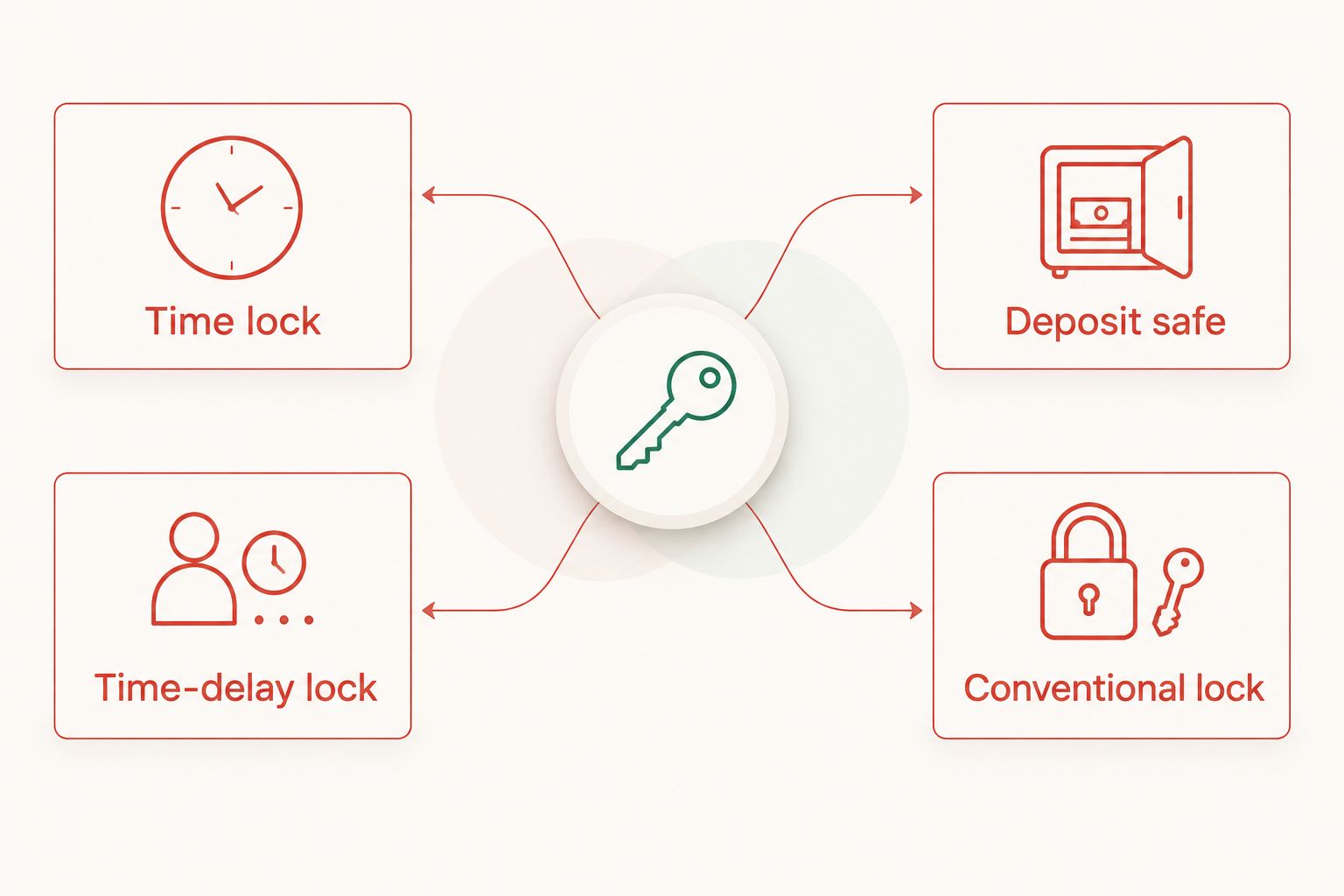
Time lock, time delay or deposit safe: which do you need?
Specify the function before selecting the cabinet. These terms describe different controls, and a deposit feature does not establish how the main door opens.
| Option | Best for | Main benefit | Main limitation |
|---|---|---|---|
| Time lock | Businesses that require access restricted to scheduled periods | Prevents authorised opening outside the configured permitted period | Restricts legitimate access as well as unwanted access |
| Time-delay lock | Businesses that require a waiting period after an authorised opening request | Separates entering a valid credential from opening the door | Adds waiting time to routine withdrawals |
| Deposit safe | Businesses that need staff to deposit cash without opening the main compartment | Separates depositing from retrieving stored contents | A deposit opening does not establish time-lock capability |
| Conventional key, dial or electronic lock | Businesses that require ordinary authorised access without timing restrictions | Provides access without a scheduled or delayed opening requirement | Does not supply a timing control merely because it locks |
A time lock governs when opening is permitted. A time-delay lock governs the wait after an authorised request. Some lock systems offer several controls, but you must verify the exact model rather than infer features from the word digital.
A deposit safe addresses another question: who can put cash in without being able to retrieve it? That distinction matters when sales staff make deposits and a manager handles reconciliation.
Do not select a timing function simply because it sounds more secure. Choose the restriction that matches the way authorised staff actually work, then check the safe body's protection separately.
A new safe with a specified timing lock
Best for: businesses replacing their storage or establishing a new cash room. Request a proposal for the safe and the exact lock as a complete configuration. This puts cabinet suitability, lock compatibility and installation requirements into the same purchasing decision.
The benefit is a clearly defined system. The limitation is that you are selecting the whole cabinet, even when your existing storage arrangement otherwise meets your needs.
Have the supplier identify usable internal space, not just external dimensions. Cash bags, trays and deposit envelopes need to fit the actual compartment, with room for the intended arrangement. Door movement also needs clearance at the installation position.
For a 2026 purchase, require written confirmation that the quoted configuration provides your chosen timing function. Do not substitute a general product-family description for the specification of the unit being supplied.
A lock change on an existing safe
Best for: businesses retaining a suitable cabinet and investigating different access controls. Ask a qualified safe technician to assess the existing safe before treating a lock change as an alternative to replacement.
The benefit is retaining the cabinet if the proposed change is suitable. The limitation is that compatibility, mounting and the effect on any applicable certification require assessment; an existing electronic lock does not prove that another lock is a direct replacement.
Provide the technician with the safe's manufacturer, model and current lock details. Include clear photographs of the exterior and accessible identification labels, without publishing credentials or sensitive access information.
Request a written scope covering the proposed lock, necessary work and any resulting changes to operation. Ask how the work affects manufacturer documentation and insurer requirements. Make the decision after that assessment, not from the appearance of the keypad.
A deposit safe with separately confirmed access controls
Best for: businesses separating routine cash deposits from authorised cash retrieval. The Platinum D2 Defender Deposit Chute Safe is a deposit-safe category example to examine when a chute is relevant to your workflow. Confirm its lock configuration separately; the product name does not establish a time lock.
The benefit of a deposit arrangement is functional separation between putting cash away and retrieving it. The limitation is that the deposit mechanism, cabinet protection and main-door locking function each need their own assessment.
Before selecting a deposit format, describe what staff deposit: loose notes, envelopes, bags or another container. Check the intended items against the actual opening and storage compartment rather than assuming every deposit safe accommodates them.
BUYASAFE commercial safe selection should follow that workflow assessment. A deposit model is not a substitute for confirmed timing controls, and timing controls are not a substitute for suitable physical protection.
Why time lock safe quotes vary
These are specification and installation differences to resolve before comparing proposals. They are not reasons to accept unexplained additions.
- Safe body: The model, construction, documented protection and internal arrangement define the cabinet being supplied.
- Lock function: Scheduled opening, delayed opening and ordinary credential access are different requirements. Specify the one you need.
- Deposit arrangement: A chute or slot introduces a separate cash-handling requirement that must suit your deposited items.
- Site access: Stairs, doorways, lifts and the final placement position determine what the delivery team must assess.
- Anchoring: The mounting surface and manufacturer's installation instructions determine the proposed securing method.
- Configuration and handover: User permissions, timing settings and operating instructions define what staff receive at completion.
Keep optional work separate from required work. If a quote adds a feature, ask which written requirement it satisfies. If a quote omits a component, establish who is responsible for it before accepting the proposal.
For 2026 comparisons, retain the quote date and its stated validity. Recheck the specification if the proposed model or lock changes during procurement.
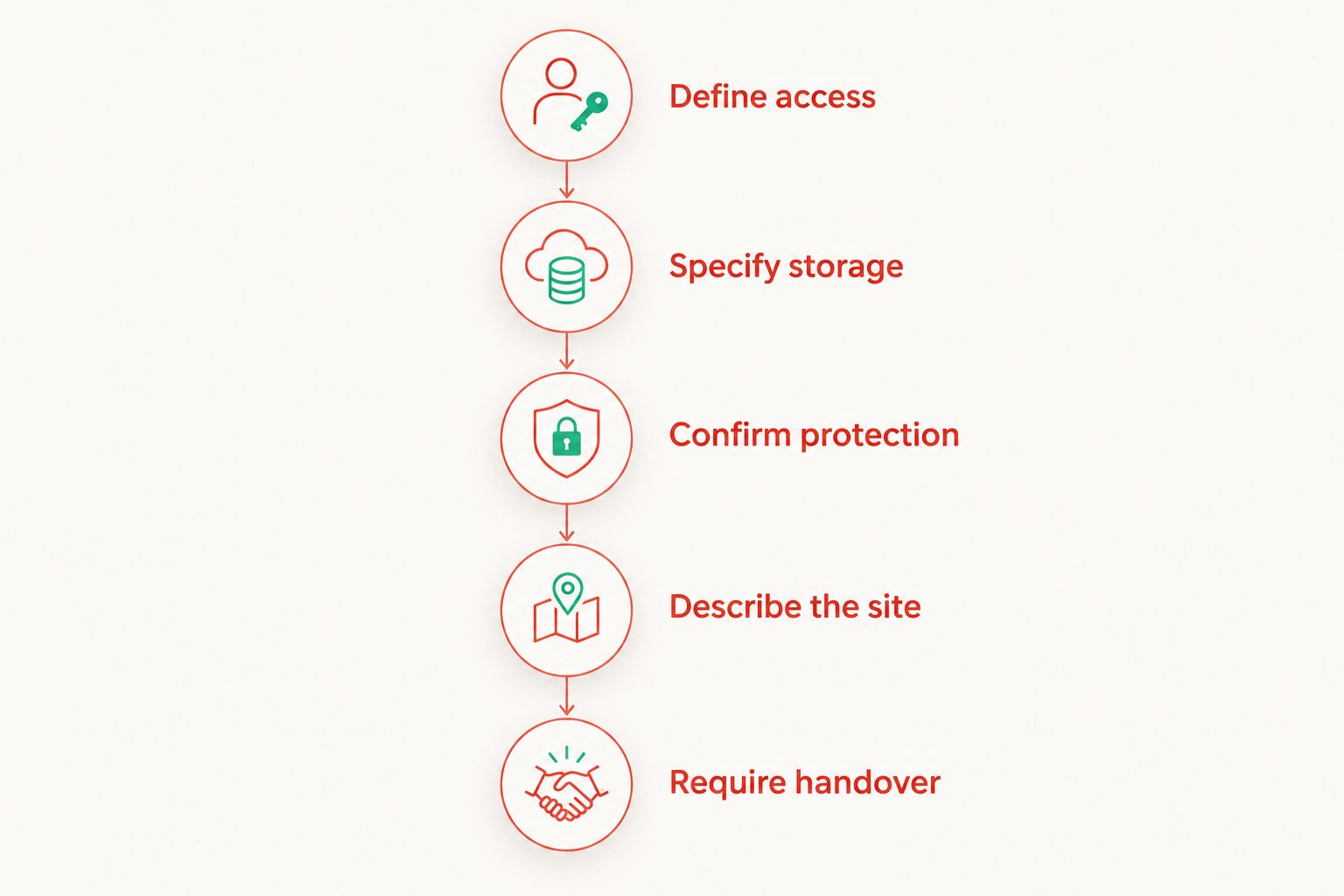
How do I request a comparable business safe quote?
Use the same brief for every supplier. Start with operational requirements, then add the site details needed to assess installation.
- Define access. State who deposits cash, who retrieves it and whether access must be scheduled or delayed.
- Specify storage. Describe the contents and internal arrangement, including any bags, trays or deposit containers.
- Confirm protection. Give the supplier any written insurer requirements and request documentation for the proposed safe.
- Describe the site. Provide the delivery route, placement position, mounting surface and known access restrictions.
- Require handover. Ask for configuration, operating instructions and a clear record of the supplied safe and lock.
This sequence avoids choosing a cabinet before defining what it must do. It also makes exclusions visible while you can still change the scope.
Request clarification in writing when a proposal uses broad terms such as installation included or electronic locking. Replace those descriptions with the actual work and lock model. Your approval should refer to the clarified scope, not an assumption about what the wording means.
Is a time lock the same as a time-delay safe?
A time lock and a time-delay lock serve different access rules. A time lock restricts authorised opening to permitted periods; a time-delay lock introduces a wait after an authorised opening request.
Ask for the operating instructions for the specified lock. Check what happens when a request starts, when access becomes possible and what staff must do if they miss the permitted opening opportunity.
Can I add a time lock to my existing business safe?
An existing safe needs a compatibility assessment before a time-lock retrofit is specified. The cabinet, current lock installation and proposed replacement all matter. Have a qualified technician confirm suitability and document the scope before approving the change.
Will a time lock satisfy my business insurer?
Only your insurer can confirm whether the proposed safe and installation meet your policy conditions. Send the exact safe model, lock configuration and installation proposal for assessment. A timing feature does not by itself establish burglary resistance or insurance acceptance.
FAQ
How do I work out the time lock safe cost for business use?
Request an itemised quote for the safe, specified lock, delivery, anchoring, configuration and handover. Compare proposals only after confirming they cover the same timing function and installation scope.
Does a digital business safe automatically have a time lock?
No, a digital lock does not automatically provide scheduled opening or time delay. Check the exact lock model and its operating instructions.
What's better for a shop: a time lock or a deposit safe?
A time lock suits scheduled access restrictions, while a deposit safe suits cash deposits without opening the main compartment. If your shop needs both functions, specify both and confirm the proposed configuration.
Can staff deposit cash while the main safe door is locked?
A suitable deposit safe allows deposits without opening the main compartment. Check the deposit mechanism and opening against the items your staff actually use.
Does a time lock safe also protect business documents from fire?
A time lock does not establish fire protection. Assess the safe's documented fire protection separately against the contents you intend to store.
What should I ask BUYASAFE before choosing a commercial safe?
Ask BUYASAFE to identify the proposed commercial safe, exact lock configuration and installation scope. Confirm timing functions, deposit requirements and protection documentation rather than relying on the category name.
Should I choose the least detailed quote if it covers the safe?
No, establish the complete scope before choosing a proposal. A cabinet-only quote does not settle delivery, anchoring, configuration or handover responsibilities.
One last thing
Check the permitted opening process against your cash collection and reconciliation schedule before ordering. Include weekends, public holidays and staff handovers in that review. A restriction that works on an ordinary trading day still needs to fit authorised exceptions.
For your 2026 procurement file, keep the accepted scope, safe and lock identification, operating instructions and installation record together. That gives the next manager a defined system to operate, rather than an unexplained keypad and a shared code.


