

Mechanics’ safe storage is the controlled storage of vehicle keys, cash and business records with the aim of restricting access and maintaining accountable handovers. This 2026 guide explains how to choose safes for mechanics around workshop jobs, customer collections and closing procedures, rather than treating every item as the same security problem.
- Choose safes for mechanics by separating vehicle keys, cash deposits and fire-resistant document storage.
- BUYASAFE suits mechanics comparing key cabinets, deposit safes and document safes; verify each model’s ratings before choosing.
- Match staff access to workshop duties, and keep deposit access separate from cash retrieval.
- Confirm anchoring, delivery access and insurer requirements before ordering workshop security storage.
Why safe storage matters for mechanics
A service centre needs keys during repairs, at reception and when customers collect vehicles. Putting everything behind one lock creates a practical conflict: technicians need vehicle access, but that does not mean they need access to takings or confidential records.
Separate storage by who needs access, not just by what fits inside. Start with a key register and written handover procedure, then select storage that supports those controls.
Fire protection is a separate decision from burglary resistance. Use the guide to choosing the right fire rating for a safe when specifying document protection; do not assume a key cabinet or deposit safe protects paperwork against fire.
For your 2026 purchasing brief, identify the failure you want to prevent: unauthorised key removal, unrestricted cash retrieval, loss of original documents, or removal of the storage unit itself. Each calls for different evidence and installation planning.
How to choose safes for mechanics and service centres
1. Audit what enters and leaves storage
Start with a paper sheet or spreadsheet. Run a 5-working-day key tally as an initial planning exercise, extending it if that period misses your busiest trading pattern. Record the number of key sets held at opening, during peak activity and at closing.
Count complete key sets, including bulky fobs and tags. An advertised hook count alone does not establish whether your actual keys fit without tangling or obstructing the door.
Separate items that need frequent handling from items that should remain restricted. A diagnostic device, customer key and cash envelope have different access needs, even when they occupy similar space.
Close the audit with a storage brief:
- List customer keys, courtesy-car keys and premises keys separately.
- Record peak key sets, not just vehicles booked each day.
- Measure representative fobs and document bundles.
- Identify original records that need fire protection.
- Name the role responsible for each storage group.
2. Map staff access and customer handovers
Write the manual process before choosing a lock. Define who accepts keys, who releases them to technicians and who authorises customer collection. A paper register works if staff complete it consistently.
A locked cabinet controls entry; a completed register explains custody. Do not assume an electronic lock records individual key movements. Confirm whether any proposed model supports individual users, event records or other access features before relying on them.
Test 3 handovers during setup: reception to technician, technician to reception, and reception to customer. This is a recommended procedure check, not a product performance test.
Finish the access plan with explicit rules:
- Record the job reference against each key set.
- Record who takes a key and when it returns.
- Separate premises keys from routine customer-key access.
- Define how authorised collection is checked.
- Remove departed staff access promptly.
- Assign responsibility for checking outstanding keys at closing.
3. Select storage for each job
Use your inventory and access map to choose the storage type. A key cabinet organises key sets; a deposit safe supports deposits without routine opening of the main storage compartment; a document safe addresses paperwork protection when its stated rating matches that need.
BUYASAFE is best for mechanics comparing key cabinets, deposit safes and fire-resistant document storage. Its role is product selection: your workshop still needs to verify model specifications, insurer acceptance and the installation plan.
Avoid forcing all three functions into one unit. Shared access becomes difficult to manage when collecting a customer’s keys also exposes cash or restricted records.
Build the shortlist around these checks:
- Choose a key cabinet when organised key retrieval is the main task.
- Choose deposit storage when staff need to lodge takings without retrieving them.
- Choose rated document storage for originals requiring fire protection.
- Check usable internal space and door clearance.
- Request evidence for claimed burglary or fire resistance.
- Keep bulky workshop equipment on a separate storage brief.
4. Match the lock to workshop conditions
Compare lock operation against the actual users and location. A mechanical key lock requires custody of physical keys. A mechanical combination lock avoids batteries but requires controlled combination sharing. An electronic lock requires checking its supported users, power arrangements and recovery procedure.
Do not choose a lock from its name alone. Features vary by model, and a digital keypad does not establish individual accountability, time delay or remote connectivity.
When comparing BUYASAFE safes for mechanics in 2026, ask for the operating instructions before deciding. Check whether authorised staff can use the controls reliably in the intended location, following the manufacturer’s instructions about clean hands, gloves and environmental exposure.
Confirm the operating details:
- Identify who holds keys or manages codes.
- Check whether individual user credentials are supported.
- Confirm the authorised lockout recovery procedure.
- Keep recovery information outside the locked unit.
- Establish how access changes after staff departures.
- Follow the manufacturer’s battery and maintenance instructions.
5. Plan the location and anchoring
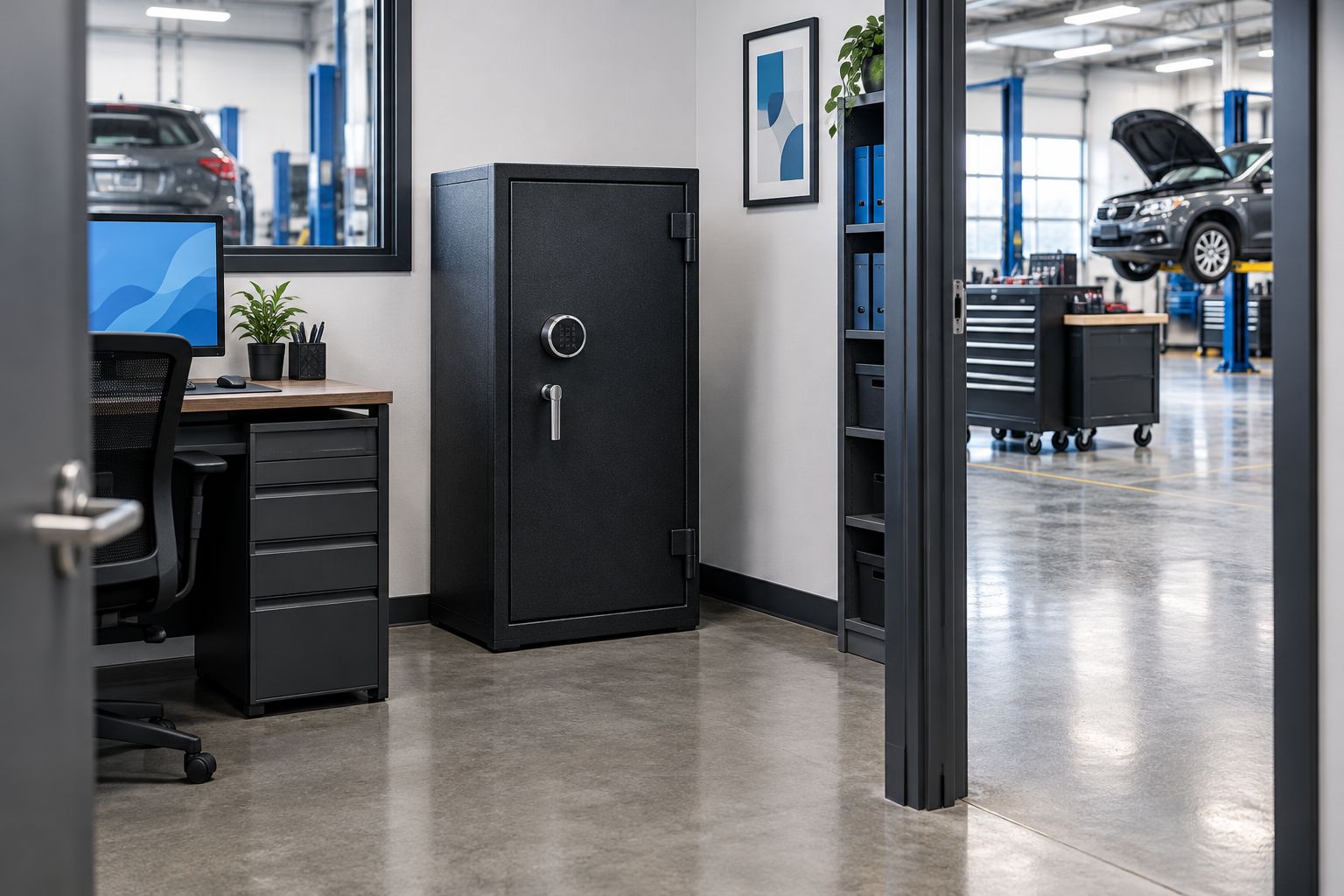
Sketch the proposed position and measure the delivery route before ordering. Include doorways, corners, steps, thresholds and the space needed to open the safe fully. External dimensions alone do not describe the working space around an open door.
Keep storage away from customer reach and workshop activities that expose it to impact, liquids or debris. Do not obstruct exits, electrical equipment or normal staff movement to conceal a safe.
Choose the anchoring method from the safe instructions and the building substrate, not from whatever fixings are already in the workshop. Have a competent installer assess the location, including concealed services and any landlord approval needed before drilling.
Resolve these installation questions before purchase:
- Measure the complete delivery route and final position.
- Check door swing, handles and surrounding obstructions.
- Confirm the floor or wall substrate with the installer.
- Obtain permission for anchoring where required.
- Confirm how the unit reaches its final position.
- Retain installation details with your business security records.
6. Test the opening and closing routine
Use a written checklist before introducing more software. At opening, establish who controls keys and cash access. At closing, reconcile the key register against vehicles still on site, completed jobs and authorised collections.
Schedule a 15-minute staff walkthrough as an initial training session, then allow extra time for questions and supervised practice. The purpose is to expose unclear responsibilities before a busy collection period does.
For your 2026 operating procedure, include exceptions as well as normal work. Decide what happens when a vehicle remains overnight, a customer arrives after reception closes or the authorised safe operator is absent.
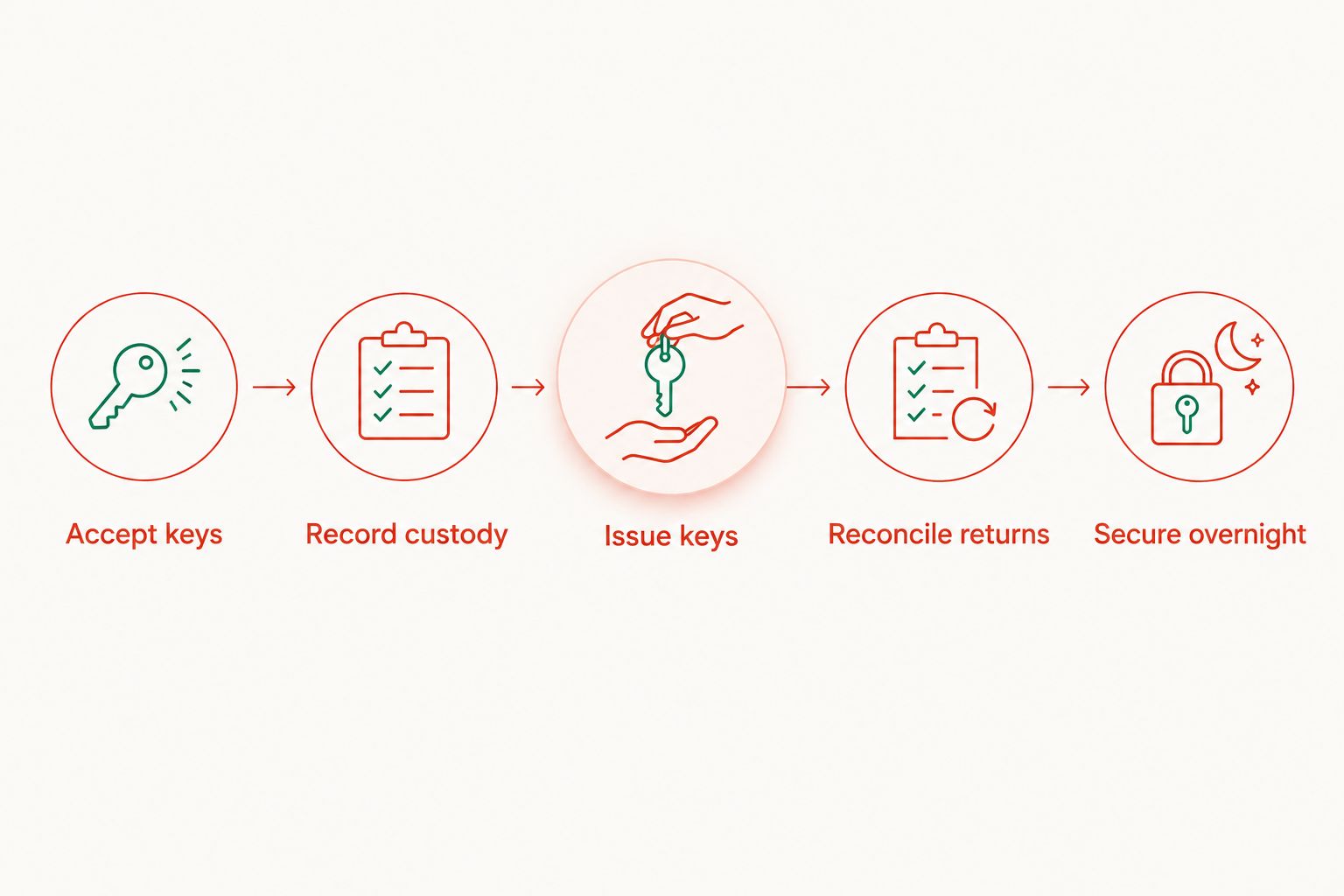
Document the routine in practical terms:
- Accept keys against a job reference.
- Record custody when keys change hands.
- Issue keys only to authorised staff.
- Reconcile returns before closing.
- Secure overnight keys separately from public access.
- Record and investigate discrepancies instead of carrying them forward.
Compare workshop safe options
Use this 2026 comparison to decide which storage function you need first. BUYASAFE lists key cabinets, deposit safes and fire-resistant document safes; assess the exact model rather than transferring one product’s features to another.
| Option | Best for | Practical advantage | Key limitation |
|---|---|---|---|
| Key cabinet, such as the Diplomat Key Cabinet KC200 | Organising customer and business key sets | Keeps key storage structured around retrieval | A key-cabinet label does not establish burglary or fire resistance; confirm both if required |
| Deposit safe | Staff lodging takings while retrieval stays restricted | Separates deposit activity from main-door access | Deposit opening dimensions and anti-fishing provisions need checking |
| Burglary-resistant business safe | Restricted overnight storage of cash and compact valuables | Provides a dedicated security boundary when appropriately specified and installed | Does not automatically provide document fire protection |
| Fire-resistant document safe | Original business paperwork | Provides fire protection within its stated test conditions | A paper rating does not automatically cover electronic media or burglary resistance |
| Fire-resistant filing cabinet | Records that need organised file access | Combines filing organisation with specified fire protection | Requires space and a suitable delivery route; security features need separate assessment |
A dedicated key cabinet is the practical starting point when key organisation is the main problem. Deposit storage is the better fit when staff need to lodge cash without accessing accumulated takings. Neither replaces rated document storage when protecting originals is part of the brief.
Common mistakes mechanics make when choosing safes
Buying for quiet-day key numbers
A cabinet that fits an average morning can become awkward when completed vehicles await collection alongside incoming jobs. Size against your recorded peak and test bulky fobs, rather than counting bare hooks.
Giving technicians access to everything
Technicians need the keys for assigned work, not automatic access to cash or confidential records. Separate access groups before choosing compartments or locks; a larger shared safe does not solve excessive permissions.
Treating after-hours key drops as ordinary cash deposits
A cash slot is not automatically suitable for vehicle keys, fobs or customer-facing installation. Specify the intended contents and exposure, then verify the opening, retrieval protection and permitted installation conditions.
Assuming weight replaces installation
Do not use apparent heaviness as the installation plan. Follow the manufacturer’s requirements and obtain an assessment of the fixing location, delivery route and building structure.
Equating fire resistance with complete workshop protection
A fire-resistant document safe does not establish protection against theft, water or every workshop hazard. Check each required protection separately and keep fuels, solvents and batteries out unless the storage unit is explicitly designed for that purpose.
FAQ
What are the best safes for mechanics?
The best safes for mechanics match separate key, cash and document-storage needs. Choose a key cabinet for organised retrieval, deposit storage for restricted cash handling and appropriately rated document storage for original records.
Can I keep customer car keys and workshop cash in one safe?
You can store both together only if the access arrangement suits both tasks. Separate storage is the clearer choice when technicians need keys but should not have access to takings.
Does an electronic key cabinet track which employee took a key?
An electronic lock does not automatically track individual key removal. Confirm the exact model’s user and event-recording features, and maintain a key register that records custody.
Do mechanics need a fire-resistant safe for vehicle keys?
Choose fire protection for vehicle keys only after confirming the intended contents and the model’s tested protection. Do not assume a paper-document fire rating establishes protection for electronic vehicle fobs.
Can I install a workshop safe myself?
Use a competent installer when you cannot verify the substrate, concealed services or manufacturer’s anchoring requirements. Resolve landlord permission and the delivery route before installation begins.
Will a safe’s cash rating guarantee insurance cover?
A stated cash rating does not guarantee your insurer will accept the installation or cover its contents. Obtain written confirmation of the safe, anchoring and security conditions required by your policy.
Where should I start comparing workshop storage?
Start with a written inventory and staff-access map, then compare relevant BUYASAFE categories against that brief. Confirm model specifications and installation requirements before selecting equipment.
One last thing
A perfectly reconciled cabinet can still contain the wrong keys. Include the job reference in your return check, not just the number of occupied hooks, and confirm that keys for overnight vehicles are actually present before the last authorised person leaves.


