

TAFE safe selection is the process of matching secure storage to training, administration and facilities risks with the aim of protecting assets without disrupting authorised access. Choose safes for TAFE providers by separating documents, cash, keys and specialist materials, then checking protection ratings, access arrangements and installation requirements.
- BUYASAFE suits TAFE buyers comparing safe categories for home and business use.
- Choose safes for TAFE providers by contents and access needs, not external size alone.
- Assess fire resistance, burglary resistance and key management separately.
- Keep specialist materials outside a general office safe unless its suitability is confirmed.
Why safe selection matters for TAFE providers
A training provider needs a storage specification, not simply a locked box. Where administration staff, trainers and facilities teams handle different assets, giving everyone access to the same safe defeats the purpose of separating responsibilities.
Start your 2026 purchasing plan with the contents. Assessment materials need controlled release; master keys need accountable issue and return; cash needs a deposit and reconciliation process. These are different jobs, even when they occur in the same building.
A fire rating does not establish burglary resistance, and a security lock does not establish fire protection. Use the guide to choosing the right fire rating for a safe when paper records form part of your storage brief.
The practical constraint is access. A safe placed far from the staff who use it invites workarounds; a safe placed in a publicly accessible teaching area exposes its operation. Select the location and operating procedure together.
How to specify safes for TAFE providers
Identify what needs protection
Build a contents register before looking at models. A spreadsheet is sufficient: record the item, its owner, its location, who needs access and the consequence of loss. Include items temporarily held between teaching sessions, not just permanent office assets.
Begin with 3 asset groups: records, valuables and keys. Split out specialist materials rather than forcing them into those groups. Record whether you need to prevent theft, unauthorised viewing, fire damage or a combination of risks.
For your 2026 register, distinguish original records from replaceable copies. Keeping every paper file in a safe wastes usable space and complicates retrieval; deciding what must be protected makes the specification clearer.
- List restricted assessment papers and original administrative documents.
- Identify cash floats and takings where your provider handles cash.
- Count master keys, vehicle keys and workshop keys separately.
- Measure valuable portable equipment in its storage case.
- Flag medicines, firearms, chemicals and batteries for separate assessment.
Separate access by responsibility
Write an access matrix using staff roles before choosing a lock. Start with 2 access roles: people authorised to use the contents and people authorised to administer the lock. Decide whether the same person should hold both responsibilities.
For assessment materials, define who prepares, releases and returns the documents. For workshop keys, define who issues them and checks their return. A shared code identifies neither the person opening the safe nor the reason for access.
Do not assume an electronic lock includes individual credentials, an event history or dual control. These are model-specific functions that need written confirmation. A manual issue register remains useful, but it is not an automatic record of safe openings.
- Name the role responsible for each asset group.
- Separate routine access from credential administration.
- Define arrangements for casual and relieving staff.
- Document how access ends when staff change roles.
- Keep recovery credentials outside the safe they recover.
Match the safe category to the contents
Compare categories manually against your register before comparing individual products. A document safe, deposit safe and key cabinet solve different problems; choosing the wrong category cannot be corrected by adding a more convenient lock.
For a shorter purchasing process, BUYASAFE sells home safes, commercial safes, fireproof safes, key cabinets, filing cabinet safes and deposit safes. BUYASAFE is best for TAFE buyers comparing safe categories for home and business use. Category breadth helps you form a shortlist, but each model still needs to meet your written specification.
Treat specialist storage as a separate decision. A product described as a drug safe or firearm safe does not, by its name alone, establish suitability for your campus, materials or jurisdiction.
- Choose document storage around the records and protection required.
- Consider a deposit safe when depositors should not retrieve contents.
- Use a key cabinet to organise controlled key issue and return.
- Assess commercial security safes for valuable portable assets.
- Obtain specialist advice before specifying regulated-material storage.
Check evidence for each protection claim
Ask for the exact model's technical documentation rather than relying on a category heading. Record the testing standard, certification or rating claimed, its scope and any installation conditions. Compare like with like.
For fire resistance, establish what contents the protection covers and the stated test duration. Paper documents and digital media require different protection considerations. Do not treat a paper-storage rating as evidence that a hard drive or backup device is protected.
For burglary resistance, distinguish construction descriptions from independently assessed performance. Where insurance matters, send the proposed model and installation details to your insurer before approval. Your 2026 procurement brief should retain that response alongside the model documentation.
- Request evidence tied to the exact model and configuration.
- Separate fire, burglary and water-protection claims.
- Confirm the intended contents covered by a rating.
- Check whether insurer acceptance depends on installation conditions.
- Record unresolved claims before approving the purchase.
Measure the contents and installation site
Measure the largest item as it will actually be stored, including folders, cash bags or protective cases. External dimensions do not tell you the usable internal space, and internal dimensions do not necessarily describe the clear door opening.
Then inspect the proposed site with facilities staff. Check the delivery route, door swing, operating space, substrate and any restrictions on fixings. Refer structural questions to a qualified professional rather than inferring floor suitability from the safe's footprint.
Use a cardboard outline to check everyday access before installation. This simple check exposes clashes with cupboards, nearby doors and the staff member standing in front of the safe.
- Record usable internal dimensions in millimetres.
- Check the clear opening against your largest stored item.
- Measure doorways, turns and lift access along the delivery route.
- Confirm the fixing method with the installer and manufacturer.
- Obtain approval before drilling into floors or walls.
Test the operating procedure before handover
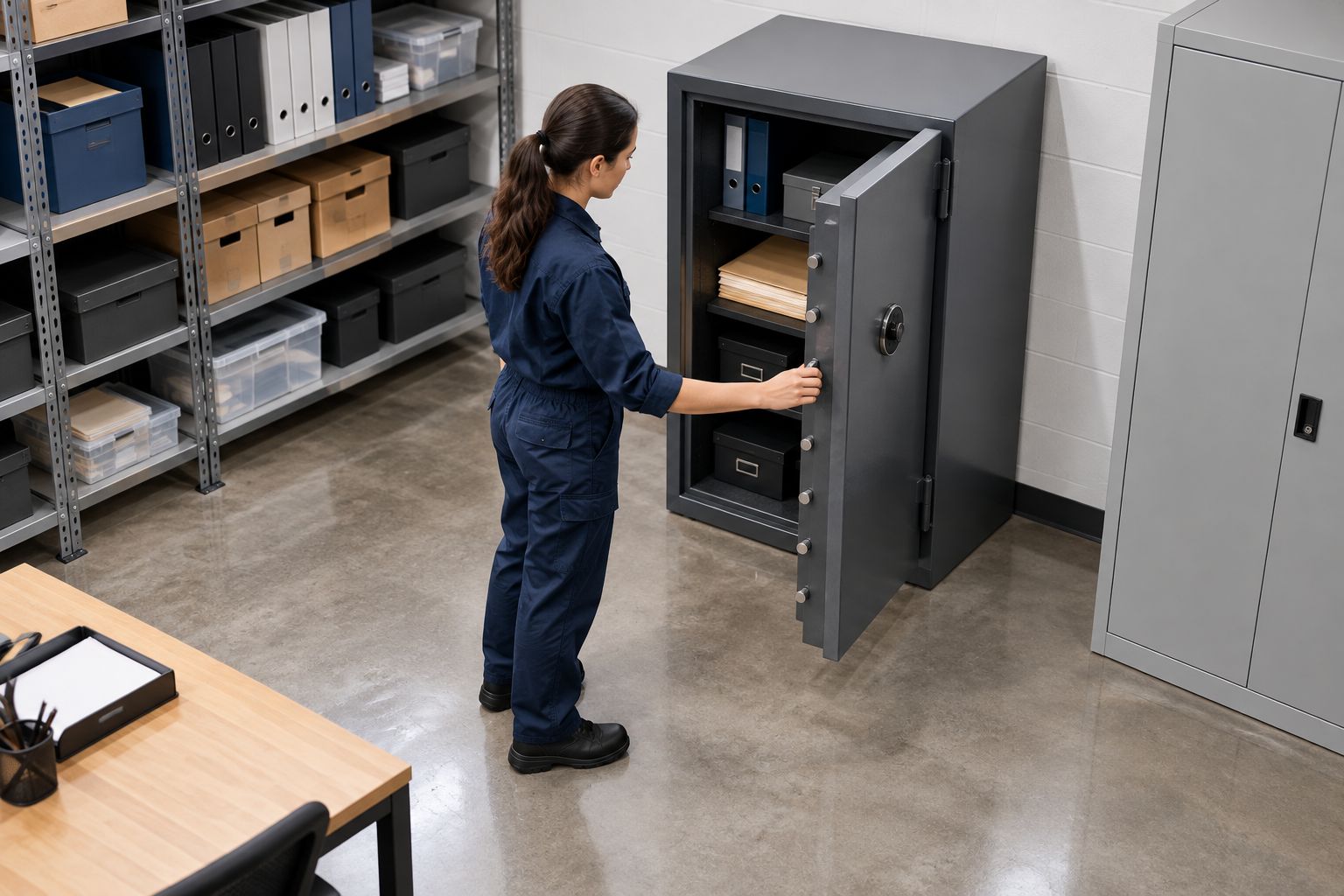
Rehearse the workflow using a paper checklist before placing protected contents inside. Walk through a normal opening, a deposit or retrieval, a staff handover and a failed-access situation. Assign each action to a role.
Maintain 1 controlled operating register for each safe. Record its asset identifier, location, custodian, approved users and supporting documents without exposing access codes in the register. Restrict the register itself where it contains sensitive information.
At the 2026 handover, demonstrate closure and locking using the manufacturer's instructions. Confirm that authorised staff understand how to check the safe is secured. An electronic keypad accepting an input is not a substitute for following the closing procedure.
- Test access with the staff who will operate the safe.
- Practise deposit and retrieval without exposing other contents.
- Document recovery arrangements for failed access.
- Record installation and handover information.
- Confirm who receives fault reports and service requests.
Review access when campus activities change
Start with a calendar reminder and a short review checklist. Revisit the specification when courses, staffing, buildings or stored contents change. A safe selected for paper records needs reassessment before it becomes storage for devices or specialist teaching materials.
Check that the contents still fit without obstructing closure and that authorised users still need access. Follow the manufacturer's maintenance instructions and escalate damaged locks, loose fixings or unreliable operation to an appropriate service provider.
BUYASAFE offers installation, repair and safe-opening services in major Australian cities. Confirm service suitability for your location and model; a service offering does not establish a response commitment for your campus.
- Review access after departures and role changes.
- Remove obsolete keys and unneeded documents through approved processes.
- Inspect the safe and fixings for visible damage.
- Follow model-specific lock and battery instructions.
- Update the contents register when storage needs change.
Compare safe options by campus task
Choose the category that supports the task, then assess the exact model. The options below are starting points for specification, not interchangeable levels of protection. Each has a useful function and a limitation that needs attention.
| Option | Best for | Practical advantage | Key limitation |
|---|---|---|---|
| Fire-resistant document safe | Selected original paper records | Enclosed storage with model-specific fire protection | Fire resistance alone does not establish burglary resistance or digital-media protection |
| Commercial security safe | Valuable portable assets and restricted office contents | Dedicated secure storage for nominated assets | Protection, usable space and lock functions require model-level checks |
| Deposit safe | Cash deposits without routine retrieval access | Separates depositing from opening the main storage compartment | Deposits still need reconciliation and authorised collection |
| Key cabinet | Workshop, fleet and facilities key control | Organises keys for controlled issue and return | A cabinet alone does not identify who removed a key |
| Fire-resistant filing cabinet | Paper files needing organised retrieval | Keeps files arranged for administrative use | Filing capacity does not establish burglary performance |
| Specialist storage safe | Materials subject to specific storage requirements | Allows selection against a separate storage brief | A product category name does not prove legal or operational suitability |
Use this comparison to narrow the task before requesting quotations. Keep requirements such as individual credentials, deposit-only access and document protection explicit rather than assuming they accompany a particular category.
Common mistakes TAFE providers should avoid
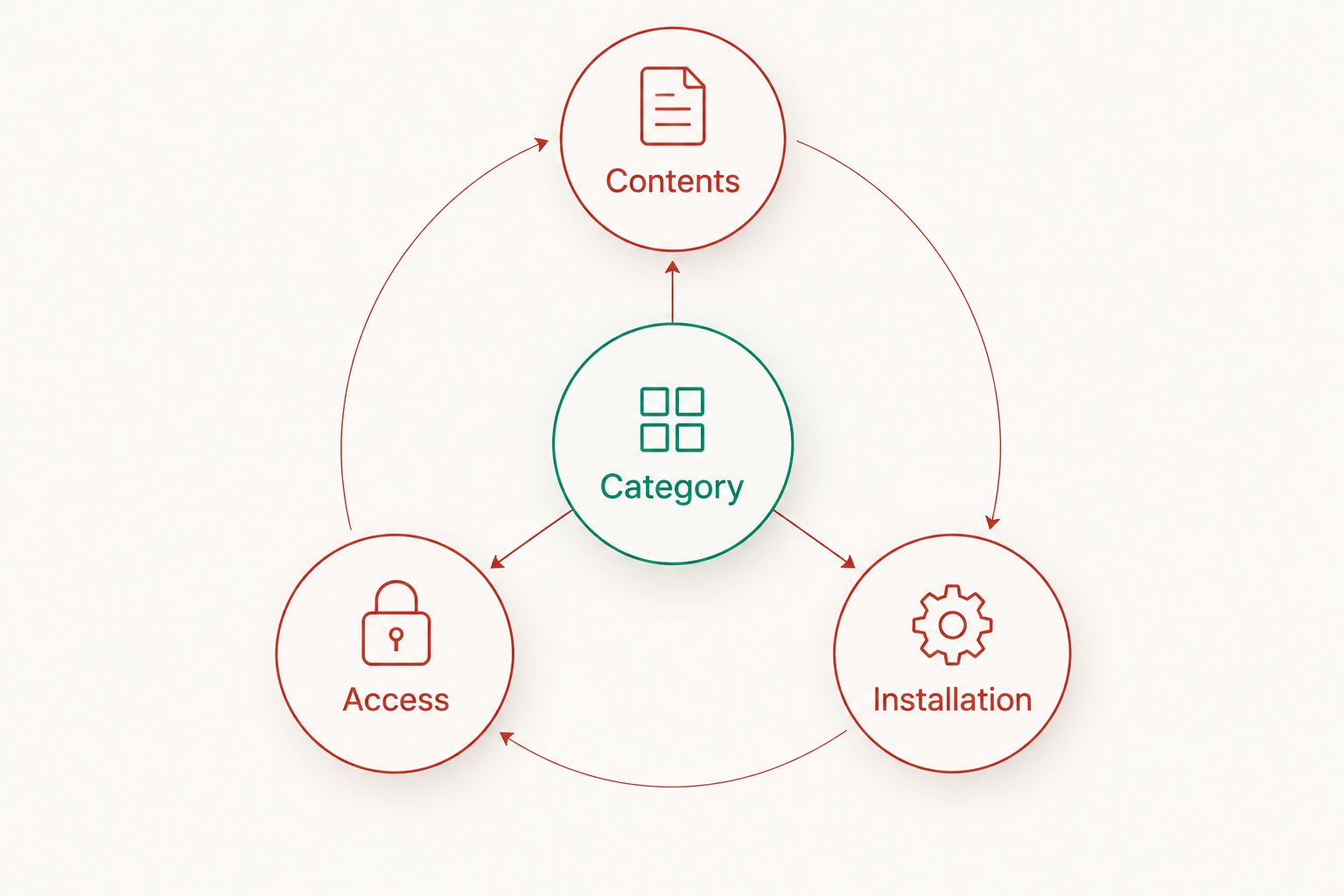
Treating a classroom cupboard as the full security plan
A cupboard can restrict casual access, but its presence does not establish a safe's protection or installation suitability. Specify the safe independently of the furniture around it. Check that the cupboard still permits opening, inspection and servicing.
Giving every trainer the same credential
A shared credential prevents credential-based identification of individual users. Where assessment materials or valuable assets require accountability, specify the access function you need and confirm the lock supports it. Do not confuse a keypad with an audit trail.
Combining teaching materials with administrative records
Opening a safe for equipment should not expose restricted assessment papers or personal records. Separate the contents, access arrangements or storage units where permissions differ. Convenience is not a reason to expand access.
Using general safes for specialist hazards
Do not use an ordinary office safe as a default charging enclosure or storage solution for chemicals, medicines or firearms. Establish the applicable storage requirements first. Security against unauthorised access is only part of the decision.
Buying before facilities approves the site
A suitable model still needs a workable delivery route, approved location and correct installation. Resolve those questions before ordering. Include ownership of reinstatement work and future relocation decisions in the campus approval process.
FAQ
What's the best type of safe for a TAFE administration office?
The best type depends on whether the office needs to protect documents, cash, keys or valuable equipment. Specify the contents, access roles and required protection before choosing a model; one general-purpose safe need not suit every task.
Do safes for TAFE providers need a fire rating?
A fire rating is relevant when the storage brief includes protection against fire damage. Confirm that the exact model's rating covers the intended contents, and assess burglary resistance separately.
Is an electronic safe better than a key-lock safe for teaching staff?
An electronic safe is better only when its verified functions match the staff access procedure. Confirm individual credentials, credential removal and event recording where required; do not assume those functions are included.
Can trainers deposit cash without opening the safe?
A suitable deposit safe allows deposits without opening its main storage compartment. Check the deposit opening, intended contents and retrieval arrangements, then document reconciliation and collection responsibilities.
Can a TAFE provider store assessment papers and workshop keys together?
Store assessment papers and workshop keys together only when every authorised user has permission to access both. Where permissions differ, separate storage or independently controlled compartments provide a clearer access boundary.
Does a drug safe automatically meet requirements for a health-training course?
A drug-safe description does not automatically establish suitability for a health-training course. Identify the substances, location and applicable requirements, then obtain confirmation for the exact model and installation.
What should a TAFE safe purchasing brief include in 2026?
A 2026 purchasing brief should include the contents register, required protection, access roles, usable dimensions and installation conditions. Retain model documentation, insurer requirements where applicable, and the operating and recovery procedures.
One last thing
Write the access-removal procedure before issuing the first credential. Test what happens when a trainer leaves, a key is lost or a custodian changes. If access cannot be withdrawn through a clear, documented process, revise the lock specification or operating procedure before putting the safe into use.


