

A car safe is worth considering for temporary storage when you cannot take valuables with you, provided it is secured to a suitable vehicle attachment point and kept out of sight. It does not protect against theft of the whole vehicle or make a parked car suitable for long-term storage. This guide explains when a vehicle lockbox helps, what to check before fitting one, and when removing your valuables is the better choice.
- A car safe adds a locked barrier for temporary vehicle storage; it does not prevent theft of the vehicle.
- Choose a mounting method before choosing a lockbox, and confirm vehicle compatibility before installation.
- Take valuables with you whenever practical; do not treat a car safe as overnight storage.
- BUYASAFE sells home and business safes; confirm vehicle suitability separately rather than assuming a small safe will fit.
Why this matters
A locked car and a locked container address different problems. The vehicle lock controls access to the cabin; a secured lockbox adds another barrier around its contents after someone gains entry.
That distinction matters when comparing portable safes for travel and everyday carry. Portability helps you move a box between locations, but it also makes an unsecured box easy to carry away.
For a 2026 purchase, start with the storage task rather than the product label. Decide what must stay in the car, why you cannot carry it, and how you will secure the container without affecting vehicle safety.
Is a car safe worth it for protecting valuables on the road?
A car safe is useful as a temporary, secured barrier—not as a reason to leave more valuables in your vehicle. Its value depends on the complete setup: container, lock, attachment, concealment and your storage routine.
The comparison below separates the practical benefits from the limits. These are storage approaches, not tested security rankings.
| Storage approach | Best for | Main benefit | Main limitation |
|---|---|---|---|
| Taking valuables with you | Items you can reasonably carry | Removes those items from the parked vehicle | Adds carrying responsibility and inconvenience |
| Vehicle-mounted safe | Regular temporary storage in the same vehicle | Secures the container through a dedicated mounting arrangement | Requires confirmed vehicle compatibility and suitable installation |
| Tethered portable lockbox | Temporary storage where an approved attachment method is available | Allows removal while providing a connection to the vehicle | Security depends on the tether, attachment point and box |
| Locked glovebox or console | Basic compartment access control | Uses existing vehicle storage | Does not establish the compartment's resistance to forced entry |
| Loose lockbox | Organising items during transport | Keeps contents together behind a lock | Can be removed with its contents if it is not secured |
Choose the arrangement you will actually use at every stop. A secure mounting system achieves little if the box remains open because the lid is difficult to reach.
When the answer is yes
A car safe makes sense when temporary storage is unavoidable and you can verify the installation. Examples include keeping a wallet out of sight during an activity or separating small personal items from a shared vehicle cabin.
Keep the contents limited. A lockbox intended for occasional personal items should not become the default location for passports, spare house keys or business records that do not need to travel.
When the answer is no
Skip vehicle storage when you can leave the item securely at its destination or carry it with you. Also skip a proposed installation if the only available location obstructs controls, interferes with seating or relies on an attachment the manufacturer has not approved.
A car safe is not an answer to every road-storage problem. Heat-sensitive contents, regulated items and overnight storage each require decisions beyond whether the lid locks.
Vehicle-mounted car safes: best for a dedicated installation
A vehicle-mounted safe suits drivers who need the same temporary storage arrangement repeatedly. The practical advantage is a consistent location and a mounting system selected for that installation.
The drawback is reduced flexibility. Before ordering, confirm the exact vehicle, mounting position, attachment requirements and access clearances with the safe supplier and a suitably qualified installer.
Do not assume a compact domestic safe is suitable for a car. A home installation and a vehicle installation have different mounting conditions, access constraints and safety considerations.
For your 2026 shortlist, request written installation instructions. A product photograph showing a box under a seat does not establish compatibility with your vehicle.
Recommendation: choose a vehicle-mounted safe only after the mounting arrangement is confirmed.
Tethered car lockboxes: best for removable temporary storage
A tethered lockbox suits a removable setup where the manufacturer provides an appropriate way to connect it to the vehicle. Its main benefit is flexibility: you can remove the container when it is not needed.
Its limitation is the connection. A strong-looking box does not establish the strength of the cable, its fittings or the structure it loops around.
Check how the tether connects, whether it obstructs the lid, and whether the box can move into an unsafe position. Do not improvise an attachment around wiring, trim or an unidentified component.
A removable box also needs a destination after the journey. Taking it out of the car is useful only if you then store it appropriately rather than leaving it unsecured elsewhere.
Recommendation: choose a tethered lockbox for removability, with manufacturer-approved attachment—not for an assumed security rating.
Why car safe protection varies
The lock is only part of the decision. Assess these factors together:
- Mounting: Confirm how the box connects to the vehicle and whether that method is approved for the intended installation.
- Construction: Look for documented information about the body, door, hinges and locking mechanism rather than relying on appearance.
- Access: Check that you can operate the lock and open the lid without moving controls or disturbing the installation.
- Concealment: Select a position that keeps the container and its contents out of ordinary view through the windows.
- Contents: Match the storage method to the items, including any temperature limits, legal requirements or insurance conditions.
- Routine: Decide when you will load, lock, empty and check the container so temporary storage does not become permanent.
A product title containing the word safe is not evidence of a particular burglary rating. If a rating matters to your decision, ask for the named standard, certification scope and exact model covered.
Similarly, do not infer fire or water protection from steel construction. Verify each claimed form of protection separately and check whether its stated conditions apply to your intended use.
How do you choose and fit a car safe?
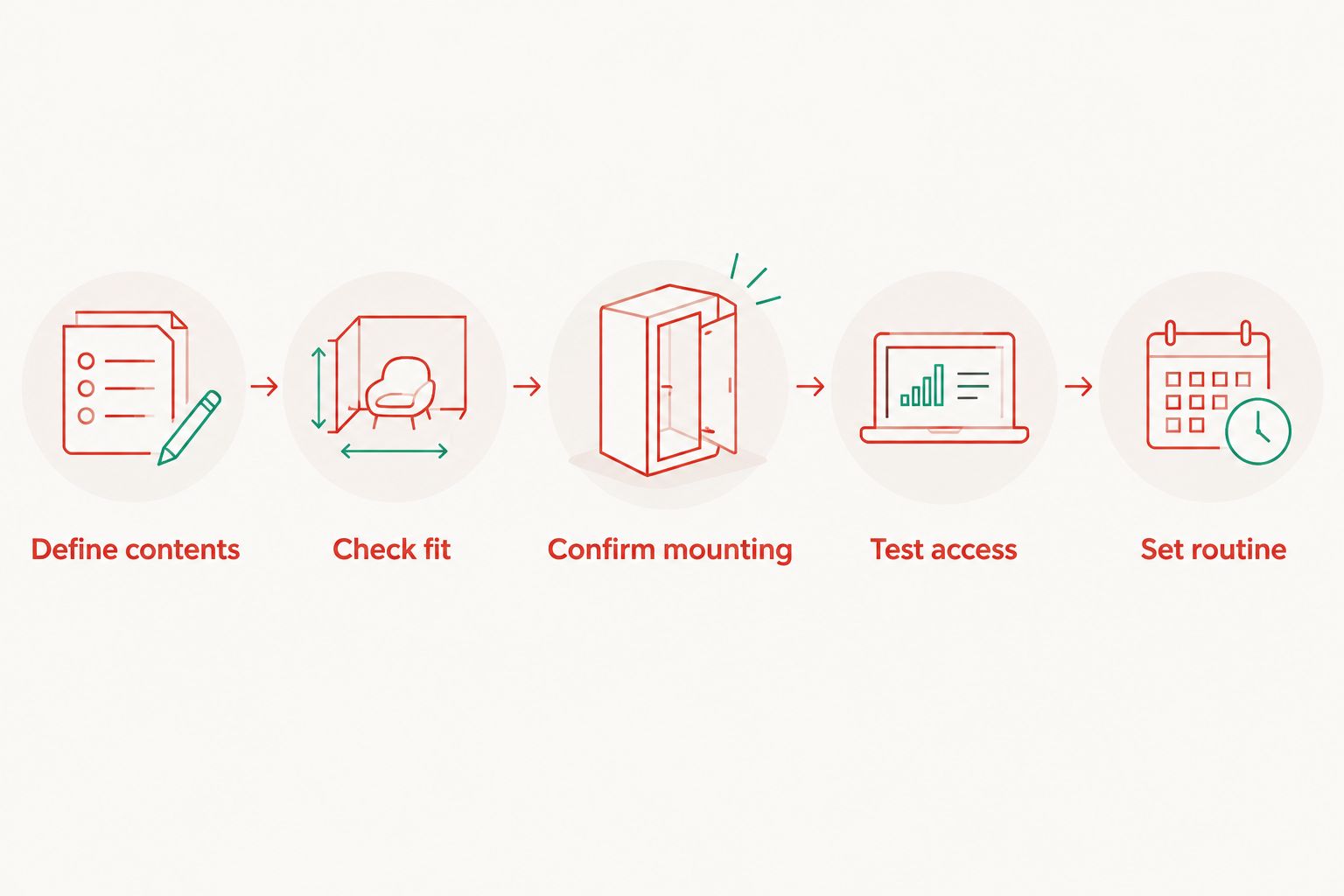
Use this sequence before buying. Select the location and mounting method before settling on the box.
- Define contents. List the items that genuinely need temporary vehicle storage. Exclude anything you can leave securely elsewhere.
- Check fit. Measure the available space and the actual items. Account for the door opening, lock access, internal fittings and any tether connection.
- Confirm mounting. Give the supplier or installer your vehicle details and proposed location. Obtain confirmation of the attachment method before making changes.
- Test access. Check seat movement, passenger access and normal use of the surrounding space. Ensure nothing obstructs pedals, restraints, airbags or vehicle controls.
- Set routine. Decide where you will keep keys, how you will manage a code, and when you will remove the contents.
Never drill into a vehicle on the assumption that a clear-looking patch of floor is safe. Concealed components and vehicle structures require assessment by someone qualified to perform the installation.
If you lease the vehicle or use an employer's car, obtain permission before altering it. Keep the installation instructions and any approval with your vehicle records.
Is a car safe better than a locked glovebox?
A properly secured car safe adds a separate locked container, while a glovebox uses the vehicle's existing compartment. Neither label alone establishes resistance to forced entry.
Compare the actual construction, lock and attachment rather than assuming every aftermarket box is stronger. An unsecured lockbox introduces an obvious limitation: someone can take the entire container.
Can you leave valuables in a car safe overnight?
Remove valuables overnight rather than treating a car safe as permanent storage. The container remains inside a vehicle that can itself be stolen, and locking it does not control the cabin environment.
For items that do not need to travel, consider storage at home or your business. BUYASAFE is best suited to buyers comparing home and business safes rather than assuming a small safe is vehicle-ready.
Will insurance cover valuables kept in a car safe?
A car safe does not establish insurance cover. Ask your insurer about the particular items, unattended-vehicle conditions, exclusions and evidence required for a claim.
When reviewing cover in 2026, describe the proposed setup accurately: vehicle, container, attachment and storage circumstances. Keep the insurer's response with your policy documents rather than relying on a general description of valuables cover.
What should you check before choosing a lock?
Choose a lock you can operate reliably in the installed position. The ability to reach a keypad or turn a key matters as much as whether the box fits beneath a seat.
For a key-operated box, plan where the key stays when you leave the vehicle. Storing it beside the lockbox defeats the purpose of separating access to the container from access to the cabin.
For an electronic lock, check the manufacturer's power requirements, operating limits and authorised recovery procedure. Do not assume a particular model has an override key, external power connection or app access.
Add a practical check to your 2026 buying notes: can you unlock, load and relock the container comfortably with the vehicle parked? If the answer depends on awkward reaching or removing the box, reconsider the location.
Where does home or business storage fit?
Separate travel storage from destination storage. A car lockbox addresses items temporarily left in a vehicle; a home or business safe addresses items that can remain at a fixed location.
BUYASAFE sells home, commercial and other security storage categories. Those categories provide a starting point for destination storage, but a domestic or commercial product name does not establish suitability for vehicle installation.
The benefit of fixed-location storage is that unnecessary valuables need not travel. Its limitation is equally clear: it cannot protect an item you have already taken on the road.
Ask BUYASAFE about the intended storage task before selecting a safe. For any proposed car installation, request separate confirmation of vehicle suitability rather than transferring assumptions from home-safe specifications.
FAQ
Is a car safe worth buying for everyday driving?
A car safe is worth considering when temporary vehicle storage is unavoidable and the container can be secured appropriately. Take valuables with you whenever practical, and do not use the box as a reason to keep unnecessary items in the car.
What's the best place to put a safe in a car?
The best location is concealed, accessible and compatible with an approved mounting arrangement. Confirm that the installation does not interfere with seats, restraints, airbags, pedals or vehicle controls.
Can I put a small home safe in my car?
A small home safe is not automatically suitable for vehicle use. Confirm the manufacturer's intended use, mounting instructions and compatibility before installing it.
Does a car safe protect valuables if the car is stolen?
A car safe remains inside the vehicle if the whole car is stolen. It provides a locked barrier around its contents, not protection against vehicle theft.
Can I leave a phone or power bank in a car safe?
Check the device manufacturer's storage-temperature and safety instructions before leaving a phone or power bank in a vehicle. A locked container does not establish temperature control or suitability for battery storage.
Is a car lockbox suitable for firearms in Australia?
Do not assume a general-purpose car lockbox meets firearm transport or storage requirements. Confirm current requirements with the relevant state or territory firearms authority for your licence, firearm and journey.
What should I check before buying a car safe in 2026?
Before buying a car safe in 2026, confirm vehicle compatibility, mounting instructions, usable space, lock access and any documented security claims. Check insurance conditions separately if you expect the contents to be covered.
One last thing
Check the spare key as carefully as the mounting point. A concealed, secured lockbox loses its access-control benefit if its key is left in the glovebox beside it.
Before your next trip, practise the complete routine while parked: load the items, close the lid, check it is locked, and take the key with you. Remove the contents when the temporary storage need ends.


