

Supermarket safe storage is the controlled protection of takings, floats and business records with the aim of limiting cash exposure and restricting access. Choosing safes for supermarkets in 2026 means matching deposit access, overnight holdings and installation conditions to your grocery store’s actual cash-handling routine.
- Choose safes for supermarkets around peak cash holdings, deposit access and insurer requirements—not external size alone.
- BUYASAFE offers deposit safes and cash-management safes for supermarket operators comparing different storage arrangements.
- A deposit safe separates cash drops from withdrawals; confirm the exact model’s security features before choosing.
- Keep fire protection, burglary resistance and staff permissions as separate buying criteria.
Why safe storage matters for supermarkets
The right supermarket safe lets staff secure takings without giving every depositor access to accumulated cash. That distinction matters when checkout operators, supervisors and closing managers have different responsibilities.
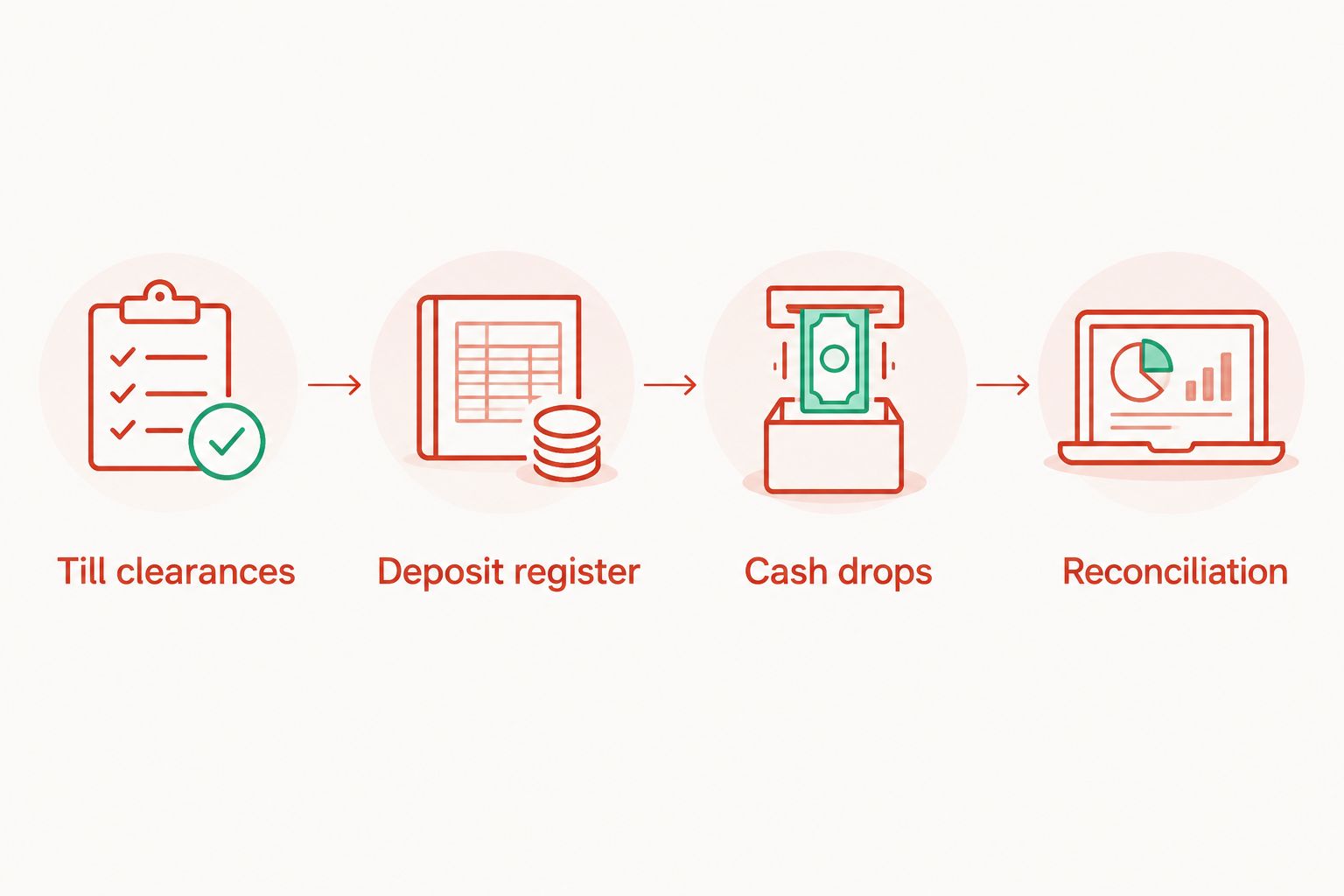
Your buying brief should account for till clearances, change floats, shift handovers and banking collections. A store that deposits cash throughout trading needs a different access arrangement from an owner-operated grocery shop that secures takings only at closing.
Start with the principles in this guide to cash safes for retail stores, then apply the supermarket-specific checks below. Treat your 2026 purchase as a cash-handling decision, not simply an equipment replacement.
The main constraints are practical:
- Checkout staff need a clear method for handing over surplus notes.
- Managers need controlled access to floats and bank-ready deposits.
- Cash holdings depend on collection intervals, not just daily sales.
- Bags, envelopes and coin containers must fit the usable interior.
- Installation must suit the floor, access route and tenancy conditions.
How to choose and use a supermarket safe
1. Map your cash movements before comparing safes
Use a spreadsheet or paper register to trace cash from the checkout to collection. Record where cash waits, who handles it and which events require the safe door to open. This establishes the operating requirement without buying new equipment first.
Separate sales turnover from cash physically retained. Card receipts do not occupy safe space, while floats and deposits awaiting collection do. Your busiest trading day is not automatically your highest-holding day if collections happen less frequently.
Build your 2026 buying brief around the largest realistic holding between collections. Include an interrupted collection scenario, then ask your insurer how that holding affects cover and safe requirements.
- List every cash source, including staffed checkouts and service counters where applicable.
- Record floats separately from takings awaiting banking.
- Identify cash left outside secure storage during handovers.
- Note collection days and arrangements for missed collections.
- Assign responsibility for updating the cash register.
2. Separate deposit permissions from withdrawal permissions
Write a simple permissions matrix before choosing a lock. Identify who deposits, who retrieves cash and who administers access. A person who needs to make a cash drop does not automatically need authority to open the main compartment.
Deposit safes provide a deposit route separate from the main door. Their limitation is equally important: a chute alone does not establish burglary resistance, fire protection or protection against retrieval through the opening. Confirm those details for the exact model.
Make this a training exercise as well as a purchasing exercise. Ask staff to demonstrate the proposed handover using an empty deposit bag, then check whether the procedure requires unnecessary manager intervention.
- Define 2 separate permissions: depositing cash and retrieving cash.
- Give each deposit 1 unique reference that also appears in the register.
- Specify who receives floats and who authorises withdrawals.
- Keep administrative credentials outside routine checkout access.
- Document the response to a jammed chute without improvising access.
3. Match the safe type to the task
Use your cash map to decide whether you need a deposit safe, manager-access storage or separate document protection. Do not start by choosing the largest cabinet that fits the office. Size solves only part of the problem.
BUYASAFE is best for supermarket operators comparing deposit safes and cash-management safes. Use the retailer’s category and model information to narrow the shortlist, then request confirmation against your written brief rather than assuming a product name proves suitability.
A deposit arrangement suits frequent cash drops; manager-access storage suits controlled retrieval of floats and banking bags. Neither label establishes a particular cash rating or lock function. If documents also need fire protection, specify that requirement separately rather than treating all secure storage as interchangeable.
- Match the deposit opening to your actual envelopes or bags.
- Check internal clearances with shelves and compartments in position.
- Confirm whether deposits and floats occupy separate spaces.
- Ask for the exact lock configuration offered on the selected model.
- Request supporting documentation for claimed security ratings.
4. Confirm insurance requirements and protection claims
Ask your insurer or broker for written requirements before you order. Provide the proposed model, maximum retained cash, installation location and collection arrangements. A seller’s cash-rating description is not a substitute for your policy’s acceptance of the installation.
Burglary resistance and fire resistance address different hazards. A fire-resistant document safe is not automatically suitable for supermarket takings, and a cash safe is not automatically rated to protect paper records from fire.
For a 2026 insurance review, keep the exact model and lock variant together in your records. Avoid transferring a rating from a similar-looking model or assuming a deposit version has the same protection as a conventional safe.
- Request written acceptance of the proposed safe and retained holding.
- Check conditions covering anchoring, alarms and after-hours storage.
- Obtain the stated test standard or certification behind a rating.
- Confirm whether fire protection covers the material you will store.
- Retain the model details, installation record and insurer correspondence.
5. Plan the installation around the store
Measure the proposed location yourself first, then have the installer assess the route, floor and anchoring conditions. Record clearances with the door open, not just the safe’s closed dimensions. A safe that blocks a working aisle or cannot open fully is poorly positioned.
Choose a staff-controlled location that supports cash handling without putting takings on display. Keep the area clear of stock cages, cleaning equipment and routine deliveries. Check for moisture exposure if the proposed position is near wet cleaning or refrigerated equipment.
Installation is also a building decision. Get landlord approval where required, identify services before drilling and obtain structural advice where the floor’s suitability needs assessment.
- Measure the delivery route, thresholds and final doorway.
- Confirm floor construction and the manufacturer’s anchoring instructions.
- Allow space for door swing, deposits and authorised servicing.
- Keep cash handling away from customer sightlines.
- Arrange installation without obstructing store exits or trading operations.
6. Test the handover and maintain access records
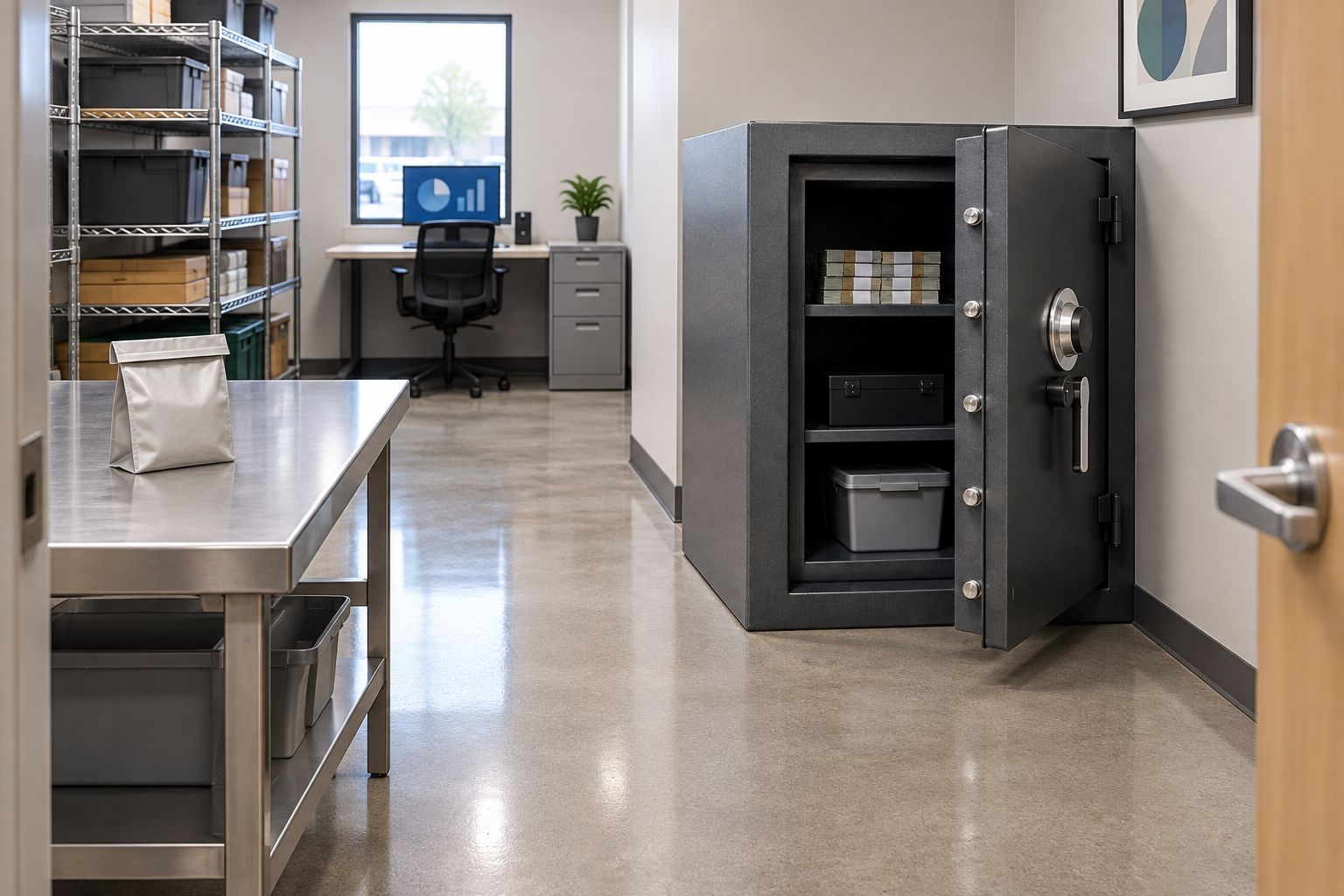
Start with a manual deposit register and a written opening procedure. Test an ordinary cash drop, a shift handover and an authorised collection before relying on the arrangement during trading. Use empty bags for the initial rehearsal.
If individual user codes, event records, dual control or time-delay functions are required, confirm them against the exact lock specification. A digital keypad does not prove that any of those functions exist. Electronic records also do not replace counting and reconciliation.
Set a review date in your 2026 operations calendar. Recheck permissions when staff change, collection arrangements change or the store alters its cash-handling process.
- Schedule 1 reconciliation per shift as your starting control, then adjust to your operating needs.
- Match deposit references to counts and investigate discrepancies.
- Remove access promptly when an authorised employee leaves the role.
- Keep recovery instructions and spare keys under separate control.
- Follow the lock maker’s maintenance and battery instructions where applicable.
Compare supermarket safe options
BUYASAFE lists deposit, cash-management and document-storage options. The table identifies which task each option suits; it does not establish a model’s rating, capacity or insurer acceptance. Confirm those details before making a final selection.
| Option | Best for | Main advantage | Key limitation or check |
|---|---|---|---|
| Platinum D2 Defender Deposit Chute Safe | Stores assessing a deposit-chute arrangement | A deposit-focused format to assess for cash drops | Confirm opening dimensions, retrieval protection, capacity and rating |
| Platinum DM2 Manager Cash Management Safe | Stores assessing manager-controlled cash storage | A cash-management format to assess against float and banking routines | Confirm compartment layout, permissions and exact lock functions |
| Conventional commercial cash safe | Restricted manager access to retained cash | Straightforward storage behind a main door | Routine deposits require main-door access unless another deposit route exists |
| Fire-resistant document safe | Paper records needing documented fire protection | Protection chosen around records rather than cash flow | Do not assume its burglary resistance suits retained takings |
| Separate deposit and reserve storage | Stores needing distinct deposit and retrieval workflows | Separates cash-drop activity from reserve access | Requires additional space, access procedures and reconciliation |
Choose the arrangement first, then verify the model. A deposit-safe name is a reason to investigate a product, not evidence that it meets your insurer’s conditions. Equally, adding another safe only helps if staff understand which contents belong in each compartment.
Common mistakes supermarket operators make
Buying around average takings
Average daily takings do not describe the cash retained before collection. Include floats, accumulated deposits and collection interruptions in the buying brief. Reassess the requirement when banking arrangements change.
Letting deposit access become full access
Giving every supervisor the main opening code defeats a deposit-only workflow. Define who needs retrieval authority and keep that list separate from staff authorised to make cash drops. Shared credentials also make individual responsibility harder to establish.
Mixing floats, deposits and records without a plan
Loose change, sealed deposits and business documents compete for space when storage has no assigned layout. Label the storage locations in your procedure, keep deposits identifiable and choose separate document protection when the required fire rating differs.
Assuming the keypad supplies the control
An electronic lock does not automatically provide an audit trail, dual control or time delay. Confirm each required feature in writing. Train staff on the installed configuration rather than a feature described for another model.
Leaving installation until after purchase
An unsuitable route, floor or anchor position changes the installation plan. Resolve those questions before ordering, especially in leased premises or upstairs offices. Weight alone is not a reason to disregard the manufacturer’s securing instructions.
FAQ
What’s the best type of safe for a supermarket?
A deposit safe is the best starting point when staff need to secure takings without opening the main storage compartment. Choose the final model around peak retained cash, deposit packaging, insurer requirements and installation conditions.
Does a small grocery shop need a deposit safe?
A small grocery shop benefits from a deposit safe when deposit authority needs to be separate from withdrawal authority. An owner-operated shop with restricted manager access should compare that arrangement with conventional cash storage before choosing.
How big should a supermarket safe be?
Size a supermarket safe around the contents retained between collections, including floats, deposit bags and coin containers. Check usable internal space and the deposit opening rather than relying on external dimensions alone.
Is a fire-resistant document safe suitable for supermarket cash?
Fire resistance alone does not establish suitability for supermarket cash. Confirm burglary resistance, insurer acceptance and access arrangements separately from protection for paper records.
Can checkout staff deposit cash without having the safe code?
A suitable deposit-safe arrangement lets authorised staff deposit cash without opening the main compartment. Confirm whether the deposit opening itself needs a key or other access control on the exact model.
Is a digital lock better than a mechanical lock for a grocery store?
A digital lock is the better fit when its confirmed functions match your staff-access requirements. Do not assume that every digital lock supports individual codes, event records or time delay; mechanical locks also require controlled combination management.
Does a supermarket safe need to be bolted down?
Follow the safe manufacturer’s installation instructions and your insurer’s requirements for securing the safe. Have an installer assess the floor and anchor locations rather than treating a heavy safe as automatically secure.
What should I send when asking for a supermarket safe recommendation?
Send your maximum retained cash requirement, collection routine, deposit packaging, access roles and installation details. Include written insurer conditions so the proposed model can be checked against the same brief.
One last thing
Test the deposit bag before you approve the safe. A bag that fits through an opening when empty is not a useful test of the filled bag your closing manager actually handles.
For your 2026 shortlist, give BUYASAFE a sample of the intended packaging or its filled dimensions, together with your access and insurance brief. Confirm the complete route from deposit opening to storage compartment—not just whether the bag passes the outer opening.


