

Surveying firm safe storage is the controlled protection of project records, keys and valuable equipment with the aim of keeping essential assets secure and accessible to authorised staff. This 2026 guide explains how to choose safes for surveying firms and engineering practices without confusing document protection, equipment security and digital backup storage.
- BUYASAFE suits surveying firms comparing document safes, commercial safes and key cabinets across a mixed storage requirement.
- Choose safes for surveying firms by contents and verified ratings, not external size or the word fireproof.
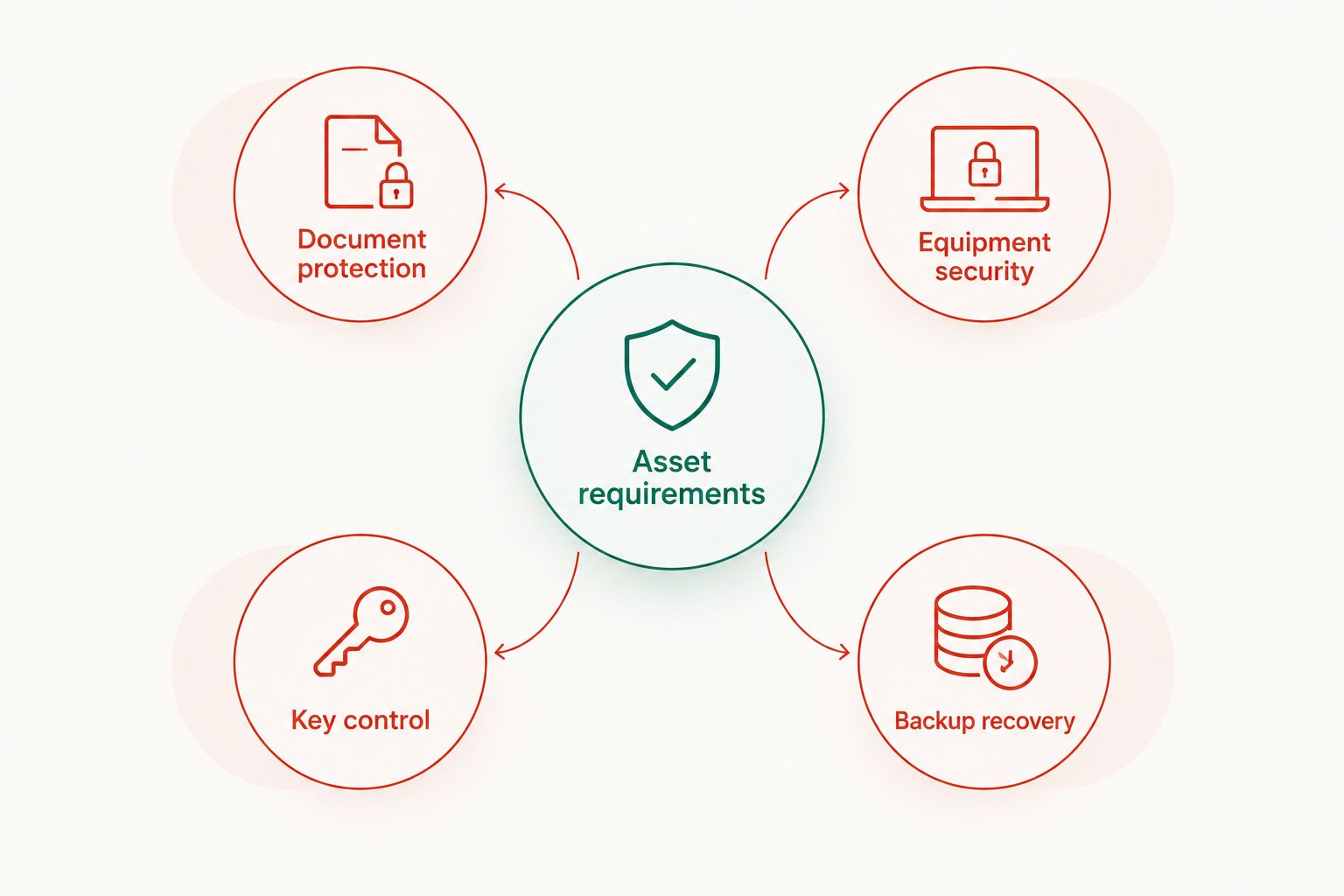
- Keep document protection, equipment security and backup recovery as separate purchasing requirements.
- Measure equipment cases and drawing folders before choosing internal dimensions or door openings.
Why safe storage matters for surveying firms
A surveying or engineering practice needs a storage specification based on its actual work: field equipment, signed records, client keys and backup media each need different treatment. One enclosure is not automatically suitable for every asset.
Start with a written contents list before comparing the safe categories at BUYASAFE. The retailer offers home and business safes, fireproof safes, key cabinets and filing cabinet safes; the correct category depends on what your firm needs to protect.
Separate the consequences of theft from the consequences of fire. A stolen receiver and an unreadable original field book create different recovery tasks, so describe both risks in your purchasing brief rather than asking only for an office safe.
For your 2026 specification, identify which contents are irreplaceable, which are replaceable but operationally essential, and which already have a recoverable copy elsewhere. That distinction helps you avoid filling expensive secure space with duplicate paperwork while leaving critical originals in ordinary drawers.
How to specify safes for surveying and engineering firms
List the assets you actually need to secure
Begin with a spreadsheet or paper register. Walk through the office, equipment store and vehicle-key area, then record the items you intend to lock away rather than estimating capacity from memory.
Use a 30-day recording period if you need a practical way to capture equipment moving between jobs. This is an inventory exercise, not a requirement to delay an urgent security purchase.
Separate active project material from archived records. Include ownership and recovery responsibility: a client key needs a different handling process from a company-owned instrument, even when both fit on the same shelf.
- Record equipment identifiers, cases and removable accessories.
- List original documents separately from working copies.
- Identify client-owned keys, records and equipment.
- Assign a staff member to maintain the register.
Match each asset to the protection it needs
Build your requirements manually before choosing a model. Give each asset a primary need: protection against unauthorised access, fire exposure, loss of custody or loss of recoverable data.
A fire-resistance claim needs supporting documentation identifying the test standard, duration and contents covered. Do not treat a paper-document claim as proof that the enclosure protects electronic storage media under the same conditions.
Keep these distinctions visible when comparing BUYASAFE safe categories. Category names narrow the search; the individual model's documentation determines whether it meets your specification.
Specify the hazard first and the safe second. This prevents a large cabinet from winning a comparison simply because it holds everything.
- Document protection: verify the stated fire test and covered contents.
- Equipment security: check burglary-resistance evidence and insurer requirements.
- Key control: define who can issue, return and retrieve keys.
- Backup recovery: specify the media and a separate recoverable copy.
Measure the contents and the usable opening
Make a cardboard template or use an empty shelf to lay out the intended contents. Measure equipment in the configuration you will actually store, including its protective case where applicable.
A4 paper measures 210 × 297 mm; A3 paper measures 297 × 420 mm. Folders, binders and sleeves extend beyond those sheet dimensions, so paper size alone is not a safe-capacity specification.
Check the door opening as well as internal height, width and depth. A case that fits the interior still needs a clear path through the opening without forcing handles, hinges or delicate accessories.
Prepare this measurement sheet before asking BUYASAFE to identify suitable safes. It gives the comparison a defined starting point rather than relying on broad descriptions such as large or extra large.
- Measure the largest case and the bulkiest document folder.
- Record internal shelf positions and clear opening requirements.
- Allow access to remove items without unloading everything.
- Keep full-size drawing storage separate if it cannot fit safely.
Define staff access before choosing the lock
Write an access list using job roles, then test it against a normal working day. Include early departures, late equipment returns, leave cover and the departure of a staff member.
Key, mechanical combination and electronic locks create different administration tasks. Assess the exact model rather than assuming a digital keypad includes individual user codes, an audit trail, remote alerts or integration with another system.
For your 2026 access plan, distinguish permission to retrieve equipment from permission to handle confidential originals. If the permissions differ, separate enclosures deserve consideration even when a single cabinet has enough room.
A manual sign-out register remains a practical starting point. Where a lock offers individual credentials or event records, verify those functions before making them part of the procedure.
- Name the people authorised to open each enclosure.
- Document the process for changing access after staff departures.
- Store recovery keys or instructions outside the locked enclosure.
- Assign responsibility for lock maintenance under the manufacturer's instructions.
Confirm the installation site before ordering
Measure the delivery route with a tape measure and photograph difficult turns, steps and thresholds. Identify the intended final position rather than leaving placement until the safe arrives.
Ask a qualified installer to assess the fixing method and substrate. Do not choose anchor dimensions from a general checklist: the safe's instructions, building conditions and installer assessment need to agree.
Where the location raises floor-loading questions, obtain an assessment from a suitably qualified professional. A clear corridor does not establish that the final floor position is suitable.
The position must also support everyday use. Staff need room to open the door fully and handle equipment cases without striking adjacent furniture or blocking an exit.
- Record doorways, stairs, lifts and tight changes of direction.
- Confirm permission for fixings in leased premises.
- Check access to handles, hinges and any service points.
- Keep the installation instructions with the asset records.
Separate archive storage from daily equipment returns
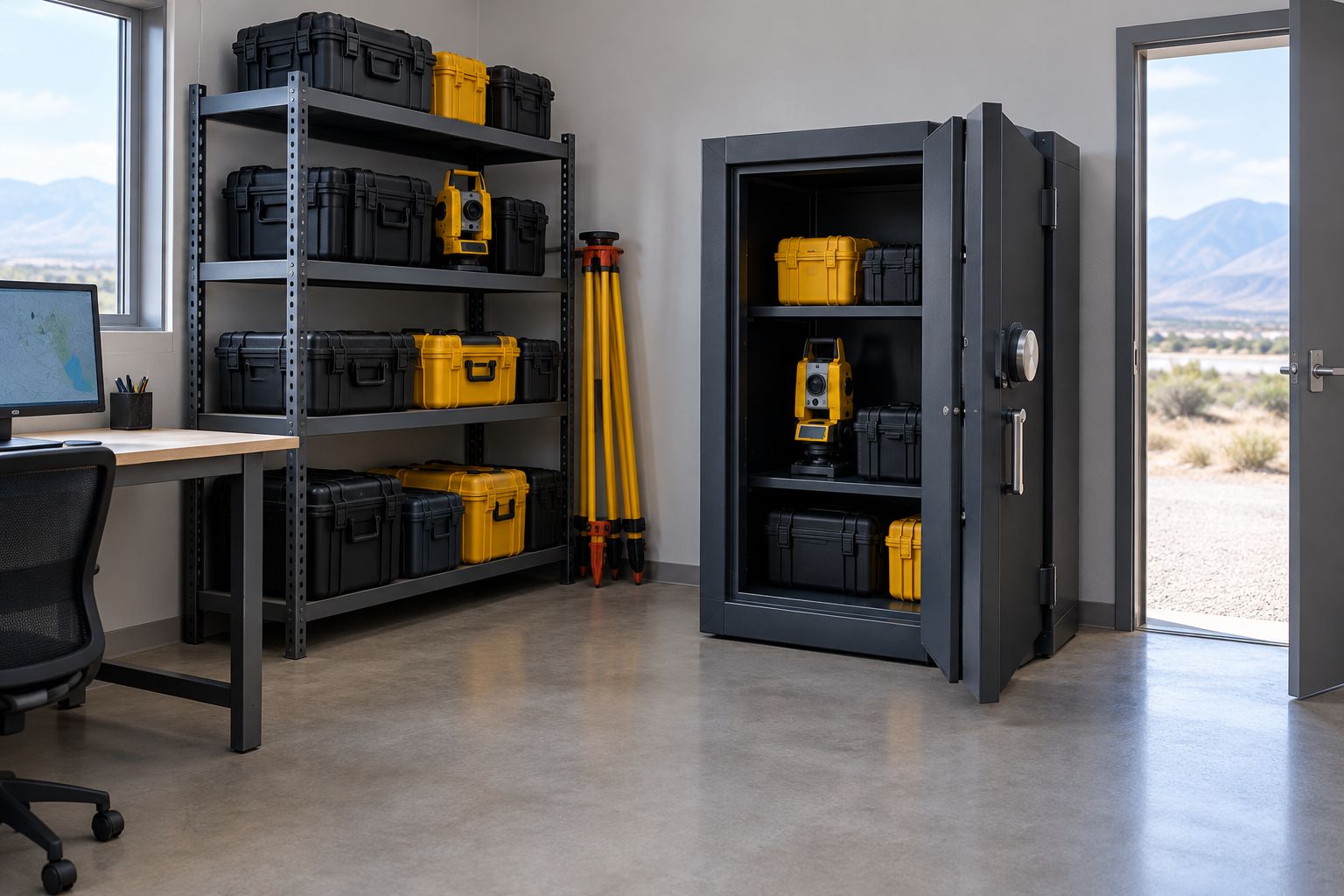
Map the daily return process on paper before buying additional storage. Identify where staff put equipment, who checks its return and how missing items are escalated.
Keep signed originals and archive records out of a frequently opened equipment enclosure when those contents have different access requirements. Repeated handling also makes it harder to maintain a clear document order.
If field equipment returns wet or dirty, follow the equipment manufacturer's cleaning and drying instructions before storage. A security safe is not a substitute for an equipment-care procedure.
For 2026, give both workflows an owner. The archive custodian and the equipment coordinator can be different people, but each needs a written process that remains usable during leave or staff changes.
- Create a defined return location for equipment awaiting inspection.
- Record missing accessories before returning cases to secure storage.
- File originals by project identifier and document status.
- Keep a recovery copy outside the same physical enclosure.
Check the evidence and the surrounding security
Compare candidate safes against the same written brief. Request model-specific documents for any claimed fire resistance, burglary resistance or lock function, then send the relevant details to your insurer for written confirmation of its requirements.
Treat building security as a separate layer. A discussion of RC2-rated door security concerns the entrance barrier; it does not establish the burglary resistance of a safe or the suitability of its installation. Assess the door, safe and fixing method separately rather than treating one label as proof of the whole system.
BUYASAFE's safe range gives firms categories to compare, but a category label does not settle model suitability. Buy against documented requirements, not the strongest wording in a product title.
- Match every claimed rating to the exact model under consideration.
- Confirm any insurer conditions before committing to the specification.
- Record the installation method and responsible installer.
- Retain instructions and purchase records outside the safe as well.
Compare storage options for your firm
Choose the storage type that solves the defined problem. The following options are not interchangeable, and none removes the need to check the individual model's evidence.
| Option | Best for | Main advantage | Key limitation |
|---|---|---|---|
| Fire-resistant document safe | A defined set of essential paper originals | Concentrates important documents in protected storage | Paper protection does not establish protection for digital media |
| Fire-resistant filing cabinet | Project records needing organised retrieval | Supports a filing-based document workflow | Requires checks for drawer format, covered contents and tested protection |
| Burglary-resistant safe | Compact valuable equipment and sensitive assets | Addresses theft resistance where supported by verified evidence | Fire resistance and case fit need separate confirmation |
| Key cabinet | Controlled issue and return of site or vehicle keys | Keeps keys organised in a dedicated location | Locking and resistance vary; key storage is not equipment storage |
| Media-rated storage | Backup media with documented environmental requirements | Lets you specify protection for the actual medium | Does not replace an independent recoverable backup |
A small practice can start with a narrower contents list rather than buying a cabinet intended to accommodate every possible future asset. A larger practice should separate incompatible access needs before comparing capacity.
For a 2026 purchasing decision, ask each supplier to respond to the same brief. Record exceptions explicitly: an unverified function is not a confirmed feature.
Common mistakes surveying and engineering firms make
Buying for loose equipment rather than its storage case
A receiver, controller or accessory can fit individually while its protective case does not. Specify the stored configuration and test the opening dimensions before selecting the enclosure.
Treating a paper fire claim as digital-media protection
A label referring to documents does not answer whether backup drives or other media are covered. Identify the actual medium and request supporting documentation for that use.
Giving every field team access to every record
Equipment retrieval and confidential project-document access are different permissions. Split storage where necessary instead of distributing a shared credential to solve every handover problem.
Leaving signed originals among superseded drawings
Physical security does not establish which document is current. Keep document status and project identifiers clear, and distinguish retained originals from working prints before filing them.
Assuming office storage solves vehicle security
An office safe protects only the contents placed inside it. Write a separate procedure for equipment in transit, unattended vehicles and temporary site accommodation, and confirm the relevant insurance conditions.
FAQ
What's the best type of safe for a surveying firm?
The best type matches the firm's actual contents and required protection. Specify document fire protection, equipment theft resistance, key control and backup-media requirements separately before comparing models.
Can I keep surveying instruments in a document safe?
Only select a document safe for instruments after checking physical fit and the required security evidence. A document-related fire claim does not establish burglary resistance or suitability for sensitive equipment.
Will an A3 drawing fit inside an office safe?
An A3 sheet measures 297 × 420 mm, but the folder and door opening determine whether it fits in practice. Measure the complete stored item and check usable internal dimensions.
Does a fire-resistant document safe protect hard drives?
A document fire-resistance claim does not establish hard-drive protection. Request evidence covering the intended media and maintain an independent recoverable backup.
Is a digital lock better for a shared engineering office?
A digital lock is suitable only when its verified functions match the office's access procedure. Check individual credentials, administration and recovery arrangements rather than assuming every electronic lock has an audit trail.
Does a business safe need professional installation?
Use a qualified installer to assess the site and carry out installation to the applicable instructions. Confirm the substrate, fixing requirements, access route and any insurer conditions before ordering.
Where should a surveying firm start when comparing BUYASAFE safes?
Start with a contents register, measured storage requirements and a written protection brief. Then compare the relevant safe categories and verify the documentation for each shortlisted model.
One last thing
Test retrieval, not just capacity. Before approving the layout, ask an authorised staff member to demonstrate how they would remove the largest case or find a specified original document without disturbing unrelated contents.
Repeat that check when the stored contents change. A safe that technically holds everything is still the wrong layout if routine retrieval requires staff to leave sensitive material outside it.


