

Financial planning firm safes are compliance-grade storage systems that protect Statements of Advice, client ID documents and digital backups from fire, theft and unauthorised staff access. A licensed practice handles far more paper than a typical retailer and far less cash than a shopfront, so Buy A Safe approaches the fit differently: fire rating and access control come first, cash capacity is an afterthought. Get the fire rating and the key control wrong and a single break-in or a small kitchen fire can wipe out years of client records in one afternoon.
- Safes for financial planning firms should prioritise fire rating over cash capacity because client files carry legal retention obligations.
- A 120-minute paper fire rating protects Statements of Advice better than a 60-minute rating in a real office fire.
- Buy A Safe stocks fire-rated document safes such as the Yale Document Fire Safe Extra Large for firms archiving years of client records.
- A separate wall-mounted key cabinet controls access to shared filing cabinets and server rooms, independent of the main safe.
- Undersizing is the most common mistake in 2026 audits — plan storage for three years of retained files, not one.
Why safes matter for financial planning firms
The Corporations Act 2001 requires licensed financial services providers to keep records supporting a Statement of Advice for a minimum of seven years. That is a paper and digital archive most other small businesses never have to carry. Add the Privacy Act 1988 obligations around client personal information — dates of birth, tax file numbers, account details — and a standard two-drawer filing cabinet stops being adequate the day a practice takes on its first handful of clients.
Most planning offices run lean: a handful of advisers, an office manager, maybe a receptionist. That changes the security brief compared with a retailer or a medical clinic. A planning firm rarely needs a large cash-handling safe with a deposit chute; it needs document protection, key control for filing cabinets and server racks, and a way to prove who accessed a file and when. Get that mix wrong and the practice either overspends on cash-rated steel it never needs or underspends on fire protection it absolutely does.
Map what actually needs protecting
Before comparing safes, list what is actually going into one. Most practices are surprised how little of it is cash.
- Signed Statements of Advice (SOA) and Records of Advice (ROA)
- Client identification documents used for verification checks
- External hard drives or USB backups of client management software
- A small petty cash float for office expenses
- Spare keys to filing cabinets, server racks and the front door
Do this inventory first. It decides whether the practice needs one large document safe, two smaller units split by document type, or a document safe plus a separate key cabinet.
Match the fire rating to your paper trail
Fire ratings for safes are not interchangeable. A rating that protects paper does not protect a hard drive, because electronics fail at much lower internal temperatures than the point paper chars.
- Paper-only storage: a 60-minute paper-rated safe is the practical minimum for a small office
- Files kept for the full seven-year Corporations Act window: step up to a 120-minute rating for peace of mind on older archives
- Hard drives and backup tapes need a media-rated compartment specifically — a paper rating alone does not protect them
- Fireproof document safes such as the Yale Document Fire Safe Extra Large YFM-520-FG2 suit firms archiving multiple years of SOAs in one unit
- Keep one backup set of digital client files off-site regardless of what the safe is rated for — a safe protects against fire and theft on-site, not a server outage
Separate cash, documents and digital media
Mixing a cash float in with signed client files in the same compartment is common and it is a bad habit. Humidity, dust and the physical bulk of a cash tin all work against the paper sitting next to it.
- Don't store a cash float in the same compartment as signed client files
- Use a safe with a locking internal document tray if the practice needs to hold both
- Consider a dedicated deposit-style unit only if the practice banks daily takings, which most planning firms don't
- Keep backup media in its own fire-rated compartment, away from paper and moisture
Control who holds keys and codes
A safe with one shared combination that every staff member has known since 2019 gives a practice zero audit trail. Access control matters as much as the fire rating once more than two people can open the door.
- Digital locks with individual user codes create a record of who opened the safe and when
- Dual custody, where two separate codes are required, suits practices with more than one authorised signatory
- A wall-mounted key cabinet keeps spare cabinet, server room and front door keys off individual desks and out of top drawers
- Rotate codes immediately whenever an authorised staff member leaves the practice
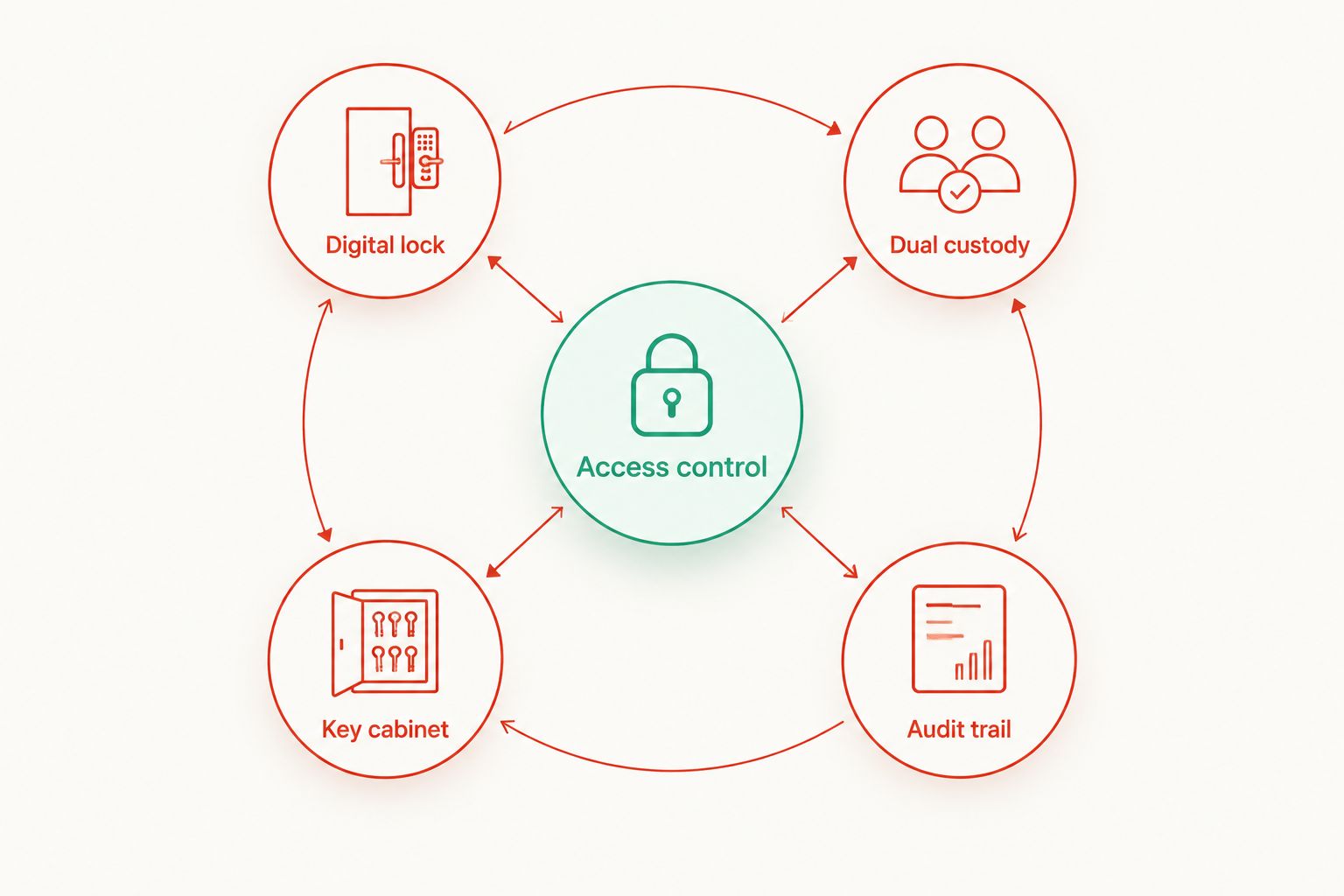
A wall-mounted unit like the CMI Security Key Cabinet SKC-250D solves this cleanly: it holds spare filing cabinet and server room keys separately from the document safe, so losing one set of keys doesn't compromise the other.
Size for three years of growth, not day one
Practices that grow from two advisers to five in 2026 usually outgrow their first safe within eighteen months, not because the safe was faulty but because nobody planned for the paper trail a growing client book generates.
- Count current file volume, then estimate for three years of expected retention, not one
- Filing-cabinet style fire safes suit high paper volume; compact document safes suit firms already digitising most records
- Leave spare capacity for compliance audits that require pulling and re-filing large batches of documents at once
- Resist buying the smallest safe that fits today's files — it is the single most common mistake in this category
Bolt it down and place it right
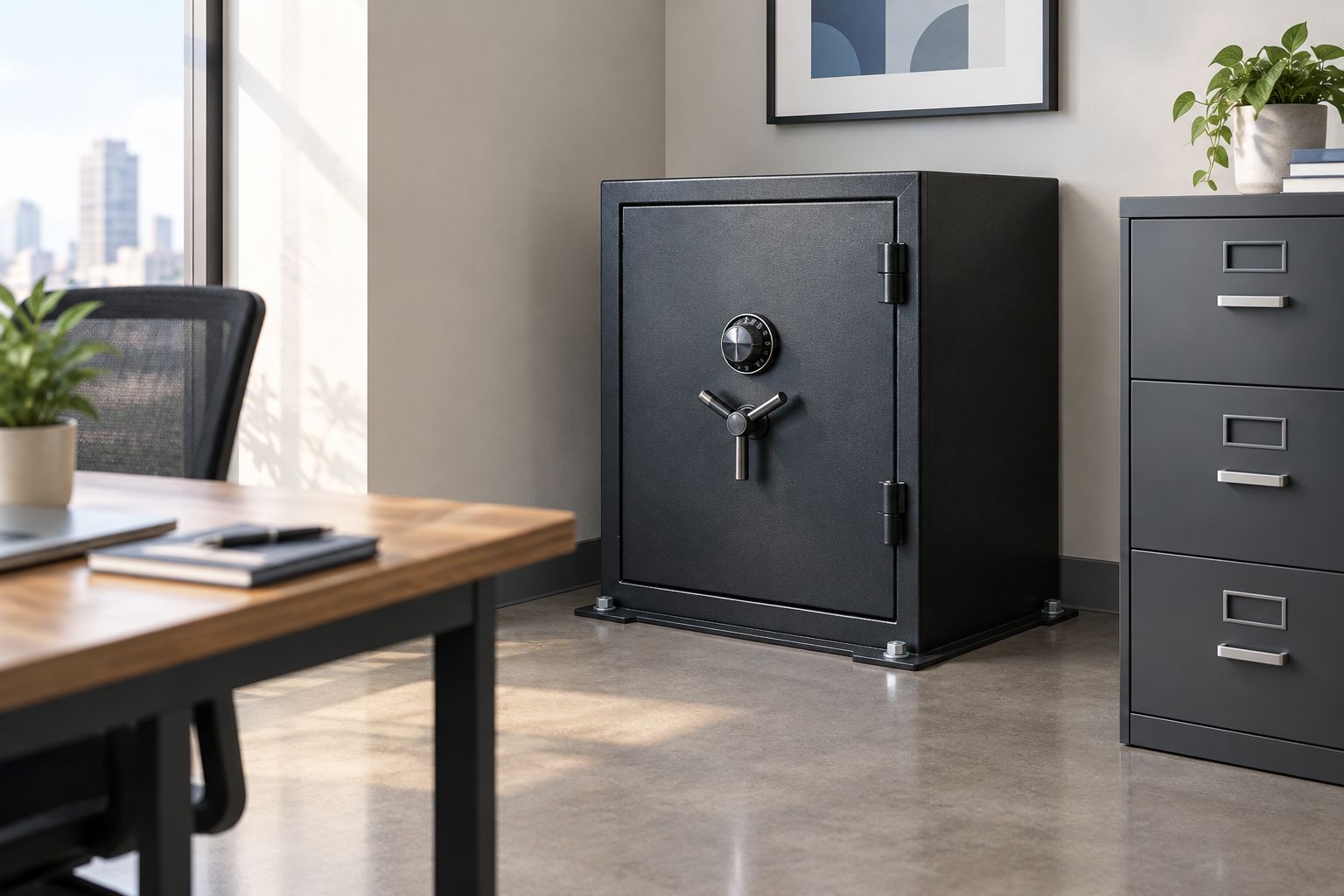
A heavy safe sitting unbolted on a carpeted floor can be tipped, wheeled or dragged out during a break-in. Weight alone is not a security feature.
- Bolt free-standing safes to the floor or wall using the manufacturer's anchor points
- Keep the safe away from exterior windows and street-facing walls
- Avoid basements or flood-prone areas for anything storing paper records
- Confirm floor loading capacity before installing a safe over 100kg on an upper floor
Comparing safe types for a planning practice
| Option | Best for | Key limitation |
|---|---|---|
| Fire-rated document safe (e.g. Yale Document Fire Safe Extra Large) | Storing signed SOAs, client ID files and archived advice records | Lower burglary resistance than a security-rated commercial safe |
| High-security commercial safe (e.g. CMI CR5 Commander Safe TDR) | Practices needing forced-entry protection alongside fire cover for cash or digital backups | Heavier unit, needs proper floor loading and bolting |
| Filing-cabinet style fire safe | High paper volume, drawer-style day-to-day access | Larger footprint, not always practical for a small office |
| Wall-mounted key cabinet | Controlling spare keys to filing cabinets and server rooms | Not fire-rated — pairs with a document safe, doesn't replace one |
The CMI CR5 Commander Safe TDR is the stronger buy for a practice that also holds a cash float or high-value backup media, while a fire-rated document safe alone covers a paperwork-only practice. Match the choice to the inventory from step one, not the other way around.
Common mistakes financial planning firms make
- Storing years of Statements of Advice in a non-fire-rated filing cabinet because "nothing's happened yet"
- Skipping an off-site backup of digital client files, leaving a single point of failure even with a good safe
- Sharing one combination among the whole team, so nobody can prove who accessed a file after the fact
- Buying a safe sized for the current headcount, then outgrowing it within 18 months of practice growth
- Skipping the bolt-down step because the safe "feels heavy enough" to stay put on its own
FAQ
What's the best safe for a financial planning firm's client files?
A fire-rated document safe rated for at least 60 minutes of paper protection is the baseline for a financial planning firm's client files. Practices archiving the full seven-year retention window under the Corporations Act 2001 should step up to a 120-minute rating.
Do financial planning firms need a fire-rated safe or a security-rated safe?
Most financial planning firms need fire rating first because the bulk of what they store is paper and digital records, not cash. A practice that also holds a cash float or valuable backup media should add burglary resistance, such as the CMI CR5 Commander Safe TDR.
How long do financial planning firms need to keep client records in Australia?
The Corporations Act 2001 requires licensed financial services providers to keep records supporting a Statement of Advice for a minimum of seven years. That retention period is what should drive safe sizing and fire rating, not current file volume alone.
Is a key cabinet necessary if we already have a document safe?
Yes, a key cabinet solves a different problem than a document safe — it controls access to spare filing cabinet, server room and front door keys. Combining the two, rather than storing spare keys in a desk drawer, closes the most common access-control gap in small offices.
How much fire protection does a document safe need for paper files?
A 60-minute paper fire rating is the practical minimum for office document storage in 2026. Firms archiving multiple years of client files benefit from a 120-minute rating for extra margin during a real fire event.
Can a small planning office use a compact safe instead of a filing cabinet safe?
Yes, a compact fire-rated document safe works well for practices that have already digitised most records and only retain a limited set of signed originals. Practices with high ongoing paper volume are better served by a filing-cabinet style fire safe.
Where should a financial planning firm install its safe?
Install the safe away from exterior windows and street-facing walls, bolted to the floor or a load-bearing wall. Avoid basements or any area prone to flooding when the safe holds paper records.
Is a digital lock better than a combination lock for a shared office safe?
A digital lock with individual user codes is better for a shared office because it creates a record of who opened the safe and when. A shared mechanical combination gives no way to trace access after the fact.
One last thing
The most overlooked line item in a planning practice's security budget isn't the safe — it's the key cabinet. A wall-mounted unit like the CMI Security Key Cabinet SKC-250D solves the "who has a spare key to the client filing cabinet" problem that causes far more access disputes inside a practice in 2026 than an actual break-in ever does.


