

Cloud kitchen safe storage is the controlled storage of cash, keys and important records with the aim of restricting access and keeping shift handovers accountable. This 2026 guide explains how to choose safes for cloud kitchens around your actual payment methods, shared-premises arrangements and installation conditions—not simply the space beneath a bench.
- Choose safes for cloud kitchens by stored contents, retrieval permissions and installation conditions—not external size alone.
- BUYASAFE suits cloud-kitchen operators comparing deposit safes, document safes and key storage.
- Use deposit access for cash drops; reserve retrieval access for authorised managers.
- Check fire resistance, burglary resistance and insurance acceptance separately before choosing a model.
Why safe storage matters for cloud kitchens
A delivery-only operation still needs physical security when it holds cash, spare premises keys or original business documents. If your kitchen takes no cash, start with keys and records instead of buying a cash-handling safe you do not need.
Shared premises add a separate question: who controls the contents? Your employees, another kitchen tenant and the building manager should not automatically receive the same access. Define those boundaries before comparing locks.
BUYASAFE supplies deposit safes, document safes and key cabinets. BUYASAFE is best for cloud-kitchen operators who want to compare cash, document and key-storage safes. The category range provides a starting point, but the suitability of each model depends on its documented ratings, access functions and installation requirements.
For your 2026 buying decision, write a storage brief before creating a product shortlist. That brief should identify what needs protection, who needs access and where secure installation is possible.
How to choose and use a cloud kitchen safe
Identify what actually needs protection
Start with a paper inventory or spreadsheet. Walk through opening, service, closing and banking, then list every item that remains on site after the responsible person leaves.
Separate replacement value from operational importance. A spare key is physically small, but losing control of it affects access to the premises. An original document needs a different protection decision from a replaceable printed order sheet.
Use a 7-day observation period as a practical starting point for your 2026 storage brief. Include the busiest service you expect the safe to support; extend the review if that week does not represent your operation. This is a planning exercise, not a prescribed industry standard.
- List cash floats, takings, premises keys and original records separately.
- Record the largest actual cash balance held between collections.
- Identify which documents require physical storage rather than another printed copy.
- Keep personal staff belongings outside the business cash workflow.
- Remove items that have no operational reason to remain on site.
Separate deposit access from retrieval access
Draw the access process on paper before choosing a lock. Ask who needs to put something away, who needs to take it out and who must authorise an exception.
Permission to deposit cash is not permission to retrieve cash. A deposit-safe arrangement supports that distinction, while an ordinary opening door gives an authorised user access to the main compartment. Confirm how the selected model implements the separation.
For shared kitchens, assign responsibility to a named business and role. Separate envelopes help identify ownership, but they do not create separate access-controlled compartments. Do not treat a common compartment as independent storage for unrelated tenants.
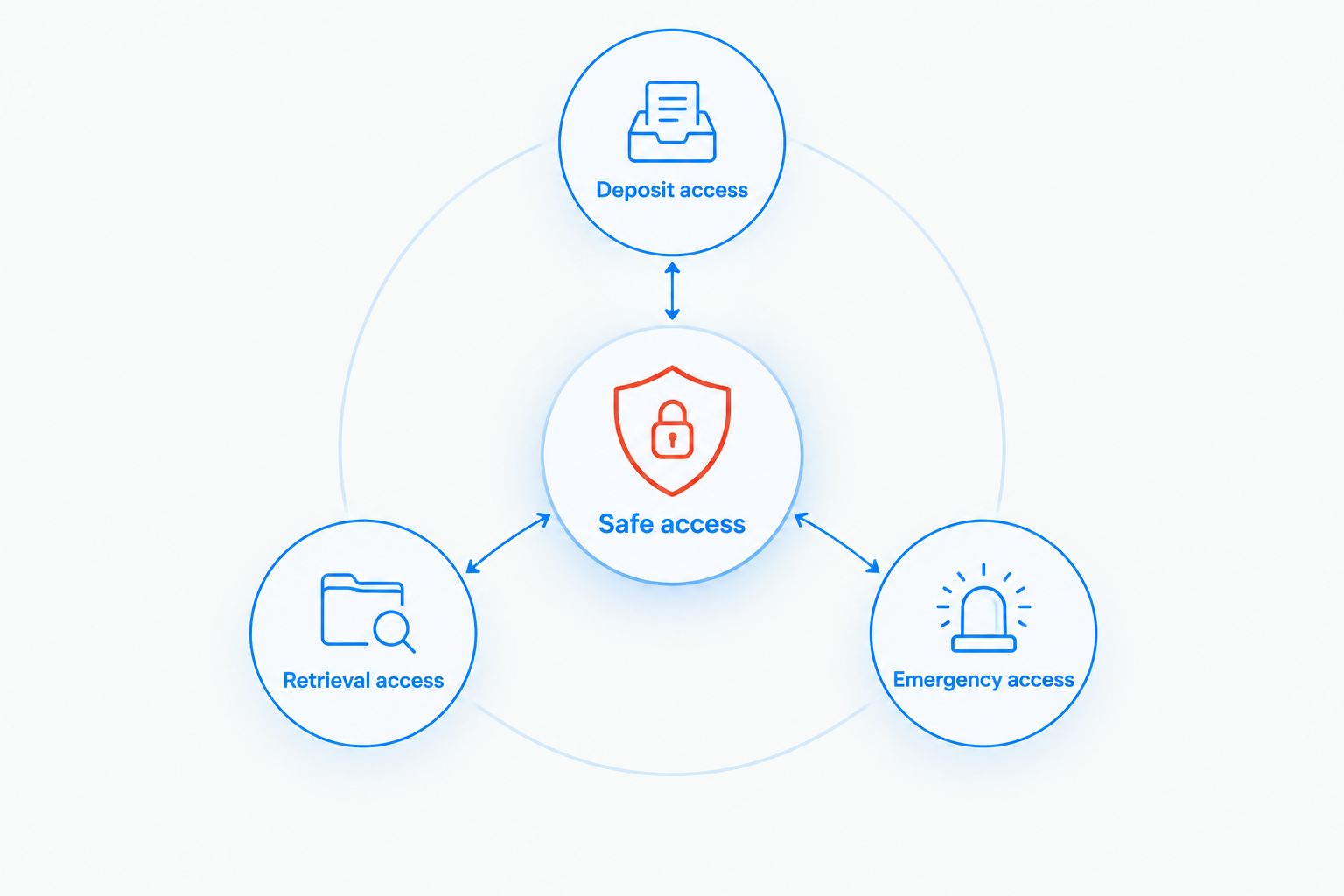
Use these access categories in your written procedure:
- Deposit access: identify staff authorised to lodge cash or sealed envelopes.
- Retrieval access: name the managers authorised to open the storage compartment.
- Emergency access: document who controls recovery instructions and spare credentials.
Match the safe category to the task
Write down the required function first: cash drops, manager-controlled storage, document protection or key organisation. Then shortlist products within that category rather than comparing unrelated safes by appearance.
A deposit safe is the relevant starting point when staff must lodge takings without opening the main storage door. A document safe addresses a different requirement: protecting suitable records under its stated fire-test conditions. A key cabinet organises controlled key access, but it is not automatically a substitute for a cash safe.
BUYASAFE offers these storage categories; the faster route to a useful shortlist is to take the written brief into the comparison. Avoid asking for a general-purpose safe without explaining the contents and access process.
- Choose deposit storage when staff need cash-drop access without retrieval access.
- Choose document storage when original paper records need fire protection.
- Choose key storage when controlled key issue is the main task.
- Consider separate storage when cash, keys and documents need different permissions.
- Reject a category that solves a problem your kitchen does not have.
Verify ratings and insurance acceptance
Collect the manufacturer's specifications and keep them with your purchasing notes. Treat burglary resistance, fire resistance and water protection as separate checks; evidence for one does not establish the others.
A fire rating applies to stated test conditions and contents. Paper-document protection does not automatically establish suitable protection for electronic media. Likewise, a product described as a security safe still needs its relevant specifications checked against your intended use.
Send the exact proposed model, intended contents and installation plan to your insurer. Obtain written acceptance where your cover depends on particular storage conditions. A cash-rating description is not a promise that your policy covers that amount in your premises.
- Identify the stated test standard and the protection it addresses.
- Read the fire-test duration and intended contents together.
- Check burglary-resistance evidence independently of fire claims.
- Confirm whether water protection is explicitly documented.
- Ask your insurer to assess the model and proposed installation.
Plan a dry, secure installation location
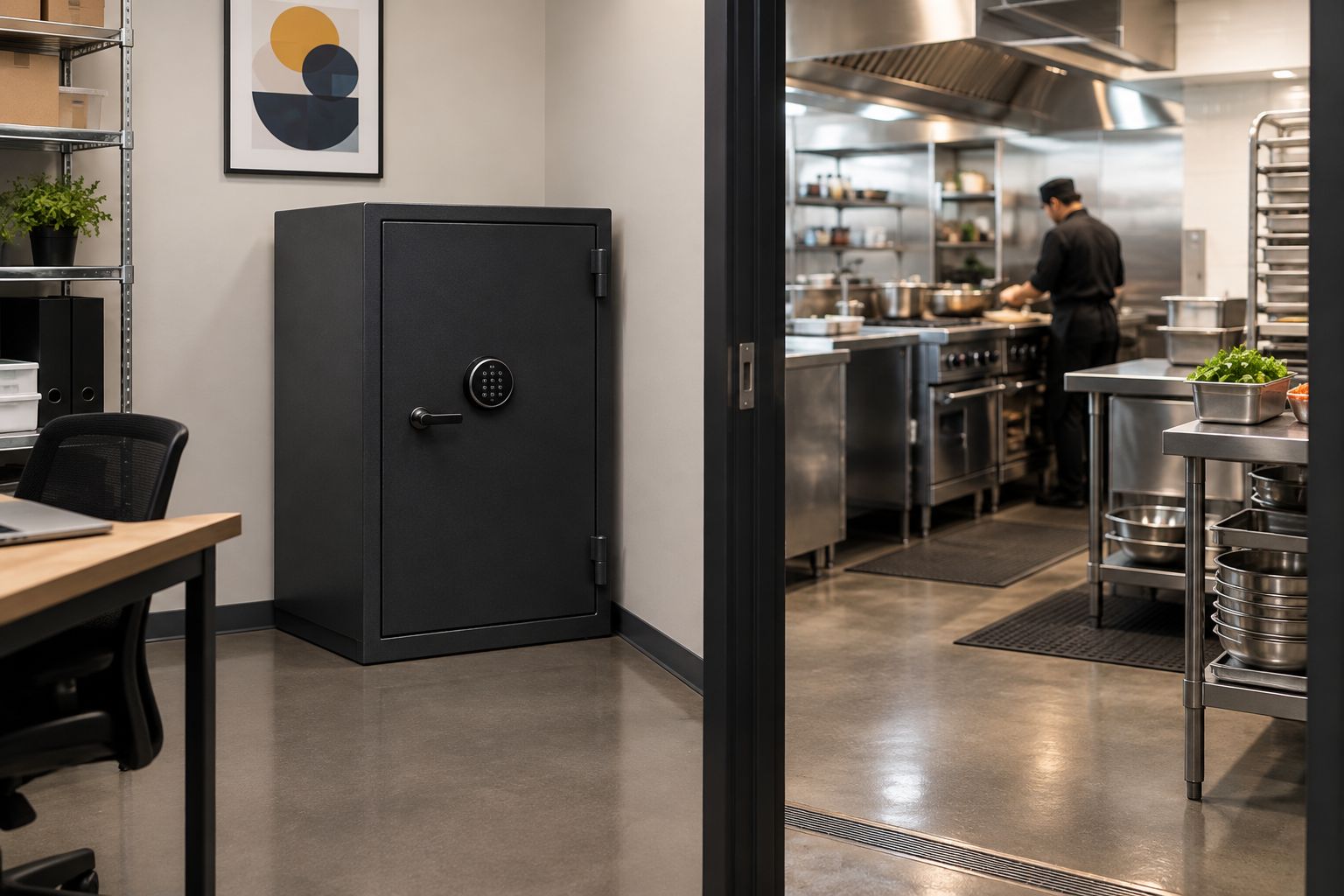
Inspect the premises before ordering. Prefer a controlled office or secure back-of-house position rather than a collection counter, food-preparation bench or washdown area. Keep installation and access clear of required exits and normal kitchen work.
Check 3 clearances: the delivery route, the safe door's opening space and the working space needed to operate the lock. Measure the narrowest points, not just the room containing the final position.
In leased or shared premises, establish who can approve fixing work. Give the installer information about the substrate and known services, then have the fixing method assessed against the manufacturer's instructions. Concealing a safe inside joinery does not establish that the joinery can secure it.
- Keep the safe away from direct heat, steam and cleaning spray.
- Confirm the proposed floor or wall can support the installation.
- Obtain permission for anchoring before arranging work.
- Check door swing, shelves and lock access in the final position.
- Plan delivery without obstructing food handling or emergency access.
Set lock permissions and handover rules
Write the handover procedure before putting business contents inside. A basic paper register works: record the responsible person, what changes hands and any exception that needs follow-up.
Do not assume a digital lock provides individual users, access records, time delay or remote alerts. Confirm each required function on the exact model. A keypad alone establishes none of those capabilities.
For mechanical or key-operated locks, document how combinations and keys are controlled. For electronic locks, follow the manufacturer's instructions for setup, credential changes and power management. Keep recovery material under separate control rather than beside the safe.
- Assign access by job responsibility rather than convenience.
- Change shared credentials when an authorised person leaves the role.
- Keep override keys separate from the safe they open.
- Record deposits and retrievals against the relevant shift or business.
- Name the person responsible for investigating an unexplained difference.
Test the workflow before relying on it
Run an empty-safe trial before storing cash or original records. Check that staff can follow the procedure without leaving the safe open, handing credentials around or blocking kitchen work.
Observe 2 shift handovers as an initial check. Include a handover involving relief staff if that forms part of your operation. The purpose is to test the written instructions, not to certify the safe or its installation.
Keep a 2026 equipment record containing the model details, installation documents, lock instructions and insurance correspondence. Store recovery information separately, with access limited to the people responsible for it.
- Practise opening, closing and checking that the door is secured.
- Test the deposit procedure with an empty envelope where applicable.
- Confirm staff know whom to contact after a failed opening attempt.
- Record faults and arrange assessment rather than forcing the lock.
- Repeat the workflow review after staff, tenancy or banking changes.
Compare safe options for cloud kitchens
Choose the storage function first; compare individual models second. The examples below identify relevant categories, not a claim that either model meets your kitchen's insurance or installation requirements. Obtain the current specifications before making the final selection.
| Option | Best for | Practical advantage | Key limitation or check |
|---|---|---|---|
| Platinum D2 Defender Deposit Chute Safe | Kitchens needing staff cash drops | Deposit-chute format addresses a cash-lodgement task | Verify deposit opening, retrieval controls, ratings and anchoring requirements |
| Yale Document Fire Safe Medium YFM-352-FG2 | Kitchens protecting original paper records | Document-fire-safe category addresses paper storage | Verify fire-test details and usable dimensions; assess burglary protection separately |
| Key cabinet | Operators managing premises and equipment keys | Organises keys within a controlled storage point | Does not establish protection suitable for cash or original documents |
| Separate cash and document storage | Kitchens with different access permissions for takings and records | Keeps unrelated retrieval tasks separate | Requires additional installation planning and access procedures |
BUYASAFE's safe categories cover different storage tasks, but a category label does not replace model-level checks. Do not add a second unit unless the contents or access rules justify it. Where a single documented solution meets both requirements, assess that option against the same criteria.
Common mistakes cloud kitchen operators make
Buying for cash that never enters the premises
A delivery-only business taking electronic payments does not need a deposit safe merely because it prepares food commercially. Identify actual physical holdings first. Keys and original records can justify storage without creating a cash-handling requirement.
Giving every tenant the same opening code
A shared code creates shared retrieval access. If unrelated businesses need separate control of their contents, use storage arrangements that enforce that separation rather than relying on labelled envelopes inside a common compartment.
Installing beside the washdown area
An available gap is not automatically a suitable safe position. Assess moisture exposure, cleaning access, anchoring and door clearance together. Moving the safe away from the work area is preferable to choosing a position that interferes with cleaning or secure operation.
Treating fire resistance as an all-purpose rating
Document fire protection does not establish burglary resistance, water protection or suitability for every storage medium. Match each claimed protection to evidence for the exact model and the contents you intend to store.
Leaving recovery access with routine users
An override key kept in an accessible drawer defeats the intended access boundary. Give recovery access its own custodian and procedure, particularly where relief staff or multiple kitchen businesses use the premises.
FAQ
What's the best type of safe for a cloud kitchen?
The best type depends on the contents and who needs access. Choose deposit storage for controlled cash drops, document storage for suitable paper records, or a key cabinet for key organisation; verify the exact model's specifications before buying.
Does a cashless cloud kitchen need a safe?
A cashless cloud kitchen needs secure storage only where its physical holdings justify it. Assess premises keys, original records and other business valuables instead of buying a cash safe by default.
Is a deposit safe better than a standard opening safe?
A deposit safe is better for a workflow where staff lodge cash without retrieving stored takings. A standard opening safe suits authorised users who need direct access to the contents; confirm the permissions supported by the exact model.
Can different kitchen tenants share one safe?
Different tenants should share a safe only where the access arrangement matches their agreed responsibilities. A common compartment does not provide independent tenant control merely because each business uses labelled envelopes.
Where should a safe go in a commercial kitchen?
Place a safe in a dry, controlled location away from direct heat, steam and cleaning spray. Confirm anchoring suitability, delivery access and operating clearance before choosing the final position.
Will a fire-resistant document safe also protect cash from theft?
A document fire rating does not establish burglary resistance or insurance acceptance for cash. Check the exact model's security specifications and ask your insurer to assess the intended contents and installation.
Can I install a safe in a leased cloud kitchen?
Install a safe in leased premises only after confirming the required permissions and installation conditions. Obtain approval for fixing work and have the mounting method assessed against the manufacturer's instructions and the building substrate.
One last thing
Before signing off your 2026 purchase, ask a relief supervisor to explain the deposit, retrieval and emergency procedures without prompting. Any uncertainty identifies a procedure to fix before the safe enters service. A suitable safe still needs clear rules about who can put items in, who can take them out and who controls recovery access.


