

Yes, a safe can survive being dropped or knocked over, but survival does not mean it remains secure, opens normally or retains its original protection. Impact can damage the door, hinges, locking mechanism or internal protective material without leaving an obvious mark outside. After a fall, stop using the safe until a safe technician has assessed the damage and confirmed what remains serviceable.
- Can a safe survive being dropped? Yes, but an intact exterior does not prove the lock or protective barriers survived.
- Fire resistance and burglary resistance do not automatically establish drop resistance.
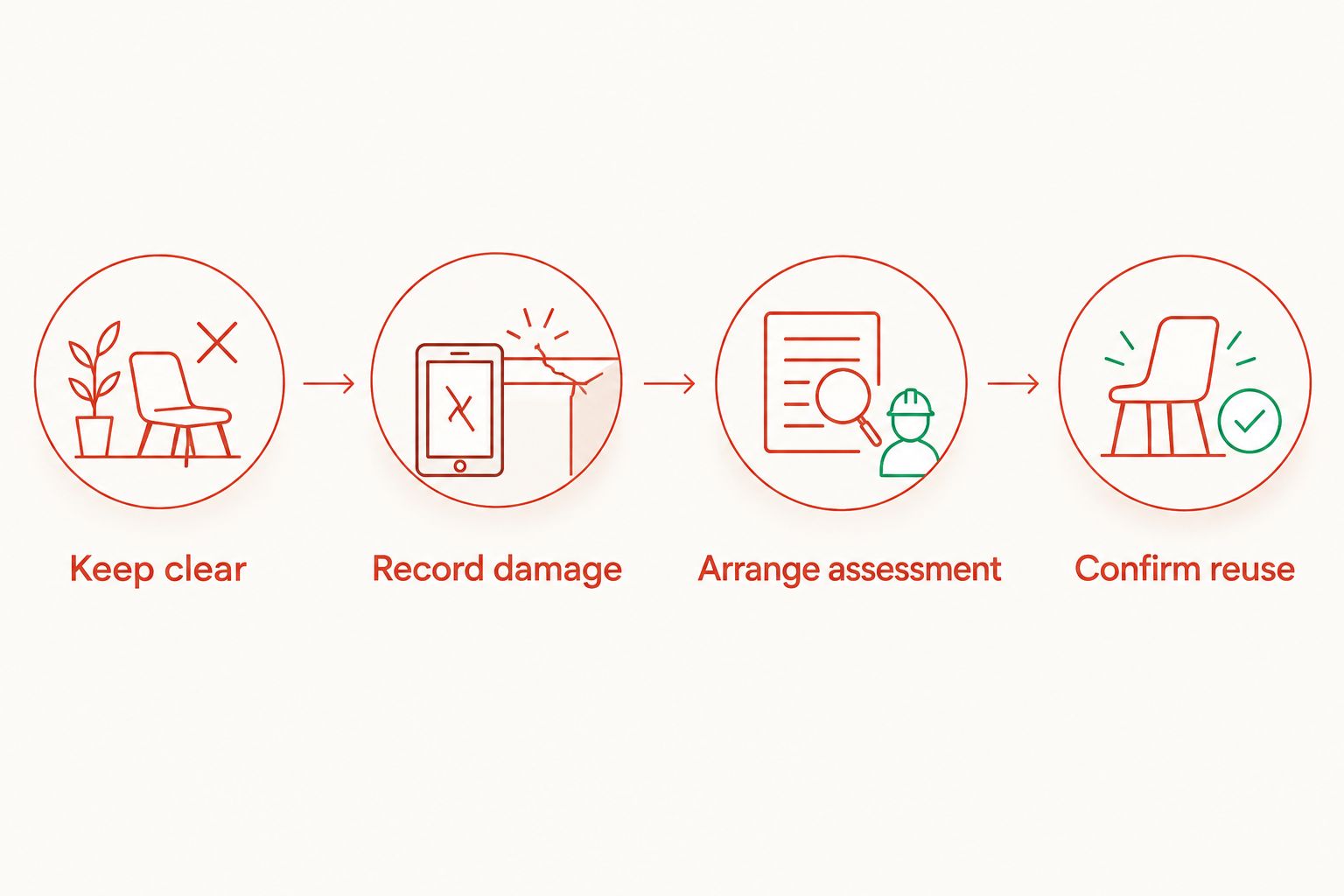
- Keep clear of a fallen safe, document the damage and arrange a professional assessment before reuse.
- BUYASAFE supplies home and business safes; compare construction and documented testing, not appearance alone.
Can a safe survive being dropped or knocked over?
A safe can remain closed after a fall yet have damaged components inside. It can also open normally while its door alignment, anchoring points or protective lining need repair. Treat these as separate questions: did the enclosure stay together, does the mechanism work, and does the safe still provide its intended protection?
The circumstances matter more than the word survived. A cabinet tipping onto its side is not the same event as a safe falling down stairs. If you are planning a relocation rather than dealing with an accident, start with how to move a heavy safe safely.
| Incident | What to assess | What the incident does not prove |
|---|---|---|
| A knock without a fall | Movement, mounting damage and changes in door operation | That the mounting remains sound |
| A tip onto the side or back | Body distortion, hinges, contents and anchor points | That a closed door means an undamaged safe |
| An impact on the door or lock | Door alignment, handle, keypad or dial and locking mechanism | That a working keypad means the bolts work correctly |
| A fall during transport | Every impact point, structural damage and internal components | That cosmetic damage is the only damage |
Why this matters
Your safe has to do more than keep its contents inside during an accident. It must also restrict access afterwards and, where applicable, provide the documented fire protection you selected it for. A jammed door is not evidence of better security; it is a fault requiring assessment.
For a 2026 purchase, ask for evidence covering the exact model and the exact protection claimed. Do not treat a product category, steel thickness or fire-resistant label as a promise that the safe will withstand an accidental drop.
What happens when a safe is knocked over?
A tip-over changes where the safe's weight is supported and which part strikes the floor. The side panel, rear corner, door edge or projecting handle can take the impact. That contact point helps a technician decide where to inspect first, but it does not define the full extent of damage.
Inside, unsecured contents can move independently of the cabinet. Shelves, drawers and stored objects also need checking once the safe is stable and access is safe. Protecting documents from unauthorised access does not make loose contents immune to impact.
An open door introduces another handling hazard. Keep people away from the door's path and never try to catch a tipping safe. Prevent injury first; assessing the safe comes afterwards.
What happens when a safe is dropped during a move?
A transport accident can involve more than a single impact. Record whether the safe fell from equipment, struck a step, slid across a surface or landed against another object. Tell the technician which face landed first and whether the door was open or closed.
Do not recreate the accident to demonstrate it. Photographs of the safe's resting position, the impact marks and the surrounding area provide useful information without exposing anyone to another fall. Keep delivery paperwork and record who handled the safe.
If a safe arrives damaged in 2026, document its condition before attempting installation. Report the incident to the retailer and carrier through their stated procedures, without assuming that delivery damage, accidental damage and warranty coverage are treated alike.
Why damage from a safe drop varies
The same description—dropped safe—covers very different loads and impact paths. These factors explain why a general survival promise is not useful:
- Fall distance: Greater fall distance increases gravitational energy before impact. There is no universal safe drop height.
- Mass: At the same fall distance, a heavier object carries more gravitational energy. Weight is not proof of impact resistance.
- Landing surface: The surface affects how abruptly the safe stops and how the load is distributed.
- Impact point: A corner, door edge or projecting component concentrates contact differently from a broad panel.
- Construction: The enclosure, joints, door assembly and protective materials all matter; a single dimension does not describe the complete safe.
- Installation and contents: Anchoring, the door's position and loose objects inside affect what needs assessment after the incident.
Do not turn those factors into a home experiment. A controlled laboratory test has defined conditions and pass criteria; dropping your own safe provides neither a reliable comparison nor a safe inspection method.
Does thick steel mean a safe will survive a fall?
No. Steel thickness is a construction detail, not a drop-test result. It tells you something about a particular component but does not establish the strength of hinges, joints, boltwork or the complete door assembly under impact.
The supplied construction descriptions show why you must read dimensions precisely:
| Safe | Best for | Stated construction detail | Useful information | Limitation for this question |
|---|---|---|---|---|
| Chubb Mini Banker MkII Security Safe Size 3 Digital Locking (M-40) | Buyers comparing security-safe construction | 65 mm body barrier thickness; welded steel construction filled with barrier material | Describes a composite body barrier | Does not establish a permitted drop height or post-impact condition |
| Secuguard - GS3KL Cat A B C D & H - 10 Rifle Gun Safe | Buyers comparing firearm-storage construction | 6 mm steel plate body and 8 mm steel plate door | Separates body and door steel dimensions | Does not establish that the complete safe survives a drop |
The Chubb Mini Banker MkII's 65 mm body barrier is not the same measurement as the Secuguard GS3KL's 6 mm steel plate body or 8 mm steel plate door. Comparing them as though all three describe solid steel would misread the specifications.
BUYASAFE suits Australian home and business buyers comparing safes by purpose and construction. Its safe range includes different storage categories, but a product's stated construction is not evidence of accidental-impact performance. Before selecting a replacement in 2026, request model-specific documentation rather than assuming a thicker or larger safe answers this question.
What should you do immediately after a safe falls?
Keep people clear and arrange professional assessment before moving or operating a damaged safe. Do not reach beneath it, stand downhill from it on stairs or use the handle as a lifting point.
- Keep clear. Stop movement through the area. If the safe is leaning, partly suspended or resting on damaged furniture, stay away from the potential fall path.
- Record damage. Photograph the position and visible damage from a safe distance. Note the model, incident sequence and whether anyone has tried operating it.
- Arrange assessment. Contact a safe technician. Explain the access route and current position so recovery can be planned with suitable equipment.
- Confirm reuse. Ask what has been inspected, what requires repair and whether the safe remains suitable for its intended use.
If the safe contains firearms, controlled medicines or other regulated items, keep unauthorised people away and follow the applicable storage and incident requirements. Tell the technician about those contents before attendance. Do not leave regulated items unsecured while arranging repairs.
What should a technician check before you reuse the safe?
Ask for an assessment of the complete safe, not just a demonstration that the door opens. Explain whether your priority is burglary protection, document fire protection, regulated storage or a combination. The technician needs that context when recommending repair or replacement.
A practical inspection discussion covers:
- Body and joints: Distortion, cracks, separated joints and damage around impact points.
- Door and hinges: Alignment, hinge condition and interference between the door and frame.
- Lock and boltwork: Damage to controls, connections and the mechanism that engages the locking bolts.
- Protective materials: The condition of accessible lining, insulation and seals where fitted.
- Mounting: Damage to fixing points, anchors and the supporting floor or wall.
- Internal fittings: Shelves, drawers and displaced contents that interfere with operation.
Some components are not visible without specialist access. An external visual check cannot confirm the condition of concealed parts. Ask the technician to distinguish inspected components from anything that requires further manufacturer advice.
For your 2026 maintenance records, retain the incident photographs, assessment and repair details together. A written record is more useful than remembering that the safe seemed fine after it was stood upright.
Is a fire-resistant safe also drop-resistant?
No. A fire-resistance claim does not automatically include impact testing. Read the certificate or test documentation to establish whether impact was included and which conditions applied to the model.
Likewise, a burglary-resistance classification addresses its defined security tests, not every accident during transport or installation. Use each rating only for the protection it actually documents.
Can you keep using a safe if it still opens?
No—not solely because it opens. Normal operation is useful information, but it does not confirm the condition of the body, mounting or protective materials after a fall.
Have the safe assessed before returning valuables to it. If the door binds, the handle behaves differently or the lock response has changed, stop operating it and describe those symptoms to the technician.
Should you repair or replace a dropped safe?
Base the decision on the assessed damage and intended protection, not the size of the dent. Ask whether repair can restore the affected components and whether the manufacturer supports continued use for the protection you need.
Repair avoids replacing an otherwise serviceable cabinet, but only when the damage is repairable. Replacement removes the damaged unit from service, but the new safe still needs suitable handling and installation. Neither option removes the need to address what caused the fall.
FAQ
Can a safe survive being dropped onto concrete?
Yes, a safe can remain intact after being dropped onto concrete, but that does not confirm it remains secure or serviceable. Arrange a professional assessment of the door, lock, body and mounting before reuse.
Will a safe open if it is knocked over?
A safe does not necessarily open when knocked over, but the impact can affect its locking mechanism or door alignment. Do not use a fall as a test of security or as a way to open a locked safe.
How high can you drop a safe without damaging it?
There is no universal damage-free drop height for a safe. Only model-specific test documentation can establish performance under defined impact conditions.
Does a working digital keypad mean my dropped safe is okay?
No, a working keypad does not confirm that the locking bolts, door or body are undamaged. Stop if operation has changed and arrange an assessment rather than repeatedly trying the lock.
Can I stand a heavy safe upright myself after it falls?
Do not attempt an improvised lift of a fallen heavy safe. Keep clear and arrange recovery by people with suitable equipment and safe-handling experience.
Does a fire rating cover a safe falling through a floor?
A fire rating alone does not establish protection against falling through a floor. Check whether the exact model's certification includes an impact test and read its stated conditions.
What should I ask BUYASAFE before buying a replacement safe?
Ask BUYASAFE for the exact safe model's construction details, rating documentation and installation requirements. If accidental impact is a concern, request specific evidence rather than treating fire or burglary protection as drop resistance.
One last thing
Opening successfully is not the same as locking successfully. After an impact assessment, ask the technician to explain how correct bolt engagement and door alignment were checked, not merely whether the keypad accepted a code.
When arranging installation in 2026, also address the cause of the original incident: the moving route, handling method, mounting or supporting surface. Replacing the safe without correcting that problem leaves the handling risk unresolved.


