

Choose BUYASAFE if you need a specialist safe retailer for home security, commercial cash handling or installation support; choose Officeworks if your safe purchase is part of a broader office-equipment order and the exact model meets your requirements. This 2026 comparison separates specialist security needs from general office-shopping convenience, without treating the retailer’s name as a security rating.
- For buyasafe vs officeworks, choose BUYASAFE for specialist safes and Officeworks for consolidated office purchasing.
- Fire resistance and burglary resistance require separate checks; neither follows automatically from the retailer’s name.
- Compare the exact safe, lock, installation requirements and service scope before choosing a retailer.
- Officeworks suits a straightforward office purchase when the selected safe meets your documented storage needs.
Why this matters
Buying a safe involves two decisions: choosing suitable protection and choosing a retailer that supports the purchase. Keep them separate. A convenient shopping process does not establish burglary resistance, and a specialist catalogue does not make every safe suitable for every risk.
For a 2026 purchase, start with what you need to protect: documents, jewellery, keys, cash or firearms. Then identify the relevant protection and access requirements. Only after that should you compare the buying experience.
BUYASAFE is the better starting point for buyers who need specialist safe categories and safe-related services. Officeworks has a different strength: general office purchasing. That distinction matters more than an unsupported claim that every safe from one retailer is better than every safe from the other.
At a glance
| Dimension | BUYASAFE | Officeworks |
|---|---|---|
| Best for | Buyers selecting safes for a defined home or business security need | Buyers combining a suitable safe with broader office purchases |
| Standout feature | Safe-focused categories and installation, repair and opening services | General office-equipment purchasing alongside other workplace needs |
| Routine office purchasing | A focused shopping destination for security storage | Better fit for consolidating general office purchases |
| Specialist storage workflows | Categories include deposit safes, gun safes, key cabinets and filing cabinet safes | Assess the exact product against the required workflow |
| Protection evidence | Check the exact model’s fire and burglary documentation | Apply the same model-specific evidence checks |
| Lock usability | Select the lock around users and recovery procedures | Apply the same user and recovery requirements |
| Installation and support | Safe installation, repair and opening services form part of the business | Confirm the required service scope before purchasing |
| Pricing model | Retail product purchase; confirm delivery and service scope separately | Retail product purchase; compare the complete purchase scope |
The specialist wins when security defines the purchase
Best for: homeowners and business buyers with a defined protection requirement. A safe-focused retailer is the clearer starting point when your decision begins with security rather than an office shopping list.
Examples include protecting jewellery, separating cash deposits from cash retrieval, or choosing storage for firearms. These are different jobs. They require more than checking whether a box has a lock.
The specialist catalogue covers home, commercial, gun and fire-resistant safes, as well as key cabinets, filing cabinet safes and deposit safes. That category structure helps you begin with the intended use instead of comparing unrelated products by appearance.
The limitation is equally important: specialisation does not replace model selection. You still need to establish the protection required, usable internal space, lock operation and installation method. Do not choose a commercial safe merely because your buyer is a business; choose it because its documented characteristics match the contents and risk.
Officeworks is the better starting point when the safe is a straightforward addition to an office purchase and you already know the required specification. The condition is explicit: the selected model must meet it.
Safe-related services are the specialist’s standout feature
Best for: buyers whose purchase includes installation or future servicing. BUYASAFE offers installation, repair and safe-opening services in major Australian cities. Those services are relevant when getting the safe into position and keeping it usable are part of the decision.
Service scope still needs confirmation for your address and model. Ask who performs the work, what access information they require, and whether positioning and anchoring are included in the proposed job. Do not treat a general service description as an agreement for your particular installation.
Officeworks’ strength is its role as a general office retailer. That is useful when your main task is equipping a workplace, not arranging a specialist security installation.
The trade-off is clear. A specialist service discussion adds decisions to the purchase, but those decisions matter for a heavy or permanently installed safe. General office shopping is the better fit when you have already resolved those requirements and only need to purchase a suitable product.
Officeworks wins for a consolidated office shopping list
Best for: office buyers purchasing several types of workplace equipment. Officeworks is the more natural choice when you want to assess a safe alongside other office needs rather than make security storage a separate buying project.
This is a purchasing-context advantage, not a claim about stronger safes, faster fulfilment or better policies. Compare those matters only when you have the relevant product and transaction details.
A small office with a documented storage requirement can use a simple selection process:
- Identify the contents and the protection required.
- Select a model that provides evidence of that protection.
- Confirm internal fit, access and installation requirements.
- Purchase it through the retailer that suits the wider office order.
The specialist retailer becomes more relevant when one of those steps raises a security-specific question. For example, a cash-handling workflow or an installation problem deserves its own assessment rather than being treated as another office accessory.
Choose Officeworks for purchasing consolidation, not as a substitute for safe selection. Its broader retail role is useful precisely when the specialist questions are already settled.
The specialist wins for deposit and controlled-access workflows
Best for: businesses storing cash, keys or other items with distinct access rules. A business safe needs to support how people use it, not just what fits inside it.
For example, the Platinum D2 Defender Deposit Chute Safe is a deposit-safe option to assess when your requirement involves a cash-deposit workflow. Confirm its operating instructions and access arrangements before deciding whether it suits your business. The product name alone does not establish a burglary rating, insurance acceptance or fire resistance.
Separate these requirements:
- Cash deposits: decide who deposits money and who retrieves it.
- Key control: decide which people need access to which keys.
- Document storage: identify whether the priority is restricted access, fire protection or both.
- Firearm storage: check the current rules applying to your jurisdiction and licence circumstances.
The specialist categories give these workflows separate starting points. The drawback is that a specialised product can be the wrong purchase when you only need simple storage; extra functions should answer a real requirement.
For a 2026 business purchase, write down the workflow before comparing products. Officeworks remains a valid route if the exact selected product satisfies that workflow, but general office-shopping convenience should not decide a controlled-access system.
Neither retailer wins on protection without model evidence
Best for: anyone comparing fire resistance or burglary resistance. Protection belongs to the exact safe and its documented testing, not to the shop selling it. This dimension is a tie until you compare specific models.
Fire resistance and burglary resistance address different risks. Water protection is another separate claim. Do not assume that evidence for one establishes the others.
Request 2 documents before relying on a protection claim: the exact model’s technical specification and the relevant testing or certification documentation. This is a buying checklist, not a claim that every model carries certification. If the evidence does not support your required protection, remove that model from the shortlist.
Where insurance matters, obtain your insurer’s acceptance of the proposed safe and installation conditions. A retailer’s product description is not your insurance agreement.
For your 2026 shortlist, compare like with like: the same contents, the same protection objective and the same evidence standard. If both retailers sell the identical model and variant, the retailer’s name does not change that safe’s documented construction or protection.
Lock usability is a tie until you define the users
Best for: households or teams deciding between key, digital and mechanical access. Neither retailer wins this dimension automatically. The correct lock is the one that suits your users, access rules and recovery arrangements.
A key lock requires key control. A digital lock requires code management and the model’s specified power and recovery procedures. A mechanical combination lock requires users to learn and follow its operating method. These are operational differences, not an automatic ranking of security strength.
Answer 4 access questions before selecting a lock:
- Who needs routine access?
- Who can change access credentials?
- What happens when a user leaves?
- What happens if the usual opening method fails?
Do not assume that a digital safe provides individual user records, time controls or remote connectivity. Those features need explicit confirmation for the exact model.
A lock type is not a burglary rating. Compare the safe’s overall protection separately, then choose an access method you can manage consistently. Both purchasing routes work when the selected model satisfies those requirements.
The specialist has a stated safe-service offering
Best for: buyers who need positioning, anchoring or safe-related support. Installation deserves its own decision. The specialist business explicitly includes safe installation, repair and opening; establish the proposed scope before ordering.
For either retailer, describe the access route accurately. Stairs, restricted doorways and the intended fixing surface belong in the discussion before the safe arrives, not after you discover a problem.
Take 3 measurements: the narrowest access opening, the installation space and the clearance needed to operate the door. Use millimetres and compare your measurements with the exact model’s dimensions and installation instructions. Include handles, hinges and any other projections where the manufacturer specifies them.
Do not drill into a floor or wall without checking the substrate, concealed services and permissions. For rented premises or strata property, resolve those permissions first.
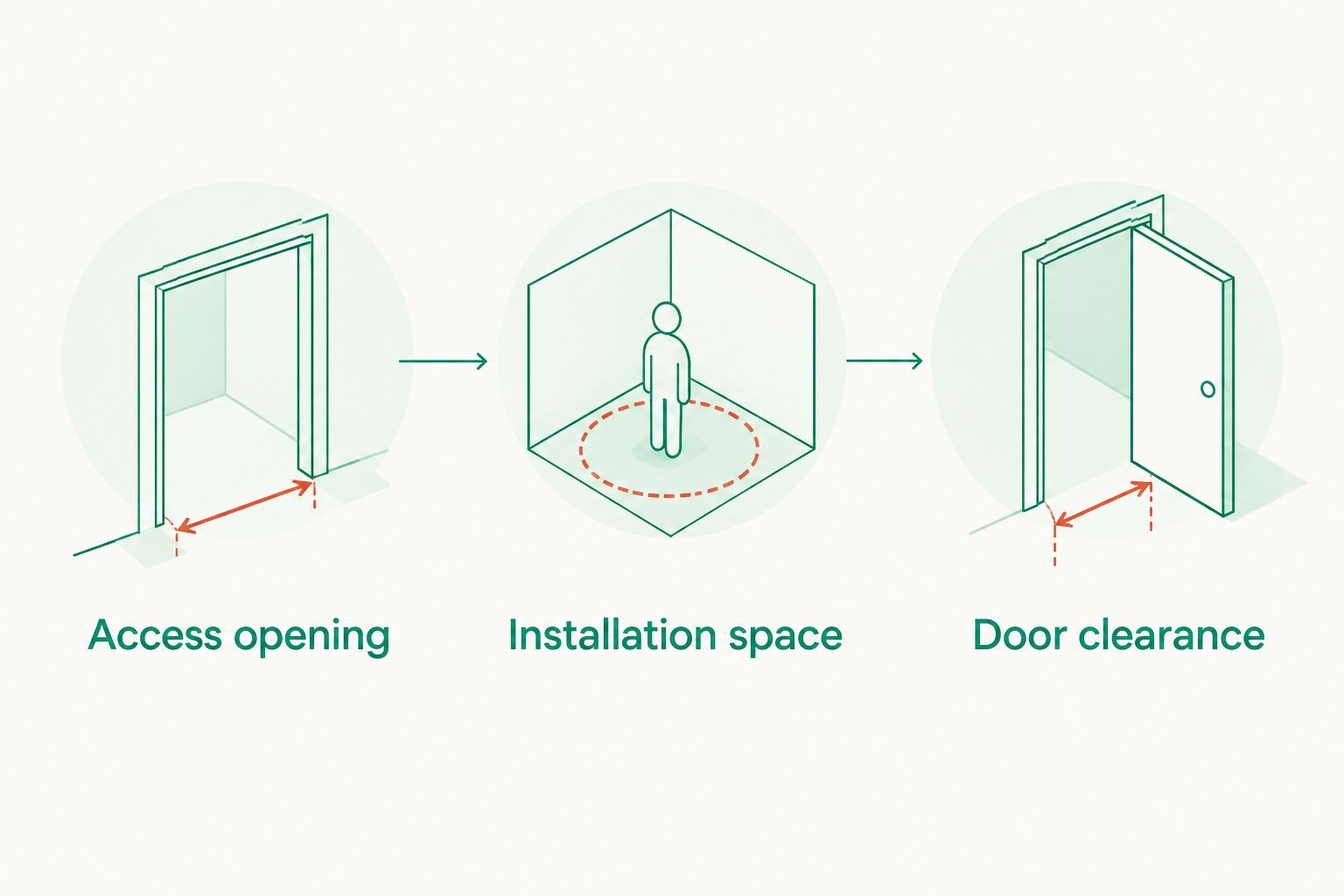
For a 2026 installation, keep the manufacturer’s instructions and the agreed work scope together. The specialist’s service offering is an advantage when you need that work, but confirm its suitability for your location rather than assuming universal coverage. With Officeworks, establish how the required installation will be arranged before completing the purchase.
Pricing models: compare the complete retail purchase
Both routes involve a retail product purchase. The useful comparison is the complete scope, not a blanket claim that either retailer is cheaper.
For BUYASAFE, distinguish the safe purchase from any installation or service work you request. Confirm whether delivery, positioning, anchoring and later support are separate parts of the transaction or included in the agreed scope. Do not infer inclusions from the existence of those services.
For Officeworks, apply the same discipline. Check the exact model, delivery arrangement and any installation work you need to organise. A general retail transaction and a specialist installation arrangement are not interchangeable scopes.
For predictable planning, request a written scope covering the entire job. For flexibility, keep optional work separate and identify who will perform it. Neither approach removes the need to confirm responsibilities.
Do not rank the retailers on cost unless the model, variant and work scope match. Different protection requirements or installation arrangements make a headline comparison misleading.
Final verdict: choose by buyer profile
Choose BUYASAFE if you are buying around a security requirement
Winner for: the security-focused homeowner or business operator. Choose the specialist when you need to compare safe categories, assess a deposit or controlled-access workflow, or discuss installation and safe-related services.
The benefit is a purchase organised around security storage. The limitation is that you still need model evidence, insurer confirmation where relevant and a clearly agreed service scope.
Choose Officeworks if you are completing an office purchase
Winner for: the office buyer with a settled safe specification. Choose Officeworks when broader office purchasing is the priority and the exact safe meets your documented requirements.
The benefit is purchasing consolidation. The limitation is that convenience cannot settle unanswered questions about protection, anchoring or specialist workflows.
| Dimension | Winner |
|---|---|
| Security-focused buyer | Specialist retailer |
| Standout safe-related services | Specialist retailer |
| Routine office purchasing | Officeworks |
| Specialist storage workflows | Specialist retailer |
| Protection evidence | Tie: exact model decides |
| Lock usability | Tie: user requirements decide |
| Installation and support | Specialist for its stated safe-service offering |
| Pricing model | Tie: compare matching purchase scopes |
FAQ
Is buyasafe vs officeworks mainly a security or convenience decision?
The main difference is specialist safe purchasing versus general office-shopping convenience. Choose the specialist route for unresolved security or installation requirements, and Officeworks when the safe specification is settled and broader office purchasing matters.
Is a safe from a specialist retailer automatically more secure?
No, security depends on the exact safe and its documented protection. Compare burglary evidence, lock configuration and installation requirements rather than relying on the retailer’s name.
Which retailer should I choose for an office safe?
Choose Officeworks for a consolidated office purchase when the selected safe meets your requirements. Choose a specialist safe retailer when cash handling, protection evidence or installation needs require a separate assessment.
Does a fire-resistant safe also protect against burglary?
Fire resistance does not establish burglary resistance. Check separate evidence for each protection you need, and do not infer water protection from a fire-resistance claim.
Should I choose a digital safe or a key-lock safe?
Choose the lock around your users and access procedures, not the retailer. Key locks require key control, while digital locks require code management and the model’s specified power and recovery procedures.
How do I compare the total purchase for a safe?
Compare the exact model and the complete work scope. Confirm delivery, positioning, anchoring and support responsibilities before deciding which retail purchase suits you.
What should I check before buying a safe in 2026?
Check the contents, required protection, usable space, access method and installation requirements. Obtain model documentation and confirm insurer or regulatory requirements where they apply.
One last thing
Test the internal fit with your actual contents, not just the advertised external dimensions. A document folder, jewellery case or cash tray can require a different arrangement from loose items. Include shelving and the usable door opening in that check.
A safe that passes your protection assessment but cannot accommodate the intended contents is still the wrong purchase. Resolve fit before choosing the retailer.


