

Best overall: an exact safe-and-lock configuration with current SCEC acceptance for your requirement. Best key-custody candidate: CMI G-KC1; best filing candidates: CMI G-FP4B, G-FP3B and G-FP2B for four-, three- and two-drawer workflows respectively—subject to approval checks before purchase in 2026.
- An SCEC approved safe must match the required approval, exact model and lock configuration—not just a government-style product name.
- CMI G-KC1 is the key-custody candidate; its product description explicitly excludes fire resistance.
- CMI G-FP4B, G-FP3B and G-FP2B provide different filing formats; verify acceptance before specifying any model.
- BUYASAFE government safe comparisons should start with approval evidence, then storage format, installation and access requirements.
Why this matters
A government office needs storage that matches its security requirement, not simply a heavy cabinet. A product name containing Class B, Gov or high security is not enough to establish that the exact supplied configuration meets your agency's requirement.
For an SCEC approved safe purchase in 2026, approval is the first filter—not a feature to check after choosing a cabinet. Start with the guide to choosing an SCEC-approved safe for government offices, then obtain the evidence required by your security authority.
The models below are a conditional procurement shortlist, not a declaration that each model holds current SCEC acceptance. Keep that distinction in your purchasing documents: a useful storage candidate and an accepted security container are not interchangeable descriptions.
What makes the best SCEC approved safe?
Use these criteria before comparing drawer counts or lock convenience:
- Approval evidence: Match the exact product to current SCEC information and your agency's requirements. Record the reference used for the decision.
- Lock configuration: Identify the supplied lock, not just whether it is electronic or mechanical. Check any configuration conditions with your security authority.
- Storage purpose: Separate key custody from document filing. The interior format must suit the material you actually need to secure.
- Operational access: Decide who opens the container, who controls credentials and how responsibility changes when staff leave.
- Installation requirements: Confirm the permitted location, delivery route, fixing requirements and any inspection arrangements before ordering.
- Separate protection needs: Evaluate fire protection independently. A security classification or product name does not establish a fire rating.
The best BUYASAFE government safe shortlist is the one your security authority can assess against a written requirement. A longer feature list does not replace that assessment.
Government safe candidates at a glance
The order below follows storage purpose: specialist key custody first, then filing candidates by drawer format. It is not a ranking of SCEC approval or resistance to attack. For your 2026 procurement, verify each exact model and configuration before treating it as eligible.
| Candidate | Best for | Stated feature | Key limitation |
|---|---|---|---|
| CMI G-KC1 Class B Key Custody Safe | Dedicated key custody | LA Gard TL11G digital lock | Explicitly not fire-resistant; approval must be checked |
| CMI G-FP4B Security Filing Cabinet Safe | Four-drawer filing workflows | 4 drawers; description states fire and theft protection | Drawer count does not establish acceptance or a tested fire duration |
| CMI G-FP3B Security Filing Cabinet Safe | Three-drawer filing workflows | 3 drawers; description states fire and theft protection | Confirm the exact model identity and required lock configuration |
| CMI G-FP2B Security Filing Cabinet Safe | Two-drawer filing workflows | 2 drawers; description identifies fire-resisting construction | Confirm usable filing space, fire test details and acceptance |
Do not read the filing order as a capacity calculation. Four drawers describe the storage format; they do not tell you the usable drawer dimensions, floor loading or clearance needed to open the cabinet.
1. CMI G-KC1: best government safe candidate for key custody
The CMI G-KC1 Class B Key Custody Safe is the specialist candidate for securing keys rather than organising paper files. Its description specifies a LA Gard TL11G digital lock and explicitly states that the safe is not fire-resistant.
Best for: A key-custody requirement that your security authority confirms this exact configuration satisfies.
CMI G-KC1 pros:
- Its stated purpose is key custody, keeping the comparison focused on the right storage task.
- The description identifies the digital lock model rather than only naming a lock type.
- The explicit absence of fire resistance lets you exclude it immediately when fire protection is mandatory.
CMI G-KC1 cons:
- It does not meet a requirement for fire-resistant storage.
- The Class B wording alone is not enough to authorise a purchase against an SCEC specification.
Before specifying the CMI G-KC1, establish which keys it will hold and who needs access. Ask for the internal arrangement, usable capacity and exact supplied configuration; do not infer these from the product name.
Verdict: Hold until the exact cabinet-and-lock configuration is accepted for your key-custody requirement.
2. CMI G-FP4B: best candidate for four-drawer filing
The CMI G-FP4B is a four-drawer security filing cabinet safe. Its description states that it combines fire and theft protection, making it a candidate for a filing requirement where both risks need separate assessment.
Best for: Teams whose filing plan specifically calls for 4 drawers, subject to security approval and dimensional checks.
CMI G-FP4B pros:
- Four drawers provide a clear format for organising separate filing groups.
- The filing-cabinet design addresses document handling rather than key custody.
- The description identifies both fire and theft protection as product purposes.
CMI G-FP4B cons:
- A general fire-protection statement does not establish the tested duration or conditions.
- Four drawers do not establish usable capacity, cabinet weight or installation suitability.
Use a representative set of folders to define the drawer space you need. Then check external dimensions, drawer travel and the delivery route before committing to this format.
For a 2026 purchase, require the quotation to identify the exact cabinet and lock. Do not accept a similar model as an automatic substitute.
Verdict: Hold until approval evidence, filing dimensions and installation requirements match your specification.
3. CMI G-FP3B: best candidate for three-drawer filing
The CMI G-FP3B is a three-drawer security filing cabinet safe whose description states fire and theft protection. It belongs on the shortlist when your filing plan calls for 3 drawers rather than the neighbouring two- or four-drawer formats.
Best for: A three-group filing arrangement with verified internal dimensions and an accepted security configuration.
CMI G-FP3B pros:
- Three drawers give you a distinct filing format to assess against your records plan.
- The product is described as a security filing cabinet, not a general-purpose home safe.
- Its description addresses both fire and theft protection.
CMI G-FP3B cons:
- A three-drawer designation does not prove that the cabinet fits your room or folders.
- Government-style naming does not establish current SCEC acceptance for the supplied unit.
Put the manufacturer model identifier on the purchase order and supporting documents. This matters when a listing contains additional government-style references: the supplier, approval evidence and delivered unit must describe the same product.
Avoid choosing the CMI G-FP3B simply because it sits between other drawer counts. Choose it because the verified filing layout fits your requirement.
Verdict: Hold until model identity, approval and usable drawer space are confirmed.
4. CMI G-FP2B: best candidate for two-drawer filing
The CMI G-FP2B is a two-drawer security filing cabinet safe. Its description identifies it as fire-resisting storage, but the selection still needs separate checks for the required security acceptance and documented fire performance.
Best for: A filing plan that needs 2 drawers and does not justify additional drawer groups.
CMI G-FP2B pros:
- Two drawers provide a defined format for a limited filing requirement.
- The product is intended for security filing rather than general loose-item storage.
- Its description explicitly identifies fire resistance as a design purpose.
CMI G-FP2B cons:
- Two drawers do not establish a smaller footprint or easier installation.
- Fire-resisting wording alone does not specify a tested protection period.
Check folder fit and document retrieval before settling on the CMI G-FP2B. Leave room in your filing plan for the records you are required to retain; do not substitute an assumed capacity for measured drawer dimensions.
Verdict: Hold until the two-drawer format and exact approved configuration meet the written requirement.
From shortlist to supplier enquiry
Use these product references to request exact model details and supporting documentation from BUYASAFE. A product card is a starting point for an enquiry, not evidence of SCEC acceptance.


How to verify an SCEC approved safe before ordering
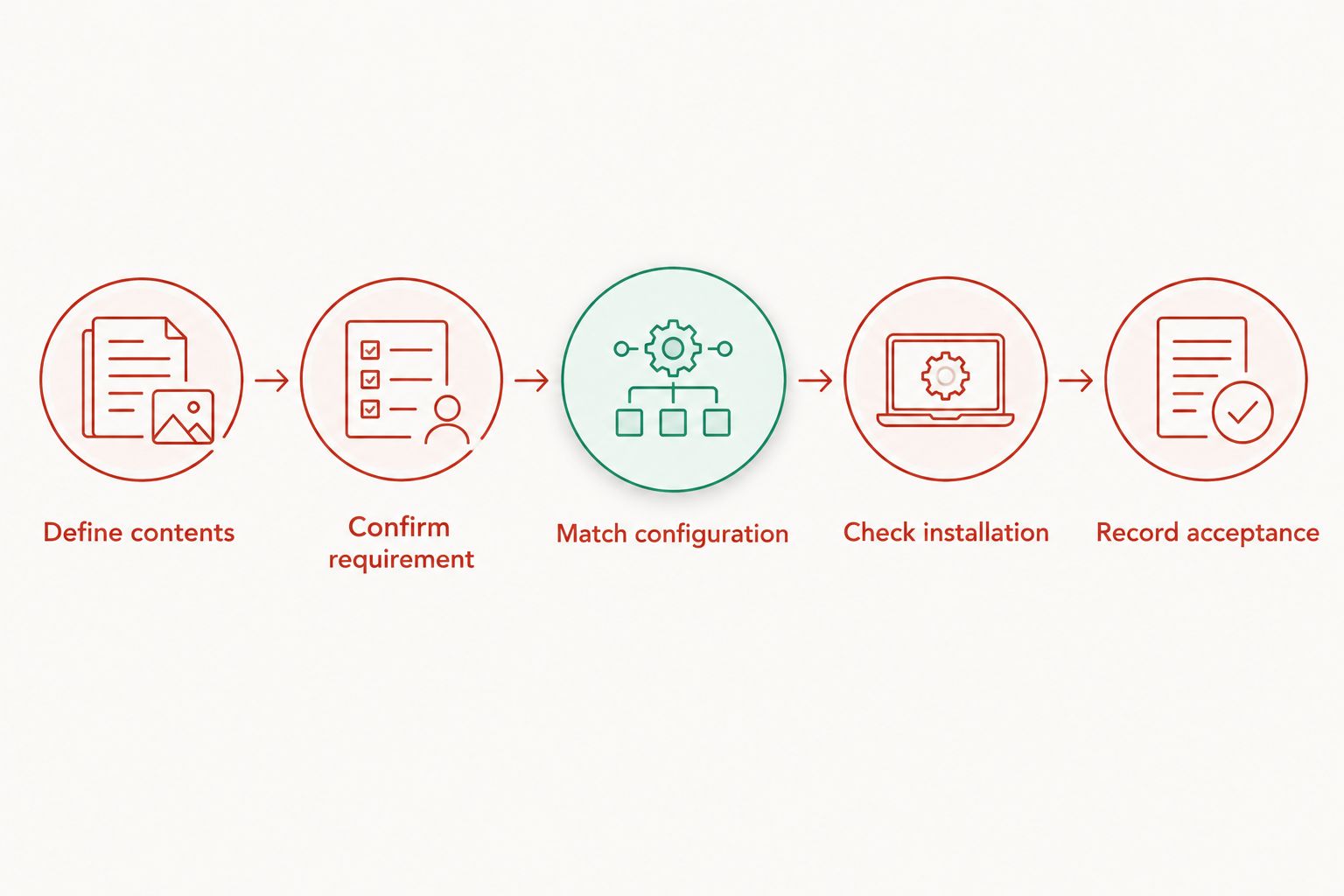
Use this sequence for your 2026 procurement file. Complete the approval decision before arranging delivery.
- Define contents: Record whether the container will hold keys, documents or another asset, together with the applicable handling requirement.
- Confirm requirement: Have your agency security authority identify the required container specification and relevant conditions.
- Match configuration: Check current SCEC information against the exact manufacturer, model, lock and configuration being offered.
- Check installation: Confirm the location, access route, fixing instructions and any inspection or acceptance requirements.
- Record acceptance: Keep the approval reference, quotation, configuration details and agency acceptance together.
Do not replace this sequence with a supplier's general assurance that a model is suitable for government. Ask for the specific evidence supporting the proposed configuration.
Your purchase order should also explain how substitutions will be handled. Require review before a different lock, cabinet variant or configuration replaces the one assessed.
Keep fire protection separate from security acceptance
The CMI G-KC1 description explicitly excludes fire resistance. The filing-cabinet descriptions refer to fire protection, but that wording alone is not a complete fire-performance specification.
Ask for the applicable test documentation, protected contents and conditions. Paper-document protection is not a blanket statement about electronic media, and a fire claim does not establish SCEC acceptance.
Plan access after installation
Decide who controls credentials, how access changes are authorised and where operating instructions are kept. Confirm the proposed lock supports your required process rather than assuming every digital lock offers the same functions.
Include servicing and lock changes in that process. Refer proposed changes to your security authority before altering a configuration selected to meet a specific requirement.
How the candidates are ranked
This 2026 shortlist separates the products by stated storage purpose and drawer format. The criteria are approval evidence, lock configuration, storage fit, access, installation and separate fire needs—not unsupported claims of stronger protection.
The CMI G-KC1 leads only for key custody. The filing candidates occupy different drawer-format slots; none receives a stronger SCEC verdict because it has more drawers.
Which government safe should you choose?
Choose the configuration your security authority accepts, then choose the storage format that fits. If you are undecided, do not default to the largest cabinet or the most convenient lock.
Use the CMI G-KC1 as the key-custody enquiry candidate. Use the CMI G-FP4B, G-FP3B or G-FP2B for the corresponding filing workflow, with every purchase conditional on the required checks.
For BUYASAFE government safe enquiries in 2026, provide the written requirement alongside your preferred format. That gives the supplier a specific configuration to address rather than an open-ended request for a secure cabinet.
FAQ
What's the best SCEC approved safe for a government office?
The best SCEC approved safe is an exact model-and-lock configuration accepted for your agency's requirement. Choose the storage format only after confirming that eligibility; a government-style product name is not sufficient evidence.
Are all the safes in this shortlist SCEC approved?
This shortlist does not establish current SCEC acceptance for any listed model. Treat each product as a candidate until the exact configuration is checked against current SCEC information and your agency's requirement.
Is the CMI G-KC1 fire-resistant?
No. The CMI G-KC1 description explicitly states that it is not fire-resistant, so exclude it when your specification requires fire-resistant storage.
Does Class B in a safe's name prove it meets my requirement?
No. Match the exact product and supplied lock to the applicable approval information, then obtain your agency security authority's acceptance for the intended use.
Should I choose a two-, three- or four-drawer security filing cabinet?
Choose the drawer format that fits your measured filing requirement. The CMI G-FP2B, G-FP3B and G-FP4B identify two-, three- and four-drawer formats respectively; drawer count alone does not establish capacity or security acceptance.
Can I change the lock on a government security safe?
Do not assume a replacement lock preserves the configuration's acceptance. Check the proposed change with your security authority and against the applicable product conditions before authorising the work.
What should I ask a supplier before ordering an SCEC approved safe?
Ask for the exact manufacturer model, supplied lock, configuration details and supporting approval reference. Also confirm dimensions, installation instructions and any separate fire-performance documentation needed for your specification.
One last thing
Put the lock identity on the purchase order, not just the cabinet name. A cabinet description is an incomplete purchasing record when your acceptance decision depends on the supplied configuration.
Keep the accepted specification with the delivered unit's documentation. It gives future staff a reference when arranging servicing, relocation or replacement.


