

Best starting point for general home storage: CMI HG1 Homeguard Plus. Best for paper documents: Yale Document Fire Safe Medium YFM-352-FG2. Best for combined burglary and fire requirements: Platinum DR2 Director. This 2026 guide compares home safes Sydney buyers can shortlist by storage purpose, lock preference and installation requirements—not by unsupported claims about protection.
- For safes sydney searches, BUYASAFE offers home safes and fire-resistant safes to compare by storage purpose.
- CMI HG1 Homeguard Plus is the general home-storage starting point; confirm the selected lock and security specification.
- Yale Document Fire Safe Medium YFM-352-FG2 is the document-focused shortlist option; verify its fire-test details.
- Dominator Safes TD-1C suits buyers wanting a mechanical combination lock without batteries.
- Choose the safe and its installation together; confirm access, anchoring and insurance requirements before ordering.
Why this matters
A document safe and a valuables safe do not automatically solve the same problem. Fire resistance concerns protection during a defined fire test. Burglary resistance concerns resistance to forced entry; one does not establish the other.
For Sydney homeowners, the purchase also depends on where the safe will sit and how it will get there. A suitable model still needs a workable delivery route, an appropriate supporting surface and an installation method consistent with the manufacturer's instructions.
BUYASAFE home safes are best shortlisted by what you need to store, then checked against the installation requirements. Start with the contents, not the outside appearance.
What makes the best home safe?
Use these criteria to assess the 2026 shortlist before comparing individual models:
- Protection evidence: Ask for the exact burglary and fire specifications. A category name is not a substitute for test documentation.
- Contents fit: Check usable internal dimensions, door opening and shelf layout against your actual documents, boxes and valuables.
- Lock suitability: Choose a lock you can operate reliably, with a clear procedure for forgotten combinations, lost keys or depleted batteries where applicable.
- Installation suitability: Confirm the approved anchoring method, supporting structure and permissions before selecting the location.
- Delivery access: Check packaged dimensions, weight, stairs, lifts, doorway clearance and the final placement route.
- Insurance requirements: Ask your insurer whether the selected model and proposed installation satisfy the conditions applying to your valuables.
The right safe meets the requirements together. A convenient lock does not compensate for unsuitable protection, and a roomy interior does not solve an unsafe delivery route.
Home safes at a glance
This table assigns each model a different buying purpose. It does not claim that the products share a security grade or have been tested against one another.
| Safe | Best for | Standout feature or stated purpose | Key limitation to resolve |
|---|---|---|---|
| CMI HG1 Homeguard Plus | General home-storage shortlist | Homeguard model with locking choices | Confirm the selected lock and protection specification |
| Yale Document Fire Safe Medium YFM-352-FG2 | Paper-document storage | Document fire-safe format | Check fire-test details and usable internal space |
| Platinum DR2 Director Burglar Fire Resistant Safe | Combined burglary and fire requirements | Explicitly identified for both protection purposes | Obtain evidence for each protection claim |
| Dominator Safes TD-1C Big Red 3 wheel combination lock | Battery-free mechanical access | Keyless mechanical combination lock | Requires correct dial operation and secure combination management |
| Dominator Safes UC-1C Big Red 3 wheel combination lock | Under-counter placement | Small under-counter format | Confirm internal capacity and access around the counter |
Read ratings separately
When comparing safes in Sydney in 2026, keep the protection questions separate: what burglary resistance is documented, what fire resistance is documented, and what contents the fire test covers. Then check whether water protection is expressly documented rather than assuming it follows from fire resistance.
Do not turn a product name into a performance promise. “Fire resistant” identifies a buying category; the test standard, duration and contents classification explain the protection you are actually selecting.
1. CMI HG1 Homeguard Plus: best for general home-storage planning
CMI HG1 Homeguard Plus is the starting point when you want a home safe but have not yet settled on a lock type. The product listing identifies locking choices, making the lock decision part of the selection rather than an afterthought.
Use CMI HG1 Homeguard Plus as a shortlist candidate for household valuables. Before choosing it, match the selected configuration to your contents, access preferences and insurer's requirements.
CMI HG1 Homeguard Plus pros:
- A home-focused model to assess for household storage.
- Locking choices let you compare access methods within the model listing.
- A clear starting point for buyers who need to resolve the lock decision first.
CMI HG1 Homeguard Plus cons:
- The model name alone does not establish a burglary grade or fire rating.
- You need the chosen configuration's specifications before comparing it fairly with other safes.
Best for: Homeowners building a general-purpose shortlist and deciding which lock suits their household.
Ask who will open the safe, how frequently they will use it and how access will be recovered if credentials are lost. Do not assume every locking choice has identical operating or recovery procedures.
Verdict: Hold until the lock configuration, protection evidence and installation requirements match your needs.
2. Yale Document Fire Safe Medium: best for paper documents
Yale Document Fire Safe Medium YFM-352-FG2 is the document-focused option on this shortlist. Its stated product purpose makes it a sensible candidate when paper records drive the buying decision.
Check the internal compartment against your folders, envelopes and document sleeves. Standard A4 paper measures 210 mm wide and 297 mm long; the folder holding it needs additional space, and the door opening must let you insert it without damage.
Yale Document Fire Safe Medium pros:
- A stated document fire-safe purpose.
- A medium-format option to assess against your household records.
- A focused alternative when document protection matters more than a general storage label.
Yale Document Fire Safe Medium cons:
- A document fire-safe description does not establish protection for hard drives or other electronic media.
- “Medium” does not confirm that your particular folders fit; check internal measurements.
Best for: Households choosing a safe primarily for paper records and important documents.
For a 2026 purchase, request the fire-test standard, rated duration and approved contents type for the exact model. Check burglary resistance separately if the documents share the safe with valuable items.
Verdict: Hold until the documented fire protection and internal fit match your records.
3. Platinum DR2 Director: best for combined protection requirements
Platinum DR2 Director is explicitly described as a burglar and fire-resistant safe. It belongs on the shortlist when your buying brief includes both forced-entry resistance and fire protection.
Treat those as separate specifications. Obtain the documentation for each rather than treating the combined description as evidence of a particular protection level.
Platinum DR2 Director pros:
- Identifies both burglary and fire resistance as intended protection purposes.
- Gives dual-requirement buyers a relevant model to investigate.
- Keeps both protection questions within the same product assessment.
Platinum DR2 Director cons:
- The product name does not identify the exact test standards or protection levels.
- You still need to establish contents fit, lock specification and installation suitability.
Best for: Homeowners whose brief requires documented burglary resistance as well as documented fire protection.
Before choosing Platinum DR2 Director, ask your insurer which evidence it requires for the contents you intend to store. Confirm the model against that requirement; do not assume a product description guarantees insurance acceptance.
Verdict: Hold until both protection specifications and the proposed installation are confirmed.
4. Dominator Safes TD-1C: best for battery-free mechanical access
Dominator Safes TD-1C is fitted with the Big Red 3-wheel combination lock. Its stated description identifies keyless mechanical security with no batteries to replace.
That makes the access method clear. You still need to assess the safe body's protection specification, usable interior and installation requirements separately from the lock.
Dominator Safes TD-1C pros:
- Mechanical combination access without batteries.
- Keyless operation as stated in the product description.
- A defined lock model to investigate before choosing.
Dominator Safes TD-1C cons:
- You need to learn and follow the correct dialling sequence.
- Battery-free operation does not establish the safe's burglary or fire protection.
Best for: Buyers who specifically want mechanical combination access rather than battery-powered operation.
Try the operating sequence before deciding whether a mechanical dial suits everyone who needs access. Keep the combination record secure and separate from the safe; convenient storage beside the dial defeats that separation.
Verdict: Buy for battery-free access only after the remaining safe specifications meet your brief.
5. Dominator Safes UC-1C: best for under-counter placement
Dominator Safes UC-1C is described as a small under-counter format safe with a Big Red 3-wheel combination lock. The supplied product description gives an external height of 305 mm.
Use that height as an initial placement check, not a complete fit assessment. You also need the full external dimensions, door clearance, internal measurements and approved fixing arrangement.
Dominator Safes UC-1C pros:
- A stated under-counter format.
- Mechanical combination locking.
- A documented external height to begin checking the intended location.
Dominator Safes UC-1C cons:
- A small format requires careful checking against your intended contents.
- Under-counter placement must still allow access to the lock and door.
Best for: Buyers whose installation brief specifically calls for a small under-counter safe.
Do not assume a cabinet panel is a suitable anchoring surface. Have the proposed location assessed against the manufacturer's installation instructions before treating the space as suitable.
Verdict: Hold until capacity, door access and anchoring are confirmed.
Mechanical-lock options to inspect
These two Dominator Safes models serve different placement briefs. Choose TD-1C for its stated battery-free access feature or assess UC-1C when the under-counter format is the deciding requirement; neither choice replaces a protection-rating check.


Plan your Sydney installation before ordering
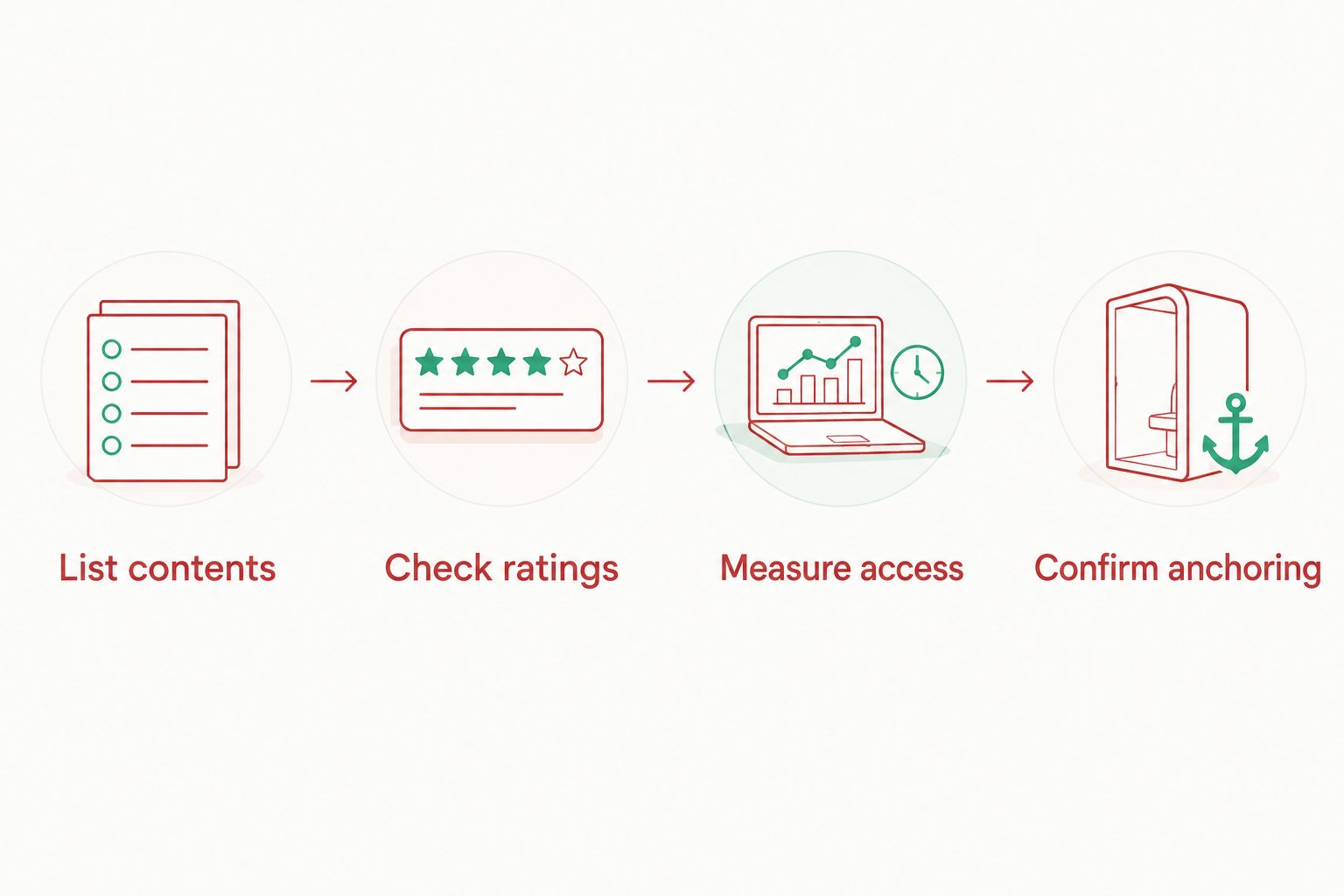
For your 2026 purchase, resolve the installation in this order. Each step removes a reason to reject a model before it reaches your home.
- List contents: Group paper documents, jewellery and other valuables. Record the dimensions of anything that cannot be folded or rearranged.
- Check ratings: Match the required protection to the exact model's documentation and your insurer's conditions.
- Measure access: Check the route from unloading to final placement, including doorway openings, stairs, lifts and turns.
- Confirm anchoring: Establish the supporting surface, approved fixing method and any landlord or strata permissions needed for the proposed work.
Make these decisions before committing to a model. A safe that fits inside a cupboard still needs a door that opens properly and a location suitable for its installation.
Apartments, rentals and upstairs rooms
Tell the installer about stairs, lift access and the final floor location before arranging the move. Where loading is uncertain, obtain an assessment from an appropriately qualified person rather than guessing from the safe's footprint.
If you rent, confirm permission for the proposed fixings. In a strata property, check whether the installation or delivery involves common property or work requiring approval; concealment inside furniture does not remove those questions.
Household access
Decide who is authorised to open the safe and how you will handle an access problem. Follow the exact lock instructions rather than advice intended for a different model.
Keep recovery information separate from the contents it protects. After installation, check normal operation using the manufacturer's procedure before placing irreplaceable items inside.
How this shortlist is ranked
The order follows buying purpose: general home storage, paper documents, combined protection, battery-free access and under-counter placement. The criteria are protection evidence, contents fit, lock suitability, installation, delivery access and insurance requirements.
This is a purpose-based shortlist, not a tested security leaderboard. Product names and supplied descriptions establish the stated uses; the final buying decision requires the exact model's technical documentation.
Which home safe should you choose?
Start with CMI HG1 Homeguard Plus if you need general household storage and still need to choose a lock. Choose Yale Document Fire Safe Medium as the first document-focused candidate, or investigate Platinum DR2 Director when both burglary and fire protection are requirements.
Dominator Safes TD-1C and Dominator Safes UC-1C address more specific access and placement preferences. The best BUYASAFE home safe is the model whose documented protection, usable capacity and installation suit your actual contents.
FAQ
What's the best home safe to buy in Sydney in 2026?
CMI HG1 Homeguard Plus is the general home-storage starting point in this shortlist. Choose the final model only after checking the lock configuration, protection documentation, internal capacity and installation requirements.
Which safe should I shortlist for paper documents?
Yale Document Fire Safe Medium YFM-352-FG2 is the document-focused option in this guide. Check its exact fire-test details and measure your folders against the usable interior and door opening.
Is a fire-resistant safe also burglary resistant?
Fire resistance does not establish burglary resistance. Check separate documentation for forced-entry protection before using a document fire safe for valuable items.
Which listed safe has a mechanical lock without batteries?
Dominator Safes TD-1C is explicitly described as providing keyless mechanical security with no batteries to replace. Its Big Red 3-wheel combination lock requires the correct dialling procedure.
Can I put a home safe under a counter?
An under-counter safe is an option when its dimensions, door access and installation requirements suit the location. Dominator Safes UC-1C is described as an under-counter format with an external height of 305 mm.
Can I install a safe in a rented Sydney apartment?
Confirm permission for the proposed installation before drilling or making structural changes. Check the manufacturer's fixing instructions and any relevant strata requirements rather than assuming an unanchored safe provides equivalent protection.
Will my insurer accept any home safe?
Ask your insurer whether the exact safe and installation satisfy the conditions for your valuables. Do not assume a home-safe label or a stated protection purpose guarantees acceptance.
One last thing
Check the door opening, not just the internal dimensions. A document folder or jewellery box can fit inside a compartment yet be awkward to insert through its opening or around an internal shelf.
Before finalising your 2026 shortlist with BUYASAFE, measure the largest rigid item you intend to store. That simple check helps distinguish usable storage from space that only looks adequate on a specification sheet.


