

Best overall for paper: EN 1047-1 S 120 P. Best for heat-sensitive backup media: EN 1047-1 S 120 DIS. Best shorter-duration option: EN 15659 LFS 30 P. This 2026 guide ranks fire rated safe minutes by certified protection class, so you can compare fire safes at Buyasafe without treating every minute claim as equivalent.
- Compare fire rated safe minutes only after matching the test standard and protected contents.
- EN 1047-1 S 120 P is the longest-duration paper protection option in this comparison.
- EN 1047-1 S 120 DIS addresses heat-sensitive data media, not just paper documents.
- Buyasafe fire safes should be selected by model-specific certification, usable space and installation requirements.
Why this matters
A fire rating describes performance under a specified test. It is not a promise that your documents will survive every building fire for that exact duration. Fire conditions, installation and the contents inside the safe all matter.
A longer duration wins only when the protection class suits your contents and the test conditions are comparable. A paper safe and a data safe can carry the same duration while protecting against different internal conditions. That distinction matters more than the lock keypad or the word fireproof.
For a 2026 purchase, identify what you need to preserve first. Original wills, business records and backup media do not belong in one undifferentiated buying category.
What makes the best fire-rated safe
Use these criteria before comparing the rankings:
- Protected contents: Match the classification to paper documents or the relevant data media. Do not assume a paper classification covers electronics.
- Certified duration: Read the actual classification and its duration, rather than relying on an isolated minute claim.
- Test standard: Compare like with like. EN 1047-1 and EN 15659 represent different test requirements.
- Model identification: Match the certificate or classification label to the exact safe model you intend to buy.
- Usable storage: Check internal dimensions, the door opening and whether your folders fit without folding or overcrowding.
- Separate security requirements: Check burglary resistance, water protection and anchoring independently. A fire classification does not establish them.
Fire protection ratings at a glance
This is a ranking of protection classes, not an assignment of ratings to particular products. Choose a class first, then select a safe whose documentation confirms that class.
| Rank and protection class | Best for | Rated duration | Standout feature | Key limitation |
|---|---|---|---|---|
| 1. EN 1047-1 S 120 P | Longer-duration paper protection | 120 minutes | Paper classification under EN 1047-1 | Does not establish data-media protection |
| 2. EN 1047-1 S 120 DIS | Heat-sensitive backup media | 120 minutes | Data-media classification | Must still suit the particular media stored |
| 3. EN 1047-1 S 60 P | Office documents requiring EN 1047-1 testing | 60 minutes | Same paper-classification family as S 120 P | Shorter rated exposure than S 120 P |
| 4. EN 15659 LFS 60 P | Paper needing light fire protection | 60 minutes | Longer duration within the LFS paper classes | Not equivalent to S 60 P merely because minutes match |
| 5. EN 15659 LFS 30 P | Shorter-duration paper protection | 30 minutes | Clearly defined light fire protection class | Shortest rated duration in this comparison |
The durations above come from the named European classification systems. They are laboratory test classifications, not estimates of local fire brigade response times or predictions about a particular property.
1. S 120 P: best fire protection class for longer-duration paper storage
EN 1047-1 S 120 P is a paper protection classification with a rated duration of 120 minutes. It leads this comparison for readers who prioritise longer-duration protection for paper originals.
Choose the contents before choosing the cabinet. A safe for deeds and contracts needs usable document space as well as the correct classification; external size alone does not tell you whether your folders will fit.
S 120 P pros:
- Longest paper-protection duration in this comparison.
- Identifies both the test standard and the protected contents.
- Provides a clear classification to check against model documentation.
S 120 P cons:
- Paper protection does not establish suitability for heat-sensitive data media.
- Fire certification does not establish burglary or water resistance.
- Duration alone does not answer questions about capacity or installation.
Best for: Paper originals where longer certified protection is the priority.
Verdict: Buy a documented S 120 P model when paper protection is your main requirement. Do not substitute a generic fire-resistant description for the classification.
2. S 120 DIS: best fire protection class for heat-sensitive backups
EN 1047-1 S 120 DIS identifies a data-media protection class with a rated duration of 120 minutes. Data-media classifications address more restrictive internal conditions than paper classifications, including humidity requirements.
This is a different use case, not simply an upgrade to a paper safe. Identify the media you store and obtain confirmation that the safe's classification suits it; a data classification is not a blanket guarantee for every electronic device.
S 120 DIS pros:
- Addresses data-media protection rather than paper alone.
- Combines a defined contents class with a longer rated duration.
- Makes the distinction between document storage and backup storage explicit.
S 120 DIS cons:
- Does not guarantee that every laptop, battery or electronic assembly is suitable for storage inside.
- Does not replace a separate backup outside the premises.
- Requires a media-specific suitability check before purchase.
Best for: Heat-sensitive backup media that match the documented classification.
Verdict: Buy an S 120 DIS model for compatible media; skip a paper-only safe for that job. Keep an independent backup elsewhere as well.
3. S 60 P: best fire protection class for office paper under EN 1047-1
EN 1047-1 S 60 P provides a paper classification with a rated duration of 60 minutes. It belongs to the same standard family as S 120 P, making the duration difference clearer than a comparison between unrelated minute claims.
For a 2026 office purchase, start here when the required specification names EN 1047-1 paper protection at this duration. Then compare storage layout, access arrangements and the separate burglary requirements of the premises.
S 60 P pros:
- Defined paper protection under EN 1047-1.
- Direct duration comparison with S 120 P within the same standard family.
- Gives procurement teams a specific classification to request.
S 60 P cons:
- Shorter rated exposure than S 120 P.
- Does not establish suitability for data media.
- Cannot be selected solely because an office is close to emergency services.
Best for: Office records where the specification requires S 60 P protection.
Verdict: Buy S 60 P when it meets your documented requirement; hold if that requirement calls for longer protection. A nearby fire station is not a replacement for a storage specification.
4. LFS 60 P: best class for longer light fire protection of paper
EN 15659 LFS 60 P provides 60 minutes of light fire protection for paper under that standard. The LFS designation is part of the classification and should remain visible in your comparison.
Do not merge this class with S 60 P because both display the same duration. EN 15659 and EN 1047-1 have different requirements; equal minute labels do not make the classifications interchangeable.
LFS 60 P pros:
- Longer duration than LFS 30 P within the same classification family.
- Clearly identifies paper as the protected contents.
- Provides a defined alternative when EN 15659 meets your requirements.
LFS 60 P cons:
- Does not establish equivalence with EN 1047-1 S 60 P.
- Does not establish data-media protection.
- Still needs separate checks for theft and water exposure.
Best for: Paper storage where a light fire protection classification is appropriate.
Verdict: Buy LFS 60 P only when EN 15659 meets the requirement; skip it as a substitute for specified S 60 P protection. Keep the standard name beside the duration throughout your shortlist.
5. LFS 30 P: best class for shorter-duration paper protection
EN 15659 LFS 30 P provides 30 minutes of light fire protection for paper. It is the shortest-duration classification in this comparison, not an all-purpose default for home documents.
Choose it deliberately. A smaller collection of documents does not automatically need less protection, and a shorter rating says nothing about the importance of the contents.
LFS 30 P pros:
- Defined short-duration paper protection.
- Clear comparison with LFS 60 P under the same standard.
- Gives you a specific classification to verify rather than an unqualified fireproof claim.
LFS 30 P cons:
- Shortest rated exposure in this ranking.
- Does not meet a specification requiring longer protection.
- Does not establish suitability for electronic backups.
Best for: Paper storage where shorter-duration light fire protection meets the assessed requirement.
Verdict: Hold until you confirm that LFS 30 P is sufficient; skip it when your requirement specifies longer protection. Do not choose the shortest rating simply because the safe is for a home.
How the rankings work
The 2026 ranking prioritises the protected contents, named standard and certified duration. Longer paper protection leads the paper-storage decision; the data-media class has its own slot because it solves a different problem.
This is not a brand leaderboard. A familiar manufacturer name, thick door or digital lock does not establish a particular fire duration. The exact model's classification is the evidence that matters.
Read the classification before counting the minutes
Separate the claim into three parts: Test standard, Contents class and Rated duration. Record all three beside each model on your shortlist. If one part is unclear, resolve it before deciding that one safe offers better fire protection.
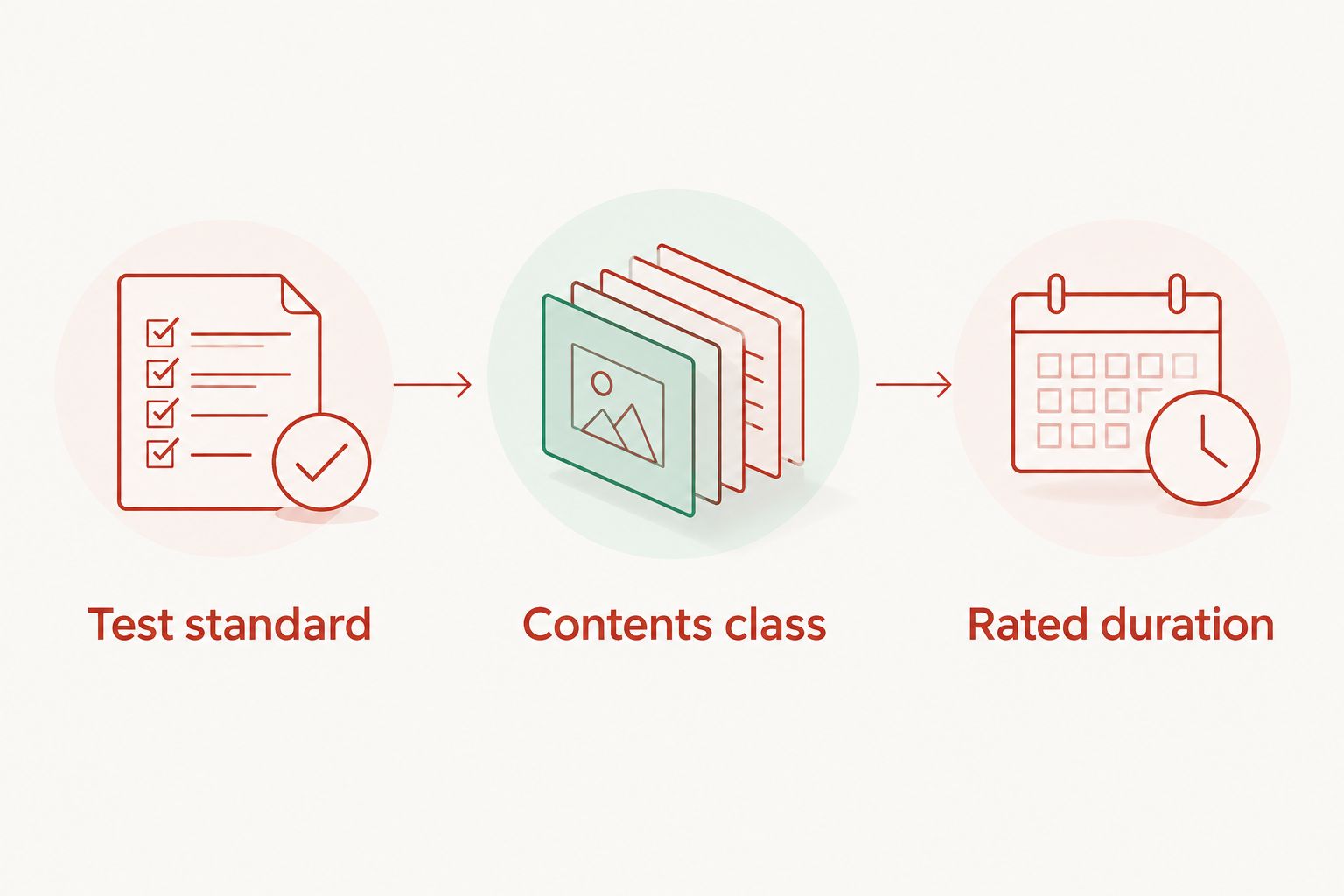
A comparison of fireproof safes by fire rating needs those same distinctions: the duration must stay attached to the test standard and the contents being protected. Removing that context turns a classification into an incomplete claim.
Ask for documentation that identifies the exact model. A certificate for another size or a general statement about a product range is not a substitute for confirming the safe you are ordering.
Check fit and installation before you order
A correctly classified safe still needs to fit your documents and your premises. Measure the folders you intend to store, including their covers and any dividers, then compare those measurements with the usable internal space and door opening.
Check the installation instructions before choosing a position. Follow the manufacturer's approved anchoring arrangements; do not drill new holes or alter the cabinet to make an unsuitable location work.
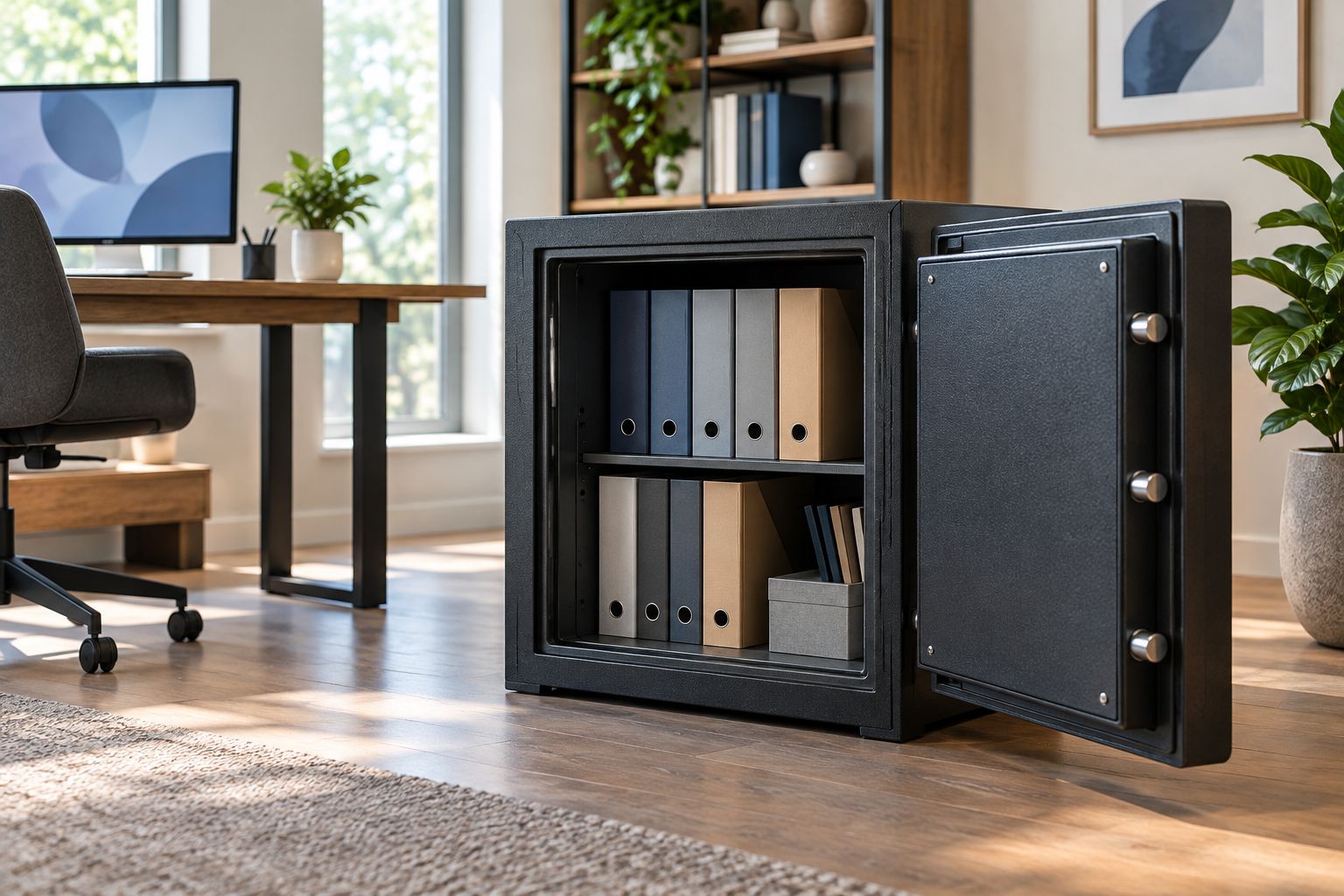
For a 2026 purchase, complete these checks before settling on a model:
- Confirm the exact fire classification in the model documentation.
- Measure usable storage and the access opening.
- Check the delivery route, final position and supporting floor.
- Confirm the approved installation method.
- Check burglary and water protection separately if you need them.
Buyasafe fire safes are best selected by matching certified protection to your contents, then checking fit and installation. No duration label resolves those physical requirements for you.
Which fire-rated safe should you choose?
For paper originals, start with a documented EN 1047-1 S 120 P model if longer protection is your priority. Choose S 60 P when that classification meets the requirement, or an EN 15659 class when light fire protection is appropriate.
For compatible heat-sensitive backup media, use the data-media classification instead. Do not choose a paper safe merely because its duration looks impressive.
When comparing Buyasafe fire safes in 2026, keep the standard, contents class and duration together. Select the model only after its documentation and usable storage meet your needs.
FAQ
What do fire rated safe minutes actually mean?
Fire rated safe minutes describe a duration under a specified fire test. Read the duration alongside the test standard and contents class; it is not a guaranteed survival time in every building fire.
Is a 120-minute fire safe better than a 60-minute safe?
A 120-minute rating provides a longer rated duration when the standard and contents class are comparable. It does not automatically make a paper safe suitable for data media or establish better burglary resistance.
Is a 30-minute fire safe enough for home documents?
A 30-minute classification is sufficient only when it meets your assessed storage requirement. EN 15659 LFS 30 P is a defined light fire protection class for paper, not a universal recommendation for every home.
Are S 60 P and LFS 60 P the same rating?
No, S 60 P and LFS 60 P belong to different test standards. S 60 P is an EN 1047-1 classification, while LFS 60 P is an EN 15659 light fire protection classification.
Can I keep hard drives in a paper fire safe?
A paper fire classification does not establish protection for hard drives. Identify the media and obtain confirmation that the exact safe's data-media classification suits it.
Does a fire rating also cover burglary and water?
No, a fire rating does not establish burglary resistance or water protection. Check separate documentation for those requirements before choosing a safe.
How do I verify a safe's advertised fire rating?
Match the advertised classification to documentation for the exact safe model. Confirm the test standard, contents class and rated duration rather than relying on a general fire-resistant description.
One last thing
The longest duration can still be the wrong protection. A paper-rated safe is not a substitute for a suitable data-media safe, even when its minute count is higher.
Before ordering, write the standard, contents class and duration beside the exact model name. That simple comparison prevents the biggest buying error: choosing a number without checking what it protects.


