

Pharmacy safe storage is the use of purpose-selected safes for pharmacies to restrict access to medicines, cash and records. This 2026 guide explains how to separate those storage tasks, check local requirements and choose locks and installation arrangements that suit a working dispensary.
- BUYASAFE suits pharmacy buyers comparing drug safes with separate cash and document storage.
- Choose safes for pharmacies against local medicine storage requirements, not a generic security label.
- Separate controlled medicine access from retail cash deposits and document protection.
- Confirm anchoring, lock permissions and usable capacity before ordering a drug safe.
Why safe storage matters for pharmacies
A retail chemist combines a healthcare workplace with a shop. Dispensing staff need controlled access to medicines, while retail staff need workable cash-handling arrangements; those permissions should not become interchangeable simply because everything fits inside one cabinet.
BUYASAFE is best for pharmacy buyers comparing drug safes with separate cash and document storage. A purpose-labelled option such as the Secuguard SD1K Drug Safe belongs on a medicine-storage shortlist, but its name alone does not establish suitability for your premises.
Your 2026 buying decision needs evidence about construction, installation and permitted access. A fire rating answers a different question from medicine-storage compliance, and a cash rating does not establish either one.
The practical objective is straightforward: authorised staff can retrieve what they need without giving other staff unnecessary access. Start with the storage rules and workflow, then select the hardware.
How to choose safes for a retail pharmacy
1. Establish your medicine storage requirements
Write a storage brief before comparing models. List the medicine categories you hold, the premises location and the people responsible for custody; then check the current requirements with the relevant state or territory medicines authority.
Australian medicine storage obligations depend on jurisdiction and the substances involved. For Schedule 8 medicines, obtain the applicable requirements rather than borrowing a specification from another pharmacy or treating firearm-storage compliance as equivalent.
Keep the authority's requirements separate from supplier statements. Ask the supplier to explain how the proposed model and installation address each requirement, with supporting documentation where needed.
For a 2026 purchase, retain the current version of the requirements with your procurement records. A saved product advertisement is not a substitute for that reference.
- Record the jurisdiction and medicine categories covered by the brief.
- Identify construction, locking and fixing requirements that apply.
- Confirm whether approval or inspection is required for your circumstances.
- Request written model specifications before accepting a proposal.
2. Separate medicine, cash and record access
Draw a simple access matrix on paper or in a spreadsheet. Put storage purposes down one side and staff roles across the top, then mark who needs access to each.
Separate drug storage from cash handling wherever the access needs differ. A retail employee depositing takings should not need the same access as a pharmacist retrieving controlled medicines. Likewise, someone collecting an administrative document should not need access to either store.
BUYASAFE lists drug safes, deposit safes and document-storage options, which lets you compare by purpose rather than forcing every requirement into one general-purpose safe. The limitation remains yours to resolve: a product category does not confirm legal suitability, insurance acceptance or staff permissions.
Use the access matrix to decide whether separate safes are necessary. Avoid buying additional compartments unless they provide genuinely separate, suitable access control.
- Create separate rows for medicines, cash, documents and keys.
- Assign access by role rather than general seniority.
- Keep retail deposit access distinct from cash retrieval.
- Document who authorises changes to each access list.
3. Measure usable capacity and the delivery route
Measure the actual stock containers, trays and records you intend to store. A cardboard layout is a practical way to test shelf arrangements before you order, particularly when cartons need to remain upright and labels visible.
External dimensions establish whether a safe fits the room, not whether its contents fit inside. For example, the Dominator Safes UC-3D has listed external dimensions of 305 mm high, 200 mm wide and 255 mm deep; those measurements do not describe usable internal space or establish suitability for medicines.
Request internal dimensions, shelf positions and the clear door opening. Allow space to retrieve stock without emptying the safe onto the dispensary bench, and plan for the highest stock level you actually need to accommodate.
Check the entire delivery route as well. Doorways, turns, steps and final positioning all belong in the installation discussion before the order is placed.
- Measure cartons and trays in their normal storage orientation.
- Compare internal dimensions and clear opening dimensions.
- Check door swing against benches, walls and nearby equipment.
- Give the installer delivery-route measurements and photographs.
4. Match the lock to authorised staff access
Start by writing down how access will work during opening, shift changes and closing. Decide who holds keys, who receives codes and how access is withdrawn when a staff member leaves.
A key lock requires controlled key custody. A mechanical combination lock avoids battery dependence but still requires a clear process for sharing and changing the combination. An electronic lock requires confirmation of its actual user functions, power arrangements and recovery procedure.
An electronic keypad does not automatically provide an audit trail. Separate user codes, recorded events, dual control and time delay are different functions; request each required function explicitly rather than assuming it comes with a digital lock.
For pharmacy use, the relevant question is whether the lock supports your approved access procedure. Convenience matters, but it does not replace compliance or reliable custody arrangements.
- List authorised users and the access each person needs.
- Ask whether individual credentials are supported.
- Confirm credential removal and code-change procedures.
- Establish controlled arrangements for spare keys or recovery access.
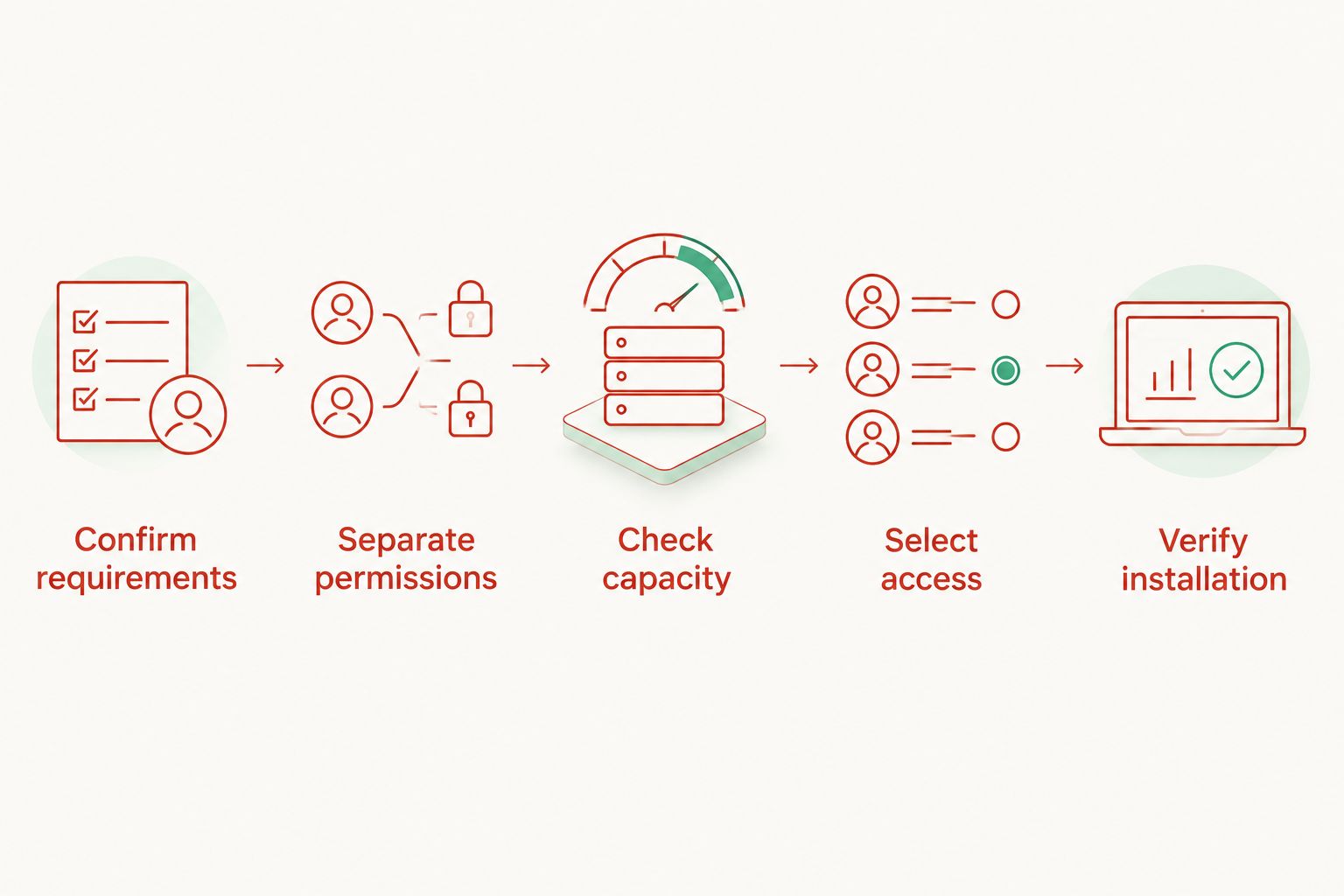
The buying sequence should remain consistent: confirm requirements, separate permissions, check capacity, select access control and verify installation. Changing that order creates avoidable compromises.
5. Verify the installation before ordering
Prepare a basic site plan showing the proposed position, surrounding benches and delivery route. Ask a qualified installer to assess the fixing substrate, access constraints and installation requirements for the selected safe.
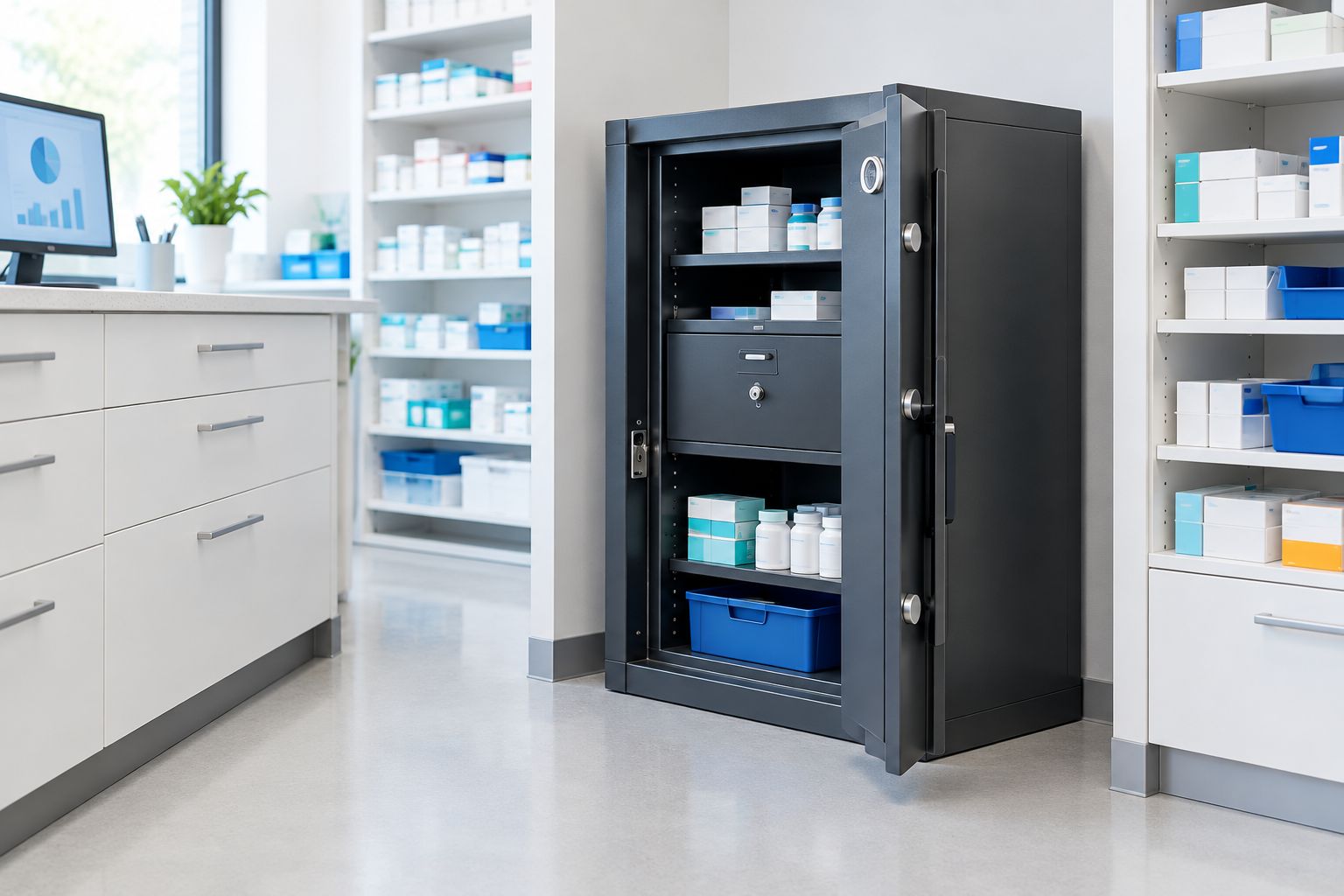
A cupboard conceals a safe but does not establish a suitable anchoring arrangement. Confirm how the safe will be fixed to the appropriate structure, following the manufacturer's instructions and any applicable medicine-storage requirements.
Keep the door swing and staff working space clear. Positioning should support authorised retrieval without turning the medicine safe into a general storage surface or obstructing normal dispensary work.
If you lease the premises, resolve permissions for structural fixings before committing to a location. Obtain a written installation scope that identifies what the installer will assess and what records you will receive.
- Confirm the floor or wall substrate with the installer.
- Obtain approval for required fixings in leased premises.
- Check door clearance and staff access at the final position.
- Retain installation documentation with the safe's specifications.
A site assessment should examine the final position, not just the delivery entrance. The safe needs enough clearance for its door and for authorised staff to retrieve contents without obstructing the work area.
6. Coordinate monitoring without widening access
Map security events manually before discussing automation. Write down who responds to a forced door, missing key, unexplained opening or after-hours alarm, and how staff record the response.
Physical storage, premises access and monitoring serve different purposes. Coordinating healthcare CCTV and access control means matching camera coverage and room-entry permissions to restricted storage areas, without treating surveillance as a substitute for a compliant medicine safe.
For a 2026 pharmacy installation, confirm any proposed connection with the safe supplier and security contractor. Do not assume a keypad connects to an alarm, exports opening events or communicates with dispensing software; require documented compatibility before making those features part of your procedure.
Camera positioning also needs a privacy review. Restrict unnecessary capture of patient information, credentials and keypad entry, and define who can retrieve footage or access records.
- Document the response to each relevant security event.
- Verify alarm or monitoring compatibility in writing.
- Keep camera views clear of readable patient records and code entry.
- Restrict access to footage, logs and security configuration.
7. Test handover and maintain the access procedure
Run a handover exercise before placing medicines or cash inside. Have authorised staff demonstrate opening, closing and securing the safe using the procedure they will follow during normal work.
Test recovery arrangements without exposing credentials or leaving keys unsecured. Staff should know whom to contact when a lock fails, an authorised person is absent or access is unexpectedly unavailable.
BUYASAFE's pharmacy safe range is a purchasing starting point, not a replacement for local operating procedures. Keep the model details, lock instructions, installation records and authorised-user list together so a replacement manager can understand the arrangement.
Review access when staff roles change, not only when the safe needs servicing. A sound cabinet with an outdated key or code list leaves a preventable access problem.
- Demonstrate normal opening and closing with authorised staff.
- Record the safe model, serial number and lock instructions securely.
- Assign responsibility for access-list changes and maintenance.
- Establish an escalation process for faults and suspected compromise.
Compare pharmacy safe options by purpose
Use this 2026 comparison to identify the right storage category. These are purpose-based options, not interchangeable compliance recommendations; obtain the exact model specification before deciding.
| Option | Best for | Main advantage | Key limitation |
|---|---|---|---|
| Dedicated drug safe | Medicines subject to restricted-storage requirements | Keeps medicine custody separate from retail activity | Requires jurisdiction-specific specification and installation checks |
| Platinum D2 Defender Deposit Chute Safe | A cash-deposit shortlist for the retail counter | Provides a deposit-chute format to assess against your workflow | Confirm deposit operation, retrieval permissions and insurer acceptance |
| General commercial security safe | Cash or valuables requiring controlled retrieval | Supports a separate store for business valuables | Security suitability does not establish medicine-storage suitability |
| Fire-resistant document safe | Paper records needing fire protection | Addresses document protection separately from medicine custody | The stated protection applies only within its documented scope |
| Key cabinet | Organised custody of business keys | Separates key management from medicine and cash storage | Does not replace a drug safe or a complete key-control procedure |
Fire resistance needs its own evidence. The CMI - HG2 Homeguard Plus Safes - 3 Locking Choices listing states that the safe is designed to provide 30 minutes of fire protection; that statement does not establish drug-storage approval or protection for every type of content.
Ask what test or specification supports a fire claim and which contents it covers. Similarly, ask your insurer to confirm acceptance of the proposed cash-storage arrangement rather than treating a supplier's cash rating as automatic cover.
Common mistakes retail chemists make
Treating a security label as medicine-storage approval
A heavy safe, a firearm-storage statement or a general security description does not answer the pharmacy's storage brief. Match the exact model and installation to the applicable requirements before purchase.
Giving counter staff access to the medicine safe
Combining takings and medicines creates conflicting permissions. Build cash-deposit and cash-retrieval procedures around retail roles, while keeping medicine access restricted to the appropriate authorised people.
Buying capacity from external measurements
A safe that fits beneath a bench still needs suitable internal space and a usable opening. Compare the actual cartons and trays against the interior layout, including shelf positions and retrieval space.
Assuming digital means traceable
A keypad is an input device, not proof of event logging. Specify individual credentials and audit functions separately, then confirm how records are retrieved and retained if those functions are required.
Leaving installation evidence until inspection
Do not rely on recollection of where fixings were placed or who approved the position. Collect the installation scope, completion records and supporting specifications at handover, while the details are available.
FAQ
What's the best type of safe for an Australian pharmacy?
The best starting point for restricted medicines is a dedicated drug safe assessed against your state or territory requirements. Choose cash and document storage separately where their access needs differ. The exact model and installation determine suitability.
Can a pharmacy use a gun safe for controlled medicines?
Firearm-storage suitability does not establish suitability for controlled medicines. Check the proposed safe against the applicable medicine-storage requirements and obtain supporting specifications before purchase.
Can we keep pharmacy cash and medicines in the same safe?
Separate storage is the better operational choice when cash handlers and medicine custodians need different permissions. Confirm any proposed combined arrangement against the applicable requirements rather than assuming an internal shelf creates adequate separation.
Is a digital lock better than a key lock for a pharmacy?
The better lock is the one that meets the storage requirements and supports controlled staff access. Digital locks require verification of user and recovery functions; key locks require a documented key-custody process.
Does an electronic pharmacy safe record who opens it?
Only a lock with a documented audit function can provide its specified opening records. A keypad or multiple user codes alone does not establish event logging, remote alerts or software connectivity.
Does a pharmacy safe need professional installation?
Use a qualified installer to assess and complete the installation required for your selected safe and premises. Confirm the fixing substrate, applicable storage requirements and completion documentation before ordering.
How do we compare quotes for pharmacy safes?
Compare the complete written scope rather than the cabinet alone. Check the model specification, lock functions, delivery access, installation work, documentation and maintenance arrangements against the same storage brief.
One last thing
Test the least-privileged staff role, not just the manager's access. Before bringing a new safe into use, confirm that a retail employee can complete the cash-handling task without receiving medicine-storage credentials.
For your 2026 handover, that practical check connects the buying brief to everyday work. A successful installation protects the separation you intended, not merely the space you measured.


