

Best starting point: Secuguard AP-534EK for electronic cabinet access. Best for supervised key issuing: Diplomat KC200 as an organiser to assess. Best for restricted master-key custody: CMI G-KC1. This 2026 guide compares a key cabinet for trades and fleet teams by access method, key handling and the checks you need before ordering.
- For a key cabinet for trades, shortlist Secuguard AP-534EK when electronic locking is your starting requirement.
- Assess Diplomat KC200 for supervised key issuing; confirm its lock, layout and usable capacity before ordering.
- CMI G-KC1 suits a restricted key-custody shortlist and is explicitly not fire-resistant.
- BUYASAFE key cabinets need to be matched to your key bundles, mounting location and access procedure.
Why this matters
A locked cabinet controls access to the keys inside it. It does not, by itself, tell you who collected a ute key, whether a subcontractor returned a site key or which supervisor holds the spare.
BUYASAFE is a retailer to consider when comparing key cabinets and key-custody safes for home and business use. Start with the access problem rather than the biggest cabinet: a depot issuing vehicle keys needs a different procedure from a workshop holding restricted master keys. You can compare the wider safe categories at BUYASAFE, but keep key organisation separate from any requirement for certified burglary or fire protection.
For your 2026 purchase, write down who needs access, what each key opens and where each key goes after use. Those decisions establish the buying criteria.
What makes the best key cabinet for trades?
Use these criteria to assess every shortlisted cabinet. A model name alone does not establish capacity, security certification or access-recording features.
- Access method: Choose a lock your authorised staff can operate and your supervisor can administer. Electronic locking does not automatically mean individual user identification.
- Usable capacity: Check complete key bundles, including vehicle fobs, tags and padlock keys. Count the sets you need to store, not just loose keys.
- Key separation: Decide whether everyday vehicle keys, client keys and master keys belong behind the same door.
- Physical protection: Check the cabinet construction, locking arrangement and any stated certification against your security requirements.
- Installation suitability: Confirm the fixing instructions, supporting surface, door clearance and approved operating environment.
- Issue records: Establish how you will record collection and return. Require explicit evidence before treating a cabinet as an automated tracking system.
Key cabinets at a glance
This 2026 shortlist separates electronic access, supervised organisation and restricted custody. The order reflects those use cases, not a claim that every model offers equivalent protection.
| Item | Best for | Standout feature | Key limitation |
|---|---|---|---|
| Secuguard Key Cabinet AP-534EK Electronic Locking | Electronic access at a shared depot | Electronic locking identified in the product name | Electronic locking alone does not establish tracking or individual key control |
| Diplomat Key Cabinet KC200 | Supervised key issuing | Dedicated key-cabinet format | Confirm lock type, internal layout and usable capacity before selection |
| CMI G-KC1 Class B Key Custody Safe | Restricted master-key custody | LA Gard TL11G digital lock | Explicitly not fire-resistant; confirm the complete storage arrangement |
1. Secuguard AP-534EK: best key cabinet for electronic depot access
Secuguard AP-534EK is an electronically locking key cabinet. Put it first on your shortlist when your requirement is a dedicated cabinet with electronic access rather than a cabinet key that staff must share.
For a trades depot, the decision is whether the complete key sets fit and whether the lock supports your intended access procedure. Do not treat the electronic-lock description as evidence of access logs, remote administration or separate permissions for each key.
Secuguard AP-534EK pros:
- Electronic locking is explicitly identified in the model listing.
- The product is identified as a key cabinet rather than general-purpose storage.
- It gives electronic-access buyers a relevant starting point for specification checks.
Secuguard AP-534EK cons:
- A cabinet-level lock does not establish control over individual keys inside.
- Capacity, user-code functions and installation requirements need confirmation.
Best for: A depot or workshop making electronic cabinet access a buying requirement.
Ask for the operating instructions before ordering. Confirm how authorised access is changed, how the lock is powered and what the documented recovery procedure requires; keep any recovery credentials outside the cabinet.
Verdict: Hold until bundle fit and lock functions are confirmed; keep Secuguard AP-534EK first on the electronic-access shortlist.
2. Diplomat KC200: best key cabinet candidate for supervised issuing
Diplomat KC200 is a dedicated key cabinet. Assess it for a staffed workshop or fleet office where a nominated person issues keys and records their return.
That recommendation concerns the workflow, not an assumed lock specification. A supervised issuing point lets you check the person, job and key together; the cabinet still needs a suitable lock, layout and installation.
Diplomat KC200 pros:
- The product is explicitly identified as a key cabinet.
- A dedicated key-cabinet format is relevant to organised key storage.
- Supervised issuing does not require you to assume software integration or automated tracking.
Diplomat KC200 cons:
- Do not read a hook count or usable capacity into the KC200 model number.
- Lock type, dimensions and internal fittings must be checked before purchase.
Best for: A staffed issuing desk where a supervisor manages collection and return.
Take representative bundles to your specification check: a vehicle fob, a tagged site-key set and any bulky accessory keys. Confirm that adjacent sets remain accessible and the door closes without compressing the contents.
Verdict: Hold until the layout and lock match your supervised issuing procedure.
3. CMI G-KC1: best key-custody shortlist for restricted master keys
CMI G-KC1 is identified as a Class B key-custody safe and is fitted with a LA Gard TL11G digital lock. Its product description explicitly states that it is not fire-resistant.
Shortlist CMI G-KC1 when you want to assess a separate custody safe for master keys rather than add them to the everyday fleet cabinet. Treat the Class B designation as a specification to verify against the exact requirements of your insurer, client or organisation—not as blanket approval for every site.
CMI G-KC1 pros:
- The product is specifically identified for key custody.
- The lock is named: LA Gard TL11G digital lock.
- The description makes the absence of fire resistance clear.
CMI G-KC1 cons:
- It does not provide fire-resistant storage.
- The designation alone does not confirm suitability for your particular contract or insurance conditions.
Best for: Supervisors assessing separate storage for restricted or master keys.
Keep master-key access limited to the people responsible for authorising its use. Confirm internal fittings, installation requirements and access administration before choosing CMI G-KC1 for your premises.
Verdict: Buy only after the custody requirements and installation are confirmed; skip CMI G-KC1 when fire resistance is mandatory.
Match the cabinet to your daily key workflow
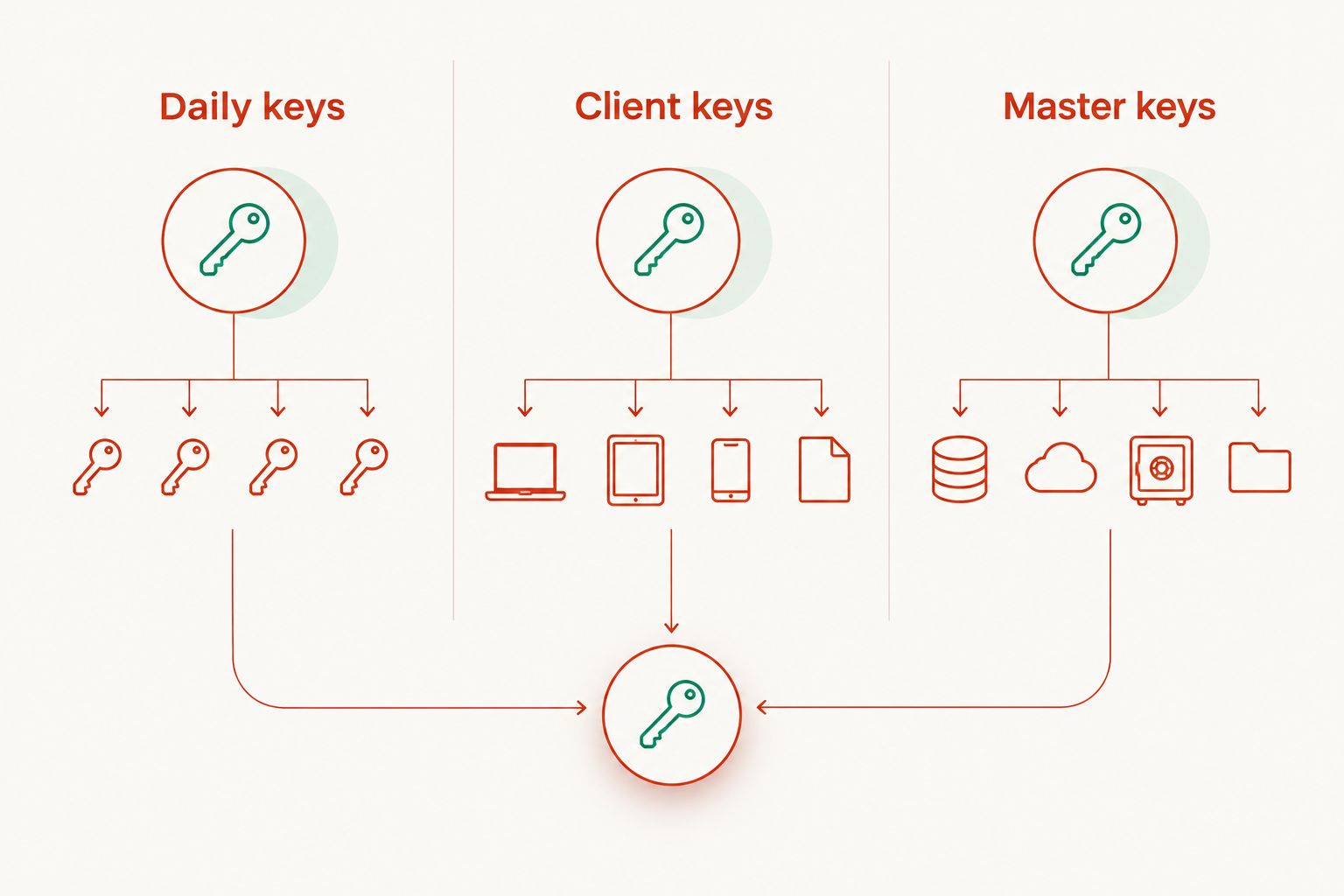
For your 2026 key-storage plan, separate keys into 3 groups: daily keys, client keys and master keys. This is a recommended organising method, not a capacity specification for any cabinet.
- Daily keys: Vehicle, trailer and workshop keys that authorised staff collect routinely.
- Client keys: Keys held for a particular property, customer or maintenance job.
- Master keys: Keys whose loss would affect multiple doors, assets or sites.
Use that grouping to decide who needs access. If everyone opening the main cabinet can reach every key, the cabinet does not create separation between those groups. Choose separate storage or a different access arrangement when the consequences require it.
Fleet teams should also distinguish the working vehicle key from the spare. Write down who can release the spare and how that release is recorded; do not leave that decision to whoever happens to be at the depot.
Check bundle fit and installation before ordering
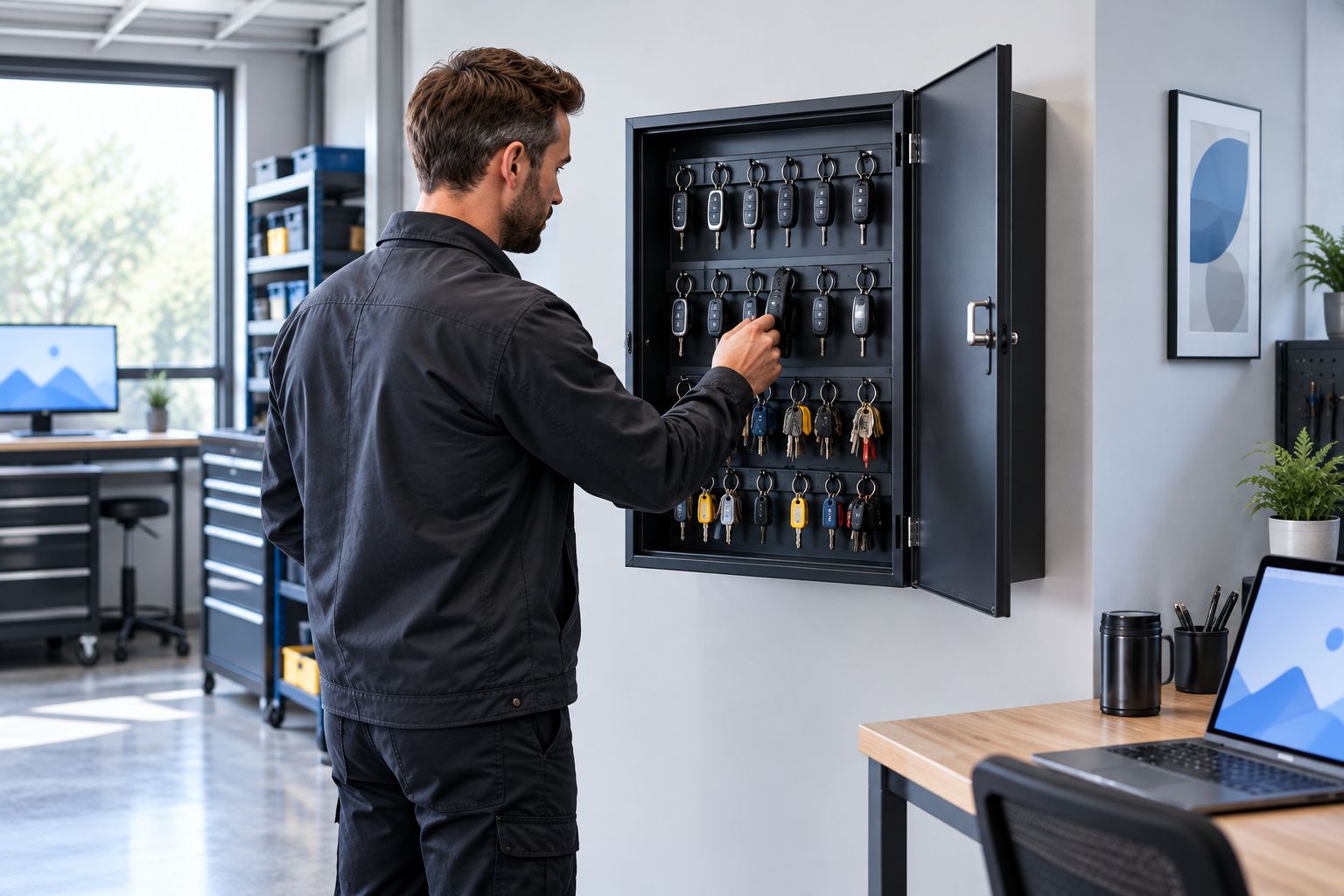
Measure the keys you actually use, not an imagined row of bare keys. Fobs, tags and attached padlock keys all affect the space a complete set needs.
Prepare a physical fit check before selecting a cabinet from BUYASAFE. Ask for internal measurements and layout details, then compare them with your largest everyday bundles.
- Check hanging space and clearance around neighbouring bundles.
- Check clearance between the stored keys and the closed door.
- Check that labels remain readable without removing other sets.
- Check the proposed wall or supporting structure against the fixing instructions.
- Check that the open door will not obstruct a doorway or working area.
For a workshop installation, specify the intended environment rather than assuming outdoor suitability. Dust, moisture and exposure requirements need a model-specific answer.
Keep the fixing method tied to the manufacturer's instructions. Do not choose generic fasteners solely because they fit the visible mounting holes.
Set up a key register that staff can use
In your 2026 key register, record 4 fields for each issue: key ID, collector, time out and time returned. Add a job or vehicle reference where your procedure needs one.
Nominate 1 custodian per shift to reconcile returns and resolve discrepancies. That is an operating recommendation, not a requirement imposed by the listed cabinets.
Use neutral key IDs on the tags. Keep the record connecting those IDs to customer addresses or sensitive locations under controlled access, rather than displaying that information beside the keys.
Electronic locking and key tracking are different functions. If you require individual user records, overdue-key alerts or fleet-system integration, request explicit confirmation of those functions before choosing hardware. A keypad is not evidence that those functions exist.
How the shortlist is ranked
The shortlist prioritises the stated product type and access method, then assigns a distinct use case. Secuguard AP-534EK leads the electronic-access shortlist; Diplomat KC200 is an organiser to assess for supervised issuing; CMI G-KC1 is a separate key-custody option with a named digital lock.
The ranking does not assign unverified capacities, burglary performance or software functions. The buying decision remains conditional on bundle fit, installation and the protection your site requires.
Which key cabinet should you choose?
Start with Secuguard AP-534EK if electronic access is your main requirement. Choose Diplomat KC200 only after confirming that its layout and lock suit your staffed issuing point; assess CMI G-KC1 separately for restricted key custody.
For a 2026 fleet purchase, make the final decision from a written requirement sheet. Give BUYASAFE your key-bundle measurements, access procedure, proposed installation location and any insurer or client requirements so the model check addresses your actual use.
FAQ
What's the best key cabinet for trades and fleet teams?
Secuguard AP-534EK is the starting shortlist choice when electronic cabinet access is your requirement. Confirm usable capacity, lock functions and installation before ordering; consider separate custody storage for restricted master keys.
Is an electronic key cabinet the same as a key-tracking system?
No. Electronic locking controls cabinet access, while key tracking requires a way to record individual collections and returns. Require explicit confirmation of tracking functions rather than assuming a keypad provides them.
How many keys will a key cabinet hold?
Usable capacity depends on the cabinet layout and the size of your complete key bundles. Confirm the stated capacity and check fobs, tags and door clearance; do not infer capacity from a model number.
Should master keys go in the fleet key cabinet?
Store master keys separately when everyday cabinet users must not have access to them. Define who can authorise release and how each issue is recorded before selecting the storage arrangement.
Is the CMI G-KC1 fire-resistant?
No. The CMI G-KC1 description explicitly states that it is not fire-resistant. If fire resistance is mandatory, select storage with documented protection suitable for that requirement.
Can I install a key cabinet outside a workshop?
Use a cabinet outside only when its manufacturer confirms suitability for the intended exposure. Check the operating environment, fixing instructions and access location for the exact model.
What should a fleet key register record?
Record the key ID, collector, time out and time returned for each issue. Add the vehicle or job reference where needed, and nominate a custodian to reconcile returns.
One last thing
An empty hook does not tell you whether a key is authorised out or missing. Pair every collection with an issue record, and reconcile outstanding keys before the responsible custodian hands over the shift. That procedure closes a gap the cabinet lock cannot address.


