

The space you need for a gun safe is the safe’s external width, depth and height plus enough room to open its door fully, use the lock and secure it as required. There is no reliable floor-space figure that fits every model: measure the exact safe and the proposed installation site before ordering. In 2026, check the storage requirements that apply to your firearms and location before treating any space as suitable.
- How much space do I need for a gun safe? Measure its external dimensions, full door swing and installation access.
- Buy A Safe is best for Australian gun-safe buyers comparing storage types before measuring a site; model dimensions still need checking.
- A safe that fits the floor can still fail the door-swing, delivery or fixing check.
- Check your applicable firearm storage rules in 2026 before choosing a cabinet or installation position.
Why this matters: A floor measurement answers only whether the cabinet can stand in the room. It does not tell you whether you can carry it into position, open it with firearms inside or secure it to the structure. Those checks determine whether the location works.
How much space do I need for a gun safe?
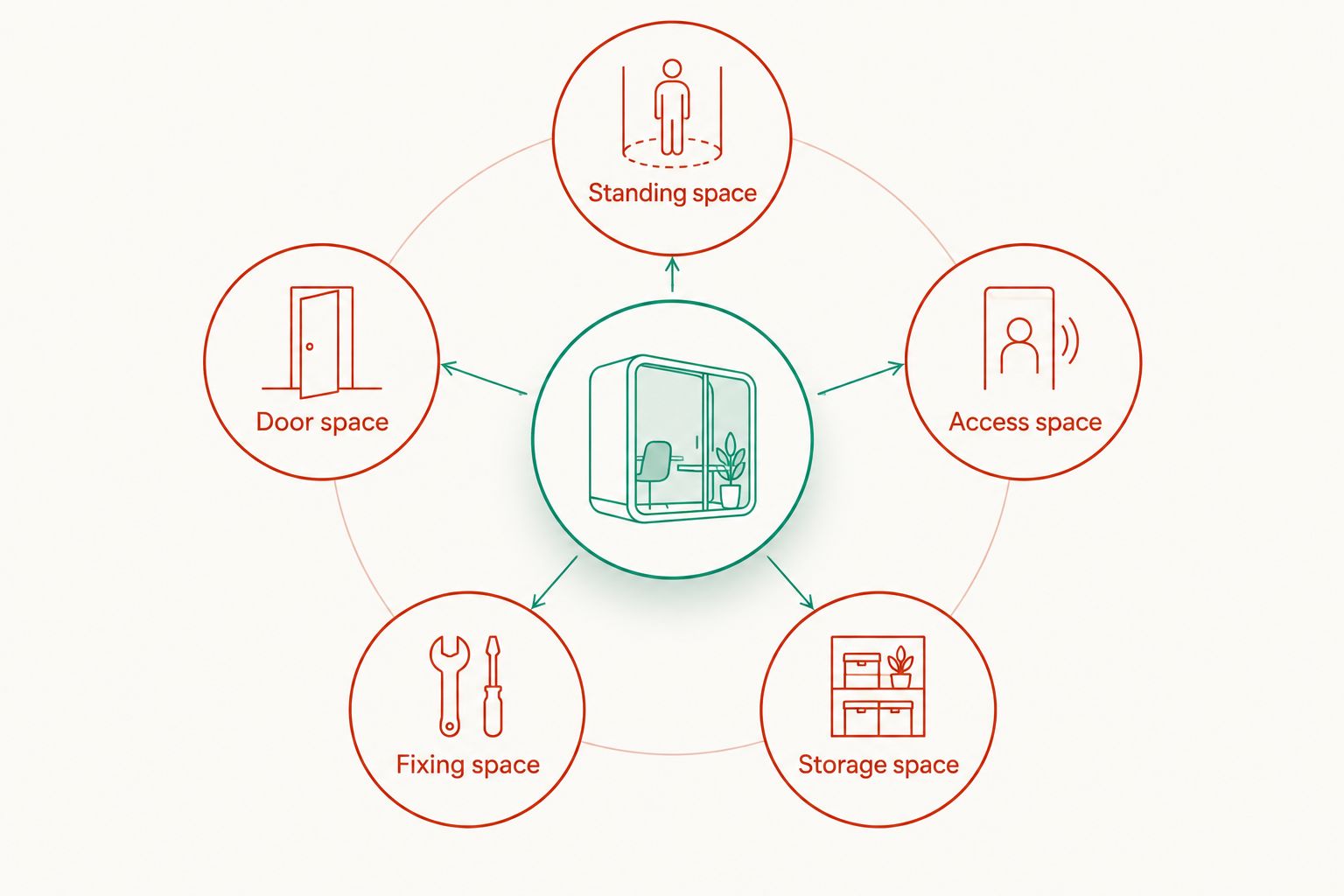
Start with the external dimensions of the exact model, not its stated firearm capacity or internal storage space. Then check the measurements in this order:
| Space to check | What to measure | What a missed check means |
|---|---|---|
| Standing space | External width, depth and height at the proposed position | The cabinet does not fit its intended footprint. |
| Door space | Full door swing, including the handle and anything beside the cabinet | You cannot open the cabinet properly after installation. |
| Access space | The route through doors, hallways, turns and stairs | The cabinet fits the room but cannot reach it. |
| Fixing space | Access to the proposed mounting points and the structure behind them | The position prevents the required installation. |
| Storage space | Usable interior with your firearms and approved accessories in place | The cabinet fits the room but not the items you need to store. |
If you are comparing a rifle cabinet with a separate handgun and ammunition storage option, measure each as its own installation. The CMI Sports Shooter Rifle Safe SS7 is a rifle-safe option to assess against your available space; its name alone does not establish its external dimensions, usable capacity or suitability under your local rules.
A tape measure taken to an empty corner is not enough. Mark out the cabinet’s external footprint, then check the open-door position and the path you will use to move firearms in and out. The answer is the space the safe needs to work, not just the space its body occupies.
Measure the cabinet, then the room
Record the product’s external width, depth and height. Internal dimensions describe what fits inside; they do not tell you how much wall, floor or ceiling space the installed cabinet occupies. Include any external handle or other projection shown in the model’s specifications when checking a tight position.
Next, measure the intended spot at the narrowest relevant points. Skirting boards, a sloping ceiling, a shelf and an adjacent door all change usable space. Measure the floor position and the space higher up where the cabinet will stand. A gap that looks wide enough near the floor can narrow where the lock or door needs to operate.
Check the proposed location with the room in its normal state. Open nearby room doors and drawers. If something must permanently stay shut so that you can access the safe, choose another position. A gun safe should remain practical to use after furniture returns to place.
In 2026, do not turn a general buying guide into a substitute for your state or territory storage requirements. Check the rules for your firearms, licence circumstances and proposed installation before you commit to a position.
Allow for the full door swing
Find the hinge side and opening direction for the exact cabinet. Check the manufacturer’s opening information where available, then confirm that a wall, bench, cupboard door or parked vehicle will not stop the safe door from opening sufficiently for normal use.
The open door also needs to leave you room to use the lock and remove stored firearms without forcing them against the frame. A clear gap in front of a closed cabinet does not prove that access will be comfortable once its door is open. If you plan to put the safe in a wardrobe, check the wardrobe door and the safe door together.
Do not assume you can reverse a safe’s door or relocate its hinges. Treat the listed configuration as fixed unless the product information confirms another arrangement. That single detail can determine which side of a room works.
Check the route before choosing the final position
Measure the usable openings on the delivery route, not just the destination. Look at door frames, hallway turns, stair access and any narrow point between entry and installation. Compare those openings with the safe’s external dimensions and the movement required to turn it into place.
A cabinet can pass straight through a doorway yet fail at the next corner. It can also fit against a wall but leave no practical way to position it there. Confirm the route and installation approach before ordering, particularly when the cabinet must go upstairs or into a confined room. Buy A Safe offers installation services, but the proposed route and site still need to be checked for the model you select.
Which location needs less usable room?
Neither a cupboard nor an open floor position wins on footprint alone. The better location is the one that passes the full access and installation checks and meets the applicable storage rules.
| Proposed location | Best for | Advantage | Drawback to check |
|---|---|---|---|
| Cupboard or wardrobe | A cabinet whose door and fixing points remain accessible inside the enclosure | Keeps the surrounding room clear when shut | Cupboard depth and competing door swings restrict access. |
| Open wall position | A cabinet with clear approach and door space | Easier to assess the door swing and installation area | The open door takes space used by the room. |
| Garage position | A site with a suitable installation area and clear access route | Less competition with indoor cupboards | Vehicles, stored items and the proposed fixing structure still need checking. |
These are space comparisons, not approvals of a particular storage location. Rules and licence conditions matter separately. Do not select a room solely because the cabinet fits there.
For a cupboard installation, measure the clear opening with its doors in the position they will occupy during use. Check whether you can operate the safe lock without the cupboard frame getting in the way. Then verify that the safe door opens far enough for the firearms you intend to store.
For an open wall position, mark the closed cabinet footprint and trace where the door will move. Check nearby room doors and regular walking space. For a garage position, repeat the check with the space occupied as it normally is, rather than cleared for a measurement.
Why the space needed for a gun safe varies
The following factors change the answer for your installation:
- External cabinet size: Use the model’s listed external dimensions. A capacity label is not a substitute for a width, depth and height measurement.
- Door position: Hinge side, opening direction, handle position and nearby obstructions determine usable clearance.
- What you store: Firearm length, accessories and the way items sit inside affect whether the interior remains usable.
- Installation surface: The proposed fixing points need suitable access and must meet the requirements that apply to the cabinet and your location.
- Delivery route: A narrow opening or turn can rule out a destination that has ample standing space.
- Other storage: If ammunition requires a separate arrangement for your circumstances, account for the space that arrangement occupies too.
Do not convert any of those factors into a generic clearance figure. They depend on the cabinet, its door and the room. For 2026 purchases, use current product specifications and current requirements for your jurisdiction rather than a footprint copied from another model.
How do I check whether my firearms will fit inside?
Compare the firearms and accessories you intend to store with the cabinet’s usable internal space, including its door opening and any internal fittings. A stated capacity does not prove that your particular combination will fit conveniently. Check whether you can remove each item without moving or damaging others.
Start with the longest item in its storage configuration, then consider scopes, cases or other fitted accessories. Check how the door closes with everything in place. Interior fit is a separate test from external room fit: passing one does not mean you have passed the other.
If you expect your storage needs to change, assess the proposed contents rather than buying solely against what you own now. That is a planning choice, not a claim about how many firearms any named model holds.
Can I put a gun safe in a wardrobe?
Yes, if the exact cabinet fits, remains usable, can be installed as required and the location meets your applicable storage rules. Measure the wardrobe’s clear opening, internal depth, available height and both door swings. A wardrobe that closes around the cabinet but blocks its mounting points or safe door is not a workable position.
Check any shelf, drawer or rail that limits access above or beside the cabinet. Do not assume that hiding a safe inside furniture replaces required security or fixing measures. Confirm the installation details for your model and jurisdiction in 2026.
Do I need space for ammunition storage as well?
Allow for ammunition storage when planning the site, but check the separation and storage requirements that apply to you. Do not assume an internal compartment, a second cabinet or space on a nearby shelf satisfies those requirements without checking. A proposed ammunition location has its own access and installation needs.
If you are comparing a dedicated option, the Guardall T25 Hand Guns Ammo Safe is a named product to assess. Its listing title is not evidence that it meets every firearm or ammunition storage requirement; verify the specifications and the rules that govern your situation.
A practical measurement sequence
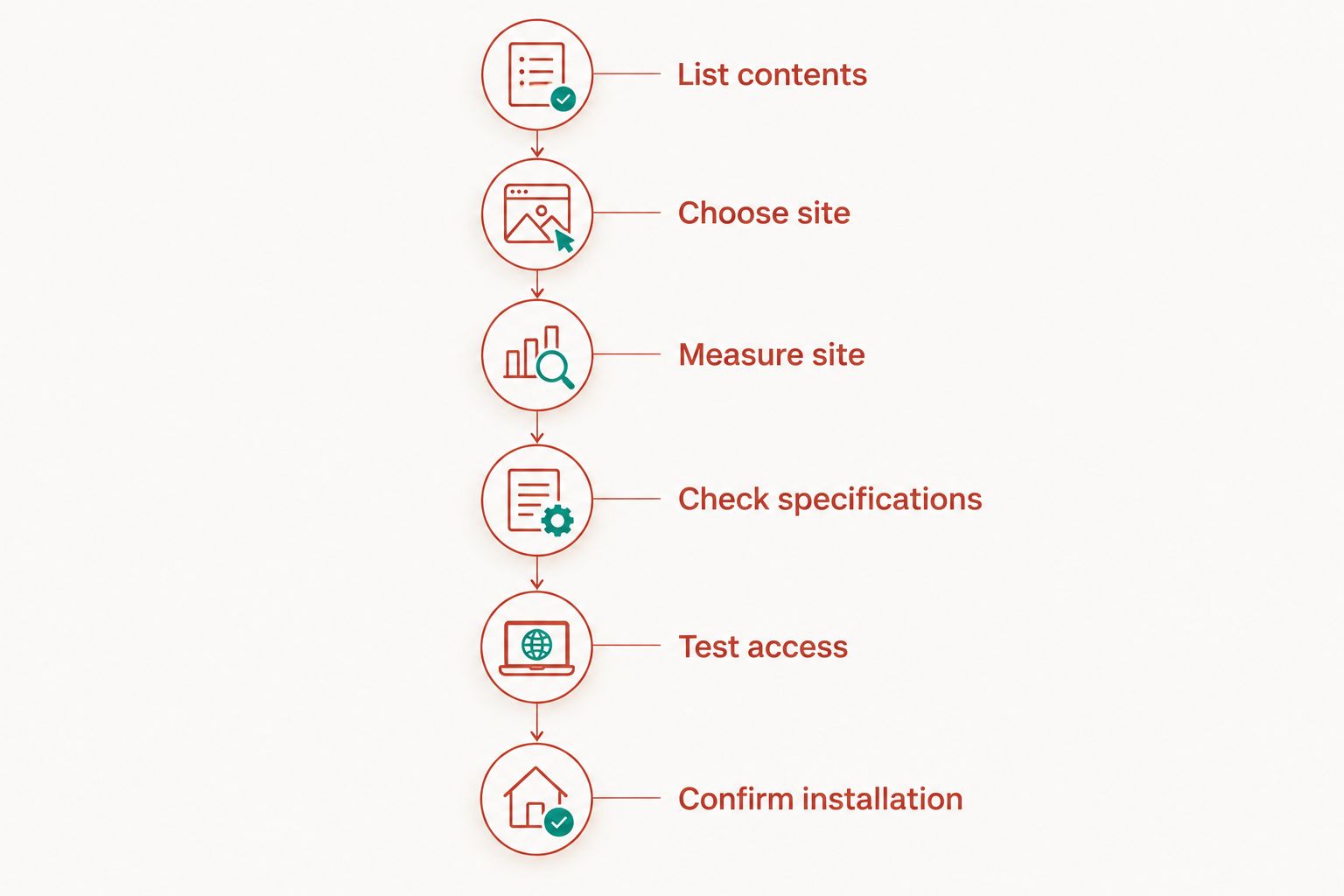
Use this sequence before choosing a model or installation date:
- List the contents. Note the firearms and any accessories that must fit inside the safe. Identify whether another storage arrangement is needed for ammunition under your applicable rules.
- Choose a candidate site. Check whether the proposed wall, floor or enclosure permits the installation the safe requires. Keep the door’s likely opening direction in mind.
- Measure the site. Record clear width, depth and height, including restrictions created by furniture, fittings and other doors.
- Check the product specifications. Compare the exact model’s external dimensions with the measured site and its usable interior with your intended contents.
- Test access. Map the full safe-door swing and the route from the property entrance to the candidate site.
- Confirm installation and compliance. Check the model’s fixing instructions and the current firearm storage requirements for your location before committing.
If a check fails, change the position or reassess the model. Do not treat a tight fit as a pass when it prevents normal access or proper installation. Buy A Safe is best used here to compare relevant gun-safe options against a site you have already measured, not to guess the dimensions of a room from a capacity label.
FAQ
How much space do I need for a gun safe in 2026?
You need room for the exact safe’s external dimensions, full door swing, access route and required installation. No single floor-space figure applies to every model or room.
Should I measure the inside or outside of a gun safe?
Measure the outside to establish where the cabinet fits, then check the usable inside space against what you intend to store. Both checks matter.
Does a gun safe need room in front of it?
Yes. Leave enough unobstructed space to open its door fully, operate the lock and move stored items without the room or nearby furniture blocking access.
Can a gun safe fit inside a cupboard?
It can if the cabinet, both door swings, installation access and applicable storage requirements all work in that position. Measure the cupboard’s clear opening as well as its interior.
Is a gun-safe capacity label enough to choose its size?
No. Compare the exact model’s external dimensions with the room and its usable interior with your firearms and accessories.
Do I need to measure the delivery route?
Yes. Check doors, hallways, turns and stairs between the entry and the proposed position; a cabinet that fits the room still has to reach it.
Do Australian gun-safe space requirements differ by location?
Check the firearm storage rules that apply to your state or territory and your circumstances in 2026. Room fit alone does not establish that an installation complies.
One last thing
Measure with the safe door open in mind. The easiest mistake is to approve a closed-cabinet footprint while the future door swing collides with a wall, cupboard door or vehicle. Buy A Safe gun-safe buyers should settle that access check before deciding a space is suitable.


