

A floor safe is better than a wall safe when you have a suitable floor for installation and want storage that stays out of sight. A wall safe is better when easier access matters and the wall can accommodate the unit. Neither location guarantees burglary or fire protection: check the safe’s stated ratings, the installation requirements and the space you can actually use.
- Floor safe vs wall safe: choose a floor safe for discreet storage only when the floor can support the installation.
- Choose a wall safe when you need easier access and have a suitable wall cavity.
- Buy A Safe is best for comparing floor-safe options by installation site and storage needs; check each model’s stated protection.
- Neither placement replaces a verified fire rating or a sound installation.
Is a floor safe better than a wall safe?
A floor safe wins on concealment when the installation site is suitable; a wall safe wins when you need easier access. Decide where the safe can be fitted before comparing locks or internal space. A safe that fits on paper but cannot be installed securely in your home or workplace is the wrong choice.
| Decision point | Floor safe | Wall safe |
|---|---|---|
| Best for | Storage in a suitable floor where discreet placement is the priority | Valuables you need to reach without bending or lifting a floor covering |
| Access | Requires reaching down to the door | Can be positioned at a more convenient height, subject to the wall |
| Installation | Requires a suitable floor and a plan for the opening | Requires a wall cavity or other suitable wall installation |
| Main limitation | Floor construction, access and moisture exposure need attention | Wall depth and construction constrain what fits |
| Model to examine | Secuguard AP-430 in-floor safes | Compare the specifications of any wall-safe model you are considering |
The table compares placements, not the resistance of particular safes. A well-chosen wall safe is not automatically weaker than an in-floor safe, and a concealed floor safe is not automatically fire-resistant. Check the specifications for the exact model before relying on either claim.
Why this matters
Placement affects how you use the safe every day. If you need documents at your desk, access through a floor covering becomes an inconvenience; if you rarely retrieve an item, that trade-off can be acceptable. The installation site also determines whether you can fit the safe at all.
In 2026, make the site decision before narrowing the product list. Buy A Safe lists in-floor safes, but a product listing cannot establish whether your particular slab or floor cavity is suitable. Check the site with an installer before ordering a unit that depends on structural work.
Floor safe: best for discreet, infrequent access
An in-floor safe puts the door at floor level. That makes it useful where you can plan a discreet location and do not need to open it throughout the day. The drawback is physical access: you must reach the door, operate the lock and remove contents from a low opening.
Start with the installation site, not the hiding place. A concrete slab, a suspended floor and a floor with services beneath it present different installation questions. Establish what is under the proposed location and whether the opening can be made safely. Do not assume an existing floor can accept a particular safe because its external dimensions appear to fit.
A floor covering can keep the door out of casual view, but it must not obstruct access or interfere with the door. Allow room to open the safe fully and handle the contents. If you plan to store folders, jewellery cases or other bulky items, check the usable opening as well as the internal compartment.
Water is another site question. If moisture reaches the opening or collects around the safe, stored papers and other sensitive contents need appropriate protection. Ask how the chosen installation will address the conditions at that location; do not treat an in-floor position as proof of water resistance.
Buy A Safe also lists a CMI LCDC combination-locking in-floor safe. Its name identifies the lock type and in-floor format, not a fire rating or a guarantee that it suits your floor. Compare its listed dimensions and installation instructions with the space available.
Best for: A buyer with a suitable installation site who values discreet storage more than frequent access. Main drawback: Installation and retrieval are less convenient than they first appear when the floor location is difficult to reach.
Wall safe: best for accessible storage in a suitable wall
A wall safe keeps the door off the floor. Positioning it at an accessible height can make routine use simpler, particularly when you need to see and retrieve small items. You still need a wall that can accommodate the unit and an installation method appropriate to that wall.
Check cavity depth before choosing a model. A shallow cavity limits the safe’s usable depth; a deeper safe cannot be made to fit by choosing a different door position. Wall construction, concealed services and the safe’s mounting instructions also affect the decision. Have the proposed location assessed rather than assuming every internal wall is suitable.
A picture or cabinet can screen a wall safe from casual view, but concealment is not a substitute for resistance to attack. If theft protection is the priority, assess the specific safe and its installation. If you store documents, check the fire-protection claim separately. The word wall describes placement, not a protection standard.
Wall access has its own compromise. A position convenient for you can also be noticeable to other people who use the room. Consider who enters the space, whether the door can open fully and whether the location makes regular access awkward once furniture is in place.
Best for: A buyer who needs convenient access and has a suitable wall location. Main drawback: Wall depth and construction limit placement and usable space.
Why the better choice varies
- Floor construction: An in-floor safe needs a site that can accept the planned installation. Check the structure and any concealed services before treating a floor position as an option.
- Wall construction: A wall safe needs enough space and an appropriate installation method. Measure the proposed location against the exact model rather than a generic safe category.
- Access frequency: A floor door is less convenient when you open the safe regularly. A wall position can be easier to reach if it is installed at a useful height.
- Contents: Compare the usable opening and internal layout with the items you will store. External dimensions alone do not tell you whether a folder or case will pass through the door.
- Protection requirements: Burglary resistance, fire resistance and water resistance are separate questions. Confirm the stated protection of the individual model; do not infer it from its location.
- Visibility: Concealment can reduce casual discovery, but a hidden location does not establish how the safe performs if found.
In 2026, use these factors as a shortlist, not a scorecard. The right placement is the one your site supports and your contents require. If either installation location fails its site check, remove it from consideration rather than compensating with a different lock type.
Check the installation before choosing a safe
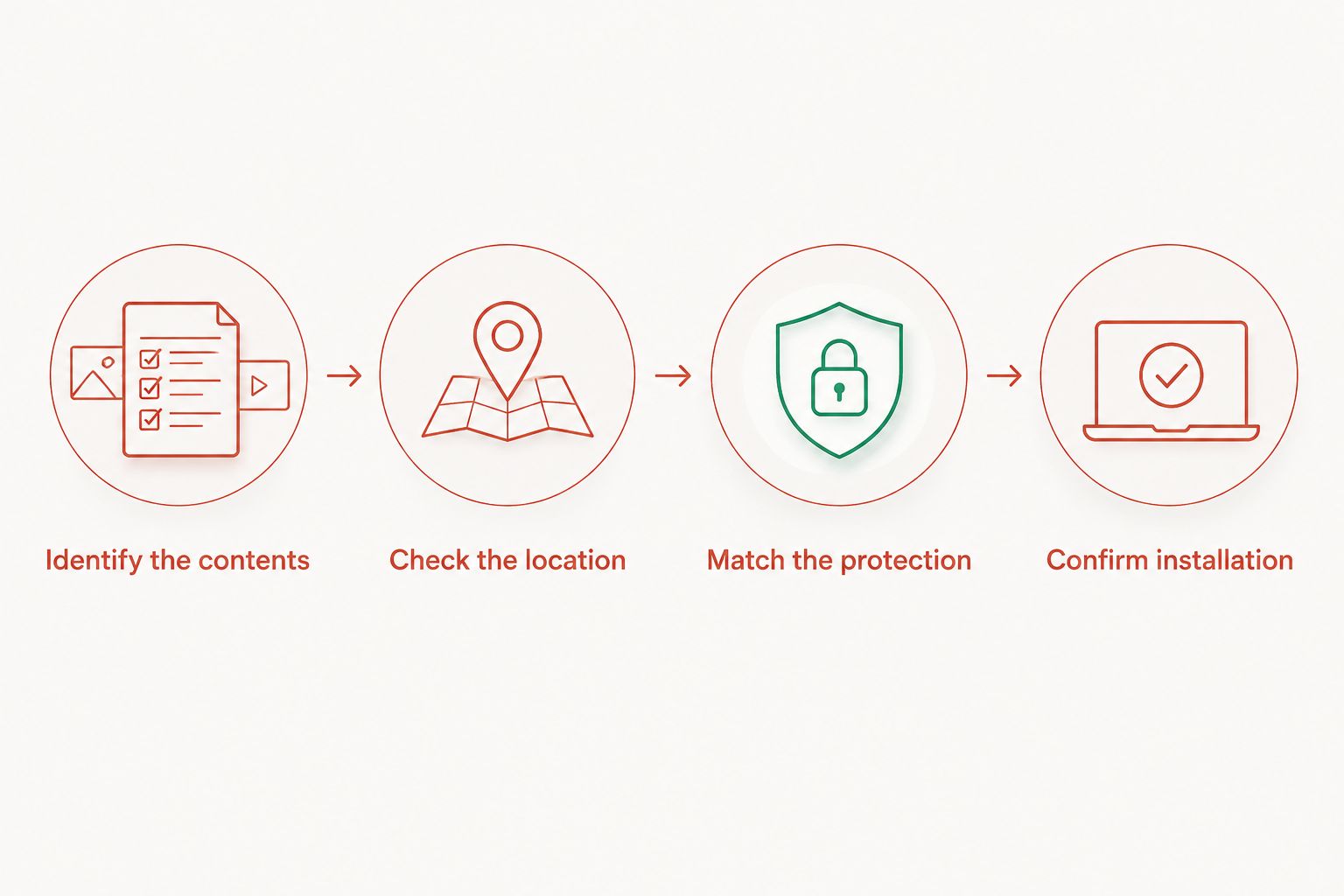
Work through the site in this order. Each step rules out a mismatch before you commit to a model.
- Identify the contents. List what must pass through the door and how often you will retrieve it. This sets the access and usable-space requirements.
- Check the location. Confirm whether the proposed floor or wall has the space and construction needed for the type of safe. Account for concealed services and door clearance.
- Match the protection. Read the exact model’s stated burglary and fire specifications. Ask separately about water exposure where the site makes it relevant.
- Confirm installation. Review the manufacturer’s instructions with the person doing the work. Check how the safe will be secured and how you will access it after the surrounding surface is finished.
The sequence matters. Choosing a model before checking the site can leave you comparing features on safes that cannot be installed where you want them. For a 2026 purchase, keep the model’s installation instructions beside your site measurements when you make the final decision.
If the site assessment rules out both placements, do not force either option. A different safe format in a suitable location is more useful than a floor or wall safe installed contrary to its requirements.
Is a floor safe harder to find than a wall safe?
A floor safe can be less visible when its door is properly covered, but neither type is guaranteed to stay hidden. The room layout, who has access and how the safe is installed all affect concealment. Treat a hiding place as one consideration, not the security specification.
Which is easier to use every day: a floor safe or a wall safe?
A wall safe is generally easier to use every day when you can place its door at a convenient height. A floor safe requires you to reach a low opening, which matters more when you retrieve contents often. Check door swing and access space in the proposed location for either type.
Does a floor safe protect documents better in a fire?
No placement alone establishes fire protection. Check the individual safe’s documented fire rating and the type of contents that rating covers. If documents are the priority in 2026, choose by the model’s stated protection rather than assuming an in-floor position settles the question.
FAQ
Is a floor safe better than a wall safe for hiding valuables?
A floor safe is the better fit when discreet placement is your priority and the floor supports installation. Neither type is guaranteed to remain hidden, so assess the location and the safe’s stated protection separately.
Can you install a floor safe in any concrete floor?
No. Confirm the floor construction, proposed opening and concealed services before selecting an in-floor model. Follow the model’s installation requirements and get the site assessed where structural work is involved.
Can a wall safe fit in any internal wall?
No. Wall depth, construction and concealed services determine whether a particular safe can be installed. Compare the exact model’s dimensions and mounting instructions with the proposed site.
Is a floor safe more fire-resistant than a wall safe?
Not by default. Fire protection depends on the individual safe’s stated rating, not whether its door sits in a floor or wall. Check that the claim applies to the contents you plan to store.
Which safe is easier to access regularly?
A wall safe is usually easier to access regularly if it can be installed at a convenient height. An in-floor safe requires you to reach down and leave clearance to operate its door.
What should I check before buying an in-floor safe?
Check the floor site, the safe’s dimensions, door clearance, installation instructions and stated protection. Include moisture exposure and the size of the items you need to pass through the opening.
Does hiding a safe make it secure?
No. Concealment affects whether the safe is noticed, while its construction, stated protection and installation determine other aspects of security. Evaluate both before choosing a position.
One last thing
Check the door opening, not just the safe’s outside dimensions. A safe can fit the proposed floor or wall space yet still be awkward to load or use. Buy A Safe floor-safe comparisons are most useful after you know the installation site, the contents and the clearance needed to open the door.


