

Retrofitting a safe into a wardrobe requires a site-specific quote covering the safe, delivery, structural anchoring and any cabinet alterations. For a 2026 installation, ask for those items separately: the safe’s advertised price does not establish the total cost of getting it securely installed and usable.
- How much does it cost to retrofit a safe into a wardrobe? Get an itemised installation quote, not a safe-only total.
- BUYASAFE home safes need model-specific checks for wardrobe fit, anchoring and access.
- Separate delivery, installation, cabinet alterations and making good when comparing quotes.
- Concealment inside a wardrobe does not replace secure anchoring or a suitable protection rating.
How much does it cost to retrofit a safe into a wardrobe?
The total is the safe plus the work needed to deliver, position, secure and accommodate it. An installation that preserves the existing cabinetry has a different scope from one involving shelf removal, plinth alterations or structural assessment. Compare the work included before comparing totals.
Start with the guide to choosing a safe that fits inside a wardrobe or cupboard. Establishing fit first prevents you from requesting installation quotes for a model that blocks the wardrobe doors or cannot be anchored as intended.
Use this breakdown when requesting your 2026 quote:
| Quote component | What to ask the supplier or installer | What to check before accepting |
|---|---|---|
| Safe supply | Identify the exact model and lock type | Do not substitute a similar-looking model without checking its specifications |
| Delivery | State the destination room and access route | Confirm whether delivery reaches the wardrobe or stops elsewhere |
| Positioning | Describe stairs, turns, thresholds and restricted access | Establish who moves the safe into its final position |
| Anchoring | Specify the proposed supporting structure and fixing method | Confirm suitability against the safe manufacturer’s instructions |
| Cabinet alterations | Identify shelves, backs, bases or plinths requiring changes | Confirm who performs and finishes the cabinet work |
| Completion | Include lock setup, operation checks and making good | Record exclusions before work starts |
Treat an unconfirmed item as unresolved, not included. A quote is useful only when you know what the installer will leave finished.
Why this matters
A wardrobe provides concealment, but its panels are not automatically a suitable anchoring structure. The installer needs to establish what lies beneath the cabinet base or behind its back before choosing a fixing method.
You also need usable access. A safe that fits with its door closed can still be unsuitable if you cannot turn the handle, open the door properly or remove the contents. Check the installed working space, not just the empty wardrobe cavity.
Keeping the wardrobe largely unchanged
Best for: a wardrobe with enough clear space and an accessible, suitable anchoring location. Ask the installer to assess whether the safe can sit in the intended position without changing shelves or cabinet panels.
The advantage is preserving the existing storage layout. The limitation is that the wardrobe’s current dimensions and construction dictate which safes are practical; you should not compromise the safe’s protection requirements just to keep a shelf.
For your quote, distinguish placing the safe inside the cabinet from securing it to the building. Ask how the installer will reach the fixing points and whether the wardrobe base obstructs that work.
A floor-standing position also needs a load assessment appropriate to the safe and supporting floor. Do not assume a raised cabinet base can carry the selected model because it already supports clothing or storage boxes.
Altering shelves, the base or the plinth
Best for: a suitable safe that needs changes to the wardrobe layout. Cabinet work belongs in the installation scope before you order, rather than as an unexpected task after delivery.
Removing an adjustable shelf differs from cutting a fixed panel. Ask a cabinetmaker or installer to identify which components can be changed without weakening the wardrobe, affecting its doors or leaving an unsupported section.
The advantage is greater freedom to accommodate the safe you need. The drawback is additional work and coordination, particularly when different trades handle cabinet alterations and safe installation.
Your 2026 quote should identify the proposed cuts, exposed edges, retained supports and final finish. It should also state whether you must empty the wardrobe and remove doors or drawers before the installer arrives.
Do not cut or drill the safe itself to make the wardrobe installation work. Use the model’s designated fixing arrangements and follow its installation instructions.
Using a different wardrobe bay or location
Best for: a proposed position that cannot provide suitable support, anchoring or door clearance. Ask for an alternative-location assessment before committing to extensive cabinet alterations.
Changing the location can avoid a particular obstruction, but it does not automatically reduce the total. Delivery access, fixing conditions and the selected safe still need checking at the alternative position.
The advantage is avoiding a forced installation in an unsuitable cavity. The drawback is losing your preferred concealed location or rearranging another part of the room.
Compare locations using the same safe and scope wherever possible. Otherwise, a different model or protection level can disguise what you are actually comparing.
Why wardrobe safe retrofit costs vary
These factors define the work your installer needs to quote:
- Safe specification: the selected model determines its dimensions, weight, lock access and designated fixing points. Choose protection for the contents before adapting the wardrobe around it.
- Delivery route: stairs, narrow doorways and tight turns need assessment before moving equipment and labour can be specified.
- Supporting structure: concrete, timber construction and raised cabinet bases require different assessments. The installer must establish a suitable support and anchoring arrangement.
- Cabinet alterations: removable shelves, fixed dividers and enclosed plinths present different tasks. Include finishing work as well as removal or cutting.
- Working clearance: hinged wardrobe doors, sliding tracks and nearby drawers can obstruct positioning or everyday safe use.
- Completion scope: delivery, anchoring, cabinet work and making good are separate tasks unless the quote explicitly combines them.
The useful comparison is between equivalent finished installations. Do not compare a delivery-only quote with a quote that includes positioning, anchoring and cabinet alterations.
How to get a quote that matches the actual job
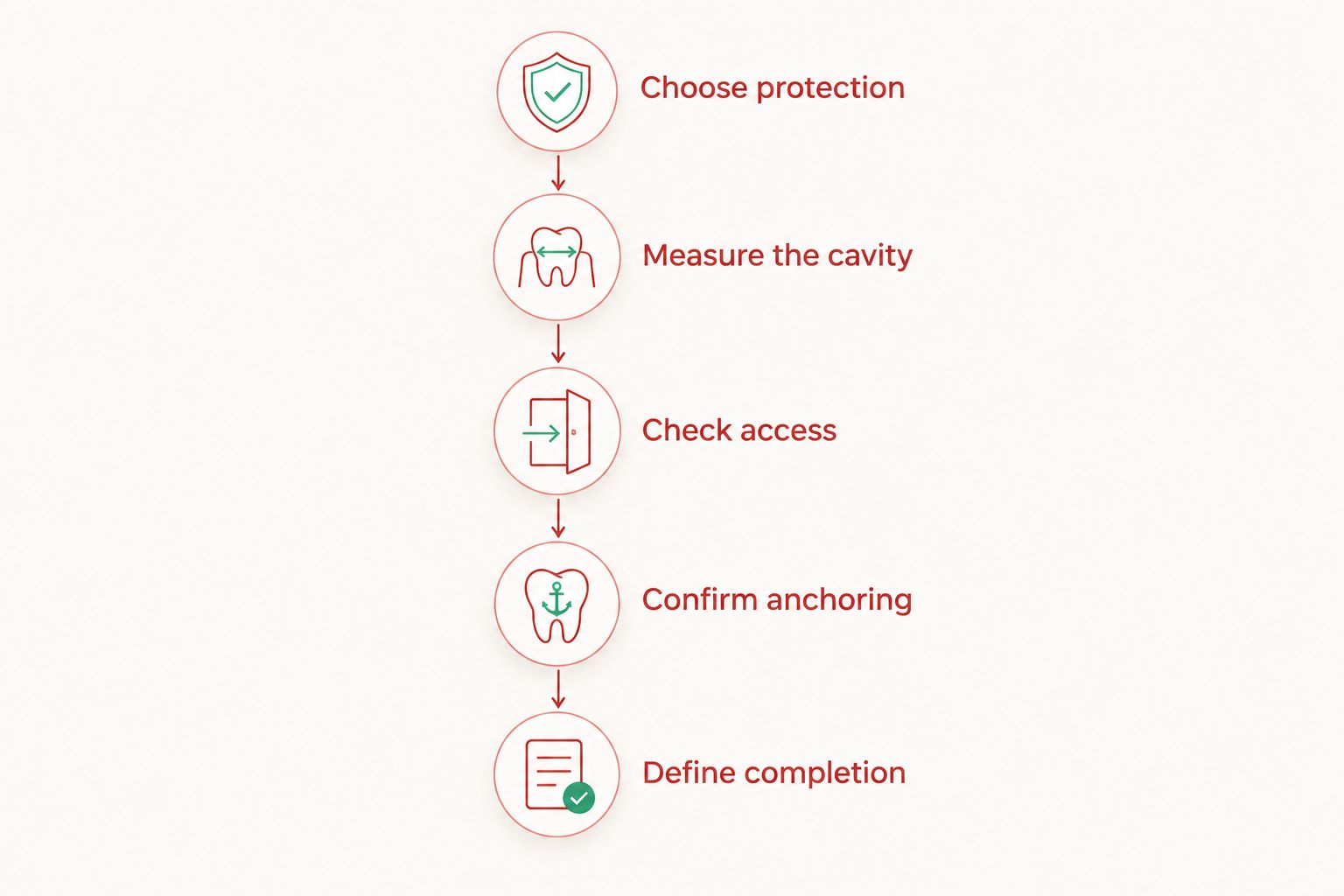
Send enough information for the supplier to assess the proposed installation rather than guessing from a photograph of the wardrobe front. Keep the same brief when approaching each installer.
- Choose protection. List what you intend to store and whether the priority is burglary resistance, document fire protection or both. Confirm any insurer requirements directly with your insurer.
- Measure the cavity. Record clear height, width and depth, including hinges, tracks, skirting and fixed shelves. Measure the opening as well as the space behind it.
- Check access. Photograph the delivery route and identify stairs, thresholds and restricted turns. Provide the safe’s confirmed dimensions and weight.
- Confirm anchoring. Explain what you know about the floor and wall construction. Have the installer assess unknown construction and concealed-service risks before drilling.
- Define completion. Ask who handles cabinet changes, positioning, fixing, lock setup and finishing. Request written inclusions and exclusions.
Keep photographs focused on the installation area rather than showing your valuables. Share access details directly with the supplier or installer handling the job.
Which safe specifications should you compare?
Do not choose a wardrobe safe by external size alone. A document fire safe and a security safe address different requirements, and a construction detail is not a substitute for a verified protection rating.
The following examples illustrate specifications to check, not confirmed wardrobe fits. Dimensions, weight, door clearance and installation instructions must be checked for the exact model before selection.
| Model | Best for | Stated feature | Limitation for this decision |
|---|---|---|---|
| Yale Document Fire Safe Medium YFM/352/FG2 | Buyers prioritising paper-document fire protection | 1-hour document fire protection; KS certification stated | The document fire claim does not establish wardrobe fit or burglary suitability |
| Platinum DOCO DC-610 Fire Resistant Storage Safe | Buyers comparing longer stated fire-protection durations | 90-minute fire rating stated | Duration alone does not establish equivalent test conditions or installation suitability |
| Chubb Mini Banker MkII Security Safe Size 3 Digital Locking (M-40) | Buyers assessing security-safe construction | 65mm body barrier with welded steel construction and barrier material | Barrier thickness alone does not establish a burglary rating or wardrobe suitability |
The Yale model’s 1-hour document protection and the Platinum model’s 90-minute rating describe different stated durations. Check the applicable test standard and protected contents before treating either as the better choice for your documents.
Similarly, the Chubb model’s 65mm body barrier is a construction specification, not an installation allowance. You still need the complete external dimensions, weight and fixing instructions.
BUYASAFE is best for home-safe buyers comparing security safes and document fire safes. Its range provides different categories to assess; no category label removes the need to confirm the exact model’s suitability for your wardrobe.
For a 2026 document-storage shortlist, these models provide specific fire-protection claims to investigate. Neither is a confirmed fit until the measurements and installation assessment are complete.


Can I install a wardrobe safe myself?
Self-installation is appropriate only when you can follow the manufacturer’s instructions and assess the supporting structure and fixing location safely. An accessible cavity does not prove the floor or wall is suitable for drilling.
Use a qualified installer when you cannot establish the substrate, concealed services, load support or handling method. Do not attempt to move a heavy safe alone or improvise an anchoring arrangement through unsupported cabinetry.
Does a wardrobe make a safe fire-resistant?
A wardrobe does not give a safe a tested fire-protection rating. Choose a safe with a documented rating appropriate to the contents, and preserve the manufacturer’s installation conditions.
A paper-document fire rating also does not establish protection for every electronic device or storage medium. Confirm the intended contents rather than relying on the word fireproof.
What should I check before accepting an installation quote?
Before accepting a 2026 quote, match the model, location and finished scope against your original brief. Ask the installer to explain any unresolved site conditions and how changes to the scope will be agreed.
Keep the acceptance checks practical:
- The exact safe model and lock type match your selection.
- The safe can reach the room and enter the wardrobe opening.
- The proposed support and fixing arrangement has been assessed.
- Cabinet alterations and finishing have a named responsible party.
- The safe door, lock and internal storage remain accessible after installation.
- Any insurer or property-owner conditions have been checked separately.
A written scope also helps when cabinet work and installation happen on different days. Confirm the sequence so that the installer does not arrive before the wardrobe is ready.
FAQ
How much does it cost to retrofit a safe into a wardrobe in Australia?
The total requires a site-specific quote for the safe, delivery, positioning, anchoring and any cabinet alterations. Request each component separately so you can compare equivalent finished installations.
Is safe installation included when I buy a safe?
Treat installation as included only when your order or written quote explicitly says so. Confirm whether the scope includes room delivery, positioning, anchoring and cabinet work.
Can a safe be bolted to the wardrobe back panel?
Do not assume a wardrobe back panel is a suitable anchoring structure. Have the installer assess the structure behind it and follow the safe manufacturer’s fixing instructions.
Can I put a safe on a wardrobe shelf?
Use a wardrobe shelf only after its support and the proposed installation have been assessed for the selected safe. Shelf fit alone does not establish load capacity or secure anchoring.
How much extra clearance does a wardrobe safe need?
Clearance is model-specific, so use the manufacturer’s dimensions and opening requirements. Include handles, keypad access, wardrobe hinges and enough room to remove the contents.
Can I install a safe in a rented wardrobe?
Obtain the necessary property-owner approval before drilling or altering cabinetry in a rental. Agree on the permitted work and any reinstatement requirements before installation.
Is a concealed wardrobe safe secure without bolts?
Concealment does not replace the safe’s specified anchoring arrangement. Follow the manufacturer’s instructions and confirm any relevant insurance conditions.
Which BUYASAFE home safe should I choose for a wardrobe?
Choose a BUYASAFE home safe by the protection your contents need, then confirm its dimensions, weight and fixing requirements. Do not select a model solely because it fits the available cavity.
One last thing
Test access to the contents, not just access to the lock. Before approving the final position, check that you can remove your largest intended item without striking the wardrobe frame or adjacent drawers.
Make that operational check part of your 2026 installation brief. A safe that can be unlocked but cannot be used comfortably is not a finished wardrobe retrofit.


