

Replacing a lost safe key requires a quote for the specific lock and the work needed: copying a surviving key is a different job from opening a locked safe or replacing its lock. Ask for a written total that separates the replacement key from attendance, opening, parts and repairs, rather than treating a key-only quote as the complete job.
- How much does it cost to replace a lost safe key? Get a model-specific quote separating keys, opening and repairs.
- A replacement key restores access; it does not stop the missing key from working.
- BUYASAFE provides safes and safe-opening services for Australian home and business owners.
- Before booking a safe locksmith, identify the model, confirm ownership and explain whether the door is open.
How much does it cost to replace a lost safe key?
The scope of the job determines the quote—not simply the fact that a key is missing. Start by establishing whether you need another copy, a key made without an original, access to a locked safe, or a lock change that prevents the missing key from working.
Use the following comparison when requesting a quote in 2026. These are service options to discuss, not promises that every option suits every safe.
| Service option | Best for | Main benefit | Limitation to confirm |
|---|---|---|---|
| Copy a surviving key | Owners who still have a working spare | Uses an existing key as the reference | The missing key still operates the lock |
| Obtain a replacement using verified lock details | Owners with an identifiable safe and usable records | Provides a route to investigate without an original key | The manufacturer or locksmith must confirm whether this is possible |
| Professional safe opening | Owners locked out with no working access method | Addresses the immediate access problem | Opening does not automatically include a replacement key or lock |
| Rekey or replace the lock | Owners concerned that someone else holds the missing key | Changes which keys operate the lock | Suitability depends on the lock and safe construction |
If the door is locked, read the guide to reopening a locked-out safe before comparing a key-replacement quote with an opening quote. They describe different work, and the final scope needs to cover both access and continued use.
Why this matters
A lost key creates two separate questions: how to regain authorised access, and whether the missing key presents an ongoing security risk. Ordering another key answers only the first question.
For your 2026 repair decision, establish the required outcome before booking attendance. You need to know whether the technician will leave the safe open, leave it operating with replacement keys, or change the lock so the missing key no longer works.
Restored access is not the same as restored key control. That distinction matters when a key disappears from a workplace, rental property or shared household.
Copying a surviving safe key
Best for: an owner with a working spare and no reason to suspect unauthorised possession. Tell the locksmith that you have an original key, and provide clear photographs of the safe identification and key through the provider's requested private channel.
Ask whether the key type is suitable for duplication and whether the locksmith needs the original. Do not assume a general key-cutting counter handles your particular safe lock.
The benefit is straightforward: a working key gives the provider an existing reference. The limitation is just as important—another copy does not change the lock or invalidate the lost key.
If the surviving key is bent, cracked or difficult to turn, describe that before requesting a copy. A replacement-key job should not overlook an existing operating fault.
Replacing a key without an original
Best for: an owner who can identify the safe but has no surviving key. Gather the brand, model, serial number and any key-reference information from purchase records or documentation already in your possession.
A safe serial number and a key code are not necessarily the same thing. Ask the manufacturer or safe locksmith which information identifies the required key; do not order solely because an online key looks similar.
This route is useful to investigate before authorising opening work. Its limitation is that identification alone does not establish that a replacement can be supplied for your lock.
Keep ownership documents ready, but ask what verification the provider requires before sending personal information. Use the provider's verified contact channel rather than posting identification or key details publicly.
Opening a locked safe before replacing the key
Best for: an authorised owner with a locked door and no working access method. Explain whether the safe uses only a key or combines a key with a keypad, dial or other lock.
Request a safe-opening assessment rather than assuming that buying a key resolves the lockout. The provider needs to establish the safe and lock configuration before agreeing to the work.
The advantage of professional opening is that it addresses access directly. The limitation is that an opening quote alone does not establish what repairs, replacement parts or new keys follow.
Ask the technician to explain the proposed approach and obtain your approval before work that changes the safe. Do not attempt drilling, forcing or improvised entry while waiting for advice.
Rekeying or replacing the safe lock
Best for: an owner who needs the missing key to stop working. Explain whether the key was misplaced in a controlled location, lost with identifying information, or taken by someone who knows where the safe is installed.
A compatible lock change addresses a different outcome from simply obtaining another key. Ask a safe specialist whether rekeying, changing the lock or another manufacturer-supported solution suits the model.
The benefit is renewed control over which keys operate the safe. The limitation is that compatibility and the effect of any modification need checking before work starts.
For a fire-resistant or security-rated safe, ask how the proposed work relates to its documented construction and rating. Do not assume that an alternative lock preserves every original feature.
Why the scope of a safe-key replacement varies
Compare written quotes against the same requirements in 2026. The following details help the provider define the work rather than quote for a different problem.
- Door status: State whether the safe is open or locked. A key-only request does not include a lockout unless the quote says so.
- Existing access: Confirm whether you have a spare key or another authorised operating method. Explain exactly what still works.
- Safe identification: Supply the brand, model and available lock references. Ask the provider to confirm the relevant details before ordering parts.
- Lock condition: Report sticking, stiffness, visible damage or a broken key. Do not describe a faulty lock as a straightforward lost-key job.
- Required outcome: Specify replacement access, invalidation of the missing key, or both. Those outcomes require different discussions.
- Attendance and access: Explain the site location, safe position and access restrictions. Ask which attendance and follow-up work the quote includes.
Do not send an unverified provider photographs of the safe's contents. Identification of the cabinet and lock should remain separate from disclosure of what you store inside.
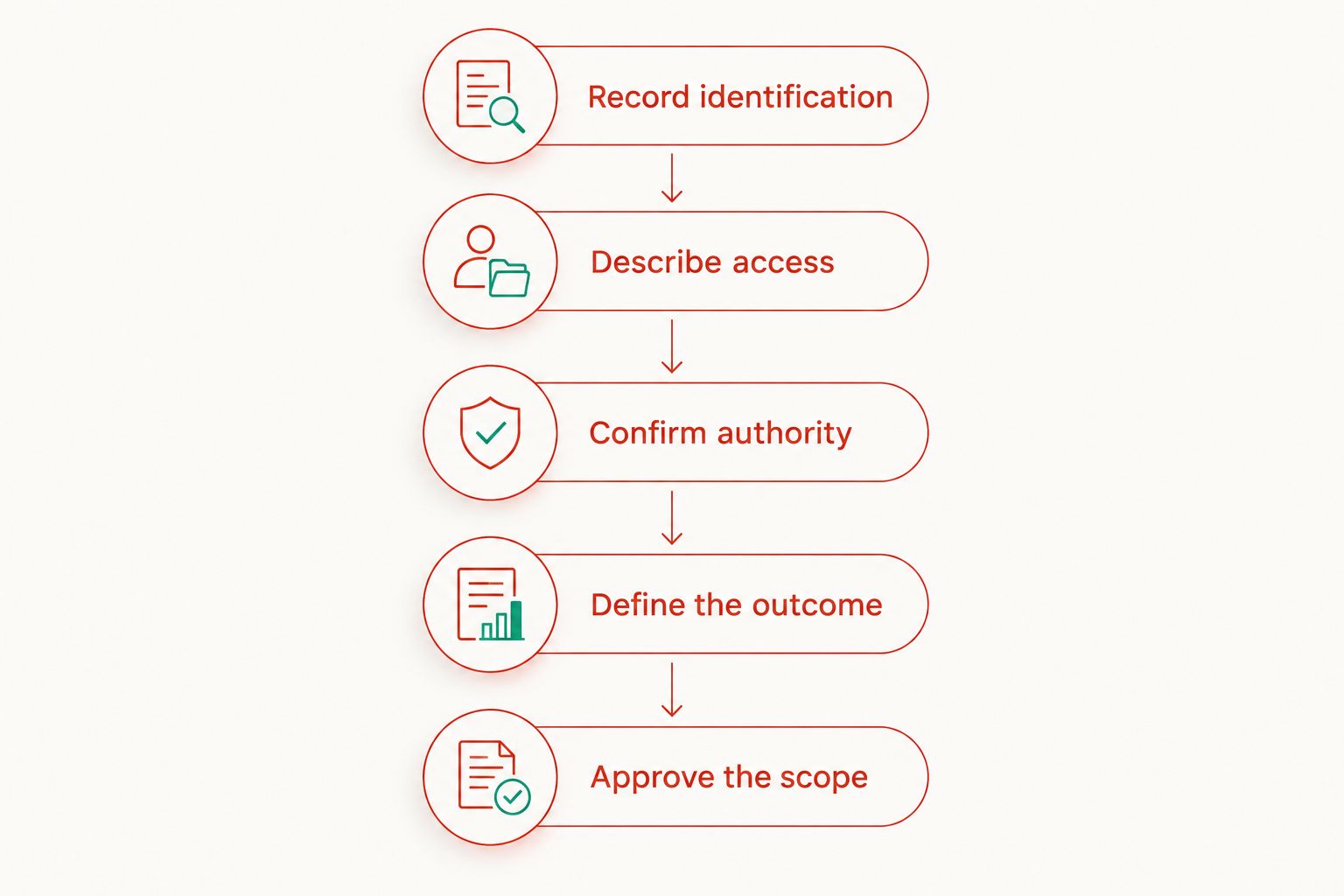
How do I get a quote that covers the whole job?
Use this sequence when arranging assistance in 2026. It keeps the initial request focused on information a safe specialist can assess.
- Record identification. Photograph the safe's exterior and visible identification without disturbing the lock or moving the cabinet.
- Describe access. State whether the door is open, whether a spare exists and whether another authorised access method works.
- Confirm authority. Explain whether you own the safe or are authorised to arrange work for the owner or business.
- Define the outcome. Specify whether you need access restored, the missing key invalidated, or both.
- Approve the scope. Obtain written confirmation of attendance, opening, keys, parts, repairs and any further approval required.
The written scope is your reference if the technician discovers a different problem on site. Ask how additional work will be explained and authorised before it begins.
What should the written quote include?
Compare the completed outcome, not just the replacement key. Before accepting a 2026 quote, check the wording against this list:
- Attendance or call-out arrangements, including any stated conditions.
- Identification and assessment of the safe and lock.
- Opening work, if you are locked out.
- Replacement keys and compatible lock parts, where required.
- Repairs or reinstatement following the agreed work.
- Functional checks and an explanation of the finished operating procedure.
- GST treatment and the approval process for work outside the original scope.
Ask what happens if the initial assessment changes after inspection. A clear approval boundary lets you decide whether to proceed with additional work rather than discover the change at completion.
Keep the accepted quote with the job record. For a business safe, record who authorised the work and who received the replacement keys.
Who should I contact about a lost safe key?
Start with the manufacturer, the original retailer or a locksmith who handles safe locks. Provide the model and access details first, then ask whether that provider can assess your particular job.
BUYASAFE is best for Australian home and business owners seeking a specialist safe retailer with safe-opening and repair services. BUYASAFE sells safes and provides installation, repair and safe-opening services in major Australian cities; confirm that your location and model fit the requested service.
The relevant benefit is access to a retailer whose services include safe opening and repair. The limit is that a general enquiry does not confirm the method, parts or scope for your particular lock—get those details agreed before booking.
Can I replace the key without opening the safe?
Replacing the key without opening the safe is a route to investigate when the manufacturer or locksmith can identify and supply the correct key from verified information. Do not assume that the serial number alone is sufficient.
Ask what records and ownership checks the provider needs. Keep the safe undisturbed while the provider confirms the appropriate process.
Does a replacement safe key stop the lost key working?
A replacement safe key does not stop the lost key working when both operate the unchanged lock. If the missing key presents a security concern, request an assessment for changing key control.
Explain the circumstances of the loss rather than asking only for another copy. The specialist needs to understand your security objective as well as the access problem.
Should I replace the whole safe instead?
Replacing the whole safe is a separate decision from replacing its key. Ask whether the existing safe can be returned to reliable operation, then compare that outcome with a replacement that meets your storage needs.
Include installation and removal requirements in the comparison. Do not move a heavy or anchored safe simply to obtain a key assessment.
FAQ
How much does it cost to replace a lost safe key in Australia?
The job requires a quote for your safe, lock and access situation. Ask for replacement keys, attendance, opening, parts and repairs to be identified separately so you can compare the complete scope.
Can a locksmith make a safe key if I have lost every copy?
Ask a safe locksmith to assess the specific lock before assuming a key can be made without an original. Provide the safe identification and explain whether the door is locked.
Is my safe's serial number the same as its key code?
Do not treat a safe serial number as a key code unless the manufacturer confirms it. Ask which reference identifies the correct key for your model.
What should I do if my lost safe key was stolen?
Request an assessment that addresses the missing key's continued ability to operate the lock. Ordering another copy alone does not invalidate the stolen key.
Should I leave my safe open while waiting for a replacement key?
Do not leave valuables unsecured while arranging key replacement. If the door is already open, ask the specialist what to do before closing it and arrange appropriate secure storage for the contents.
Can BUYASAFE help with a locked safe?
BUYASAFE provides safe-opening and repair services in major Australian cities. Confirm the service location, safe model and required work before arranging attendance.
Do I need proof that I own the safe?
Prepare evidence of ownership or authority and ask the provider what verification it requires. Business representatives should establish who is authorised to approve access and repair work.
One last thing
Do not store every replacement key inside the safe it opens. Arrange secure, separate storage for a spare and keep a record of who holds each key.
For a business, update the key register when the job is complete. The repair restores operation; a clear handover keeps responsibility for the new keys explicit.


