

The cost to open a locked safe in 2026 depends on the lock fault, the opening method and any repair needed to make the safe usable again. There is no reliable fixed figure without identifying the safe and assessing the fault. Ask for an itemised quote that separates opening, lock repair and any work needed after access is restored.
- The cost to open a locked safe in 2026 needs an assessment of the lock and opening method; get an itemised quote.
- Check the safe model, lock type and symptoms before booking a technician.
- Ask whether the quote covers opening only or also covers making the safe usable again.
- Buy A Safe offers safe opening and repair in major Australian cities; confirm the work needed before approving it.
How much does it cost to reopen a locked-out safe?
Get a written quote for your specific safe rather than relying on a standard opening figure. Tell the technician what kind of lock it has, what happens when you try to open it and whether the safe needs to remain usable afterwards. If you have forgotten the code, start with the guide to opening a safe when you forget the combination before treating the problem as a failed lock.
A quote for access alone does not tell you what it will take to put the safe back into service. Ask the technician to distinguish diagnosis, opening, any replacement parts and work on the door or locking mechanism. If the method changes after inspection, get approval for the revised work before it starts.
| What needs attention | What the technician needs to establish | What to clarify in the quote |
|---|---|---|
| Forgotten combination | Whether the lock works but the correct code is unavailable | Whether recovery or another non-destructive method is possible |
| Digital lock not responding | Whether the issue is power, keypad or lock mechanism | Whether diagnosis and any lock work are included |
| Key lost or not turning | Whether the key or lock is the problem | Whether access and subsequent lock work are separate |
| Door will not open despite the correct input | Whether the lock releases but the door or boltwork remains stuck | Whether work on the door or boltwork is included |
These are fault descriptions, not quoted service tiers. The same symptom can require different work on different safes. Describe what you have observed; let the technician identify the fault.
Why this matters
Opening the door is not necessarily the end of the job. A safe that opens but will not lock again has not been returned to service, and a damaged lock can leave you with another access problem. That distinction matters when the safe holds documents, business cash or regulated items.
Buy A Safe offers safe opening and repair in major Australian cities. When requesting help, state whether you need immediate access, a working safe after the visit, or both. Ask for both outcomes to be addressed in the quote so you can compare the proposed work on the same basis.
What should you check before booking a safe opening?
Use this sequence to give the technician useful information without experimenting on the lock. In 2026, the useful starting point is still the safe’s identity and the exact behaviour you can observe, not a guess about the cause.
- Record the make and model if you can see them. Check labels and paperwork already available to you. Do not damage the safe or remove it from its installation to search for a label.
- Identify the lock type. Say whether you use a key, mechanical dial, digital keypad or biometric reader. If the safe has more than one locking control, describe each one.
- Describe the last successful opening. Tell the technician whether the problem appeared suddenly or followed a change you know about, such as a code change, battery change or move.
- Describe what happens now. Does the keypad respond? Does a key turn? Does the handle move? Report what you see and hear without repeating attempts that put force on the mechanism.
- State the outcome you need. Say whether you need the contents urgently and whether the safe must remain usable afterwards. Ask what will happen if the planned opening method cannot be used.
Keep the safe closed and avoid forcing a handle or key. Forcing the mechanism can change the fault the technician needs to diagnose. If the safe contains a firearm or medication, tell the technician what type of contents are inside so the appointment can be planned accordingly; do not assume an ordinary access procedure covers your storage obligations.
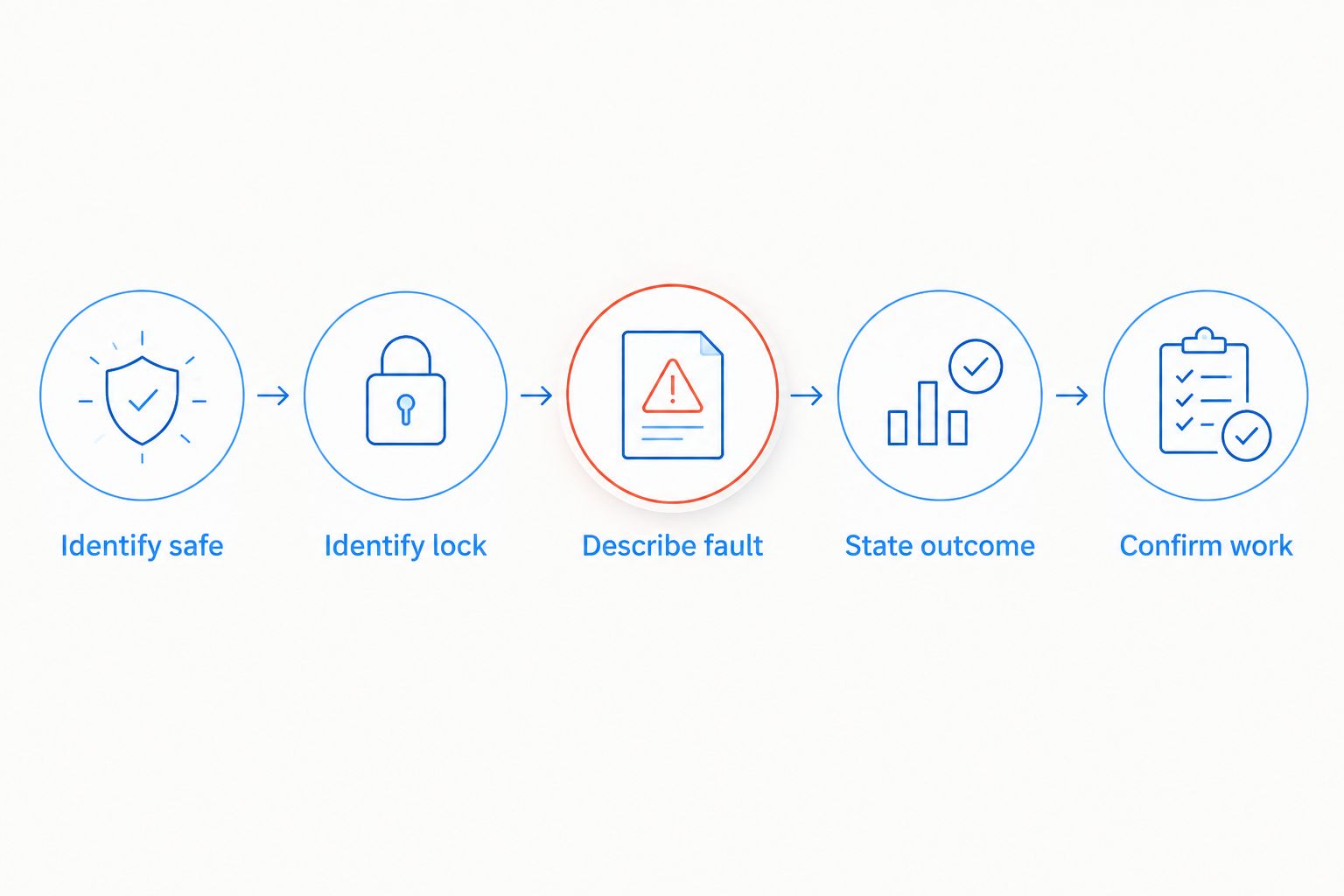
The checklist is also useful if another person normally operates the safe. A business owner booking the visit should obtain the observations from the staff member who last used it, rather than report only that it is locked. That gives the technician a more precise starting point without claiming to know which component failed.
Why does the cost to open a locked safe vary?
The work required varies with the fault and the condition in which you need the safe returned. Ask about these factors when you request a 2026 quote:
- Lock type: A key lock, mechanical dial, digital keypad and biometric reader present different symptoms. Name the lock rather than describing every problem as a lost code.
- Cause of the lockout: Forgotten credentials, an unresponsive input and a door that remains shut after the lock responds are different problems. The technician needs to diagnose which one applies.
- Access method: Ask whether the proposed method preserves the safe’s usability and what changes if it cannot be used.
- Repair after opening: Find out whether the quote includes checking the locking mechanism, repairing it or replacing a faulty component. Do not treat access alone as a completed repair.
- Safe identification and site access: Give the model information you have and explain where the safe is installed. A technician needs to know what can be inspected and accessed at the appointment.
- The required outcome: Retrieving contents and restoring a safe to everyday use are distinct jobs. Say which result you are authorising.
Avoid comparing quotes that cover different outcomes. A proposal to open a door and a proposal to open, diagnose and repair the safe do not describe the same work. Ask each provider to state what remains unresolved when the quoted work is finished.
Can a locked safe be opened without damage?
Ask for a non-destructive assessment, but do not assume that a damage-free opening is possible. The answer depends on the fault and what the technician finds. A working lock with unavailable credentials is a different case from a failed lock or jammed mechanism.
Ask what the proposed opening method does to the lock, door and safe body. Then ask what repair would be required before you could lock and use the safe again. A method that provides access but leaves the safe out of service does not meet a request to restore working security storage.
For a digital lock, report whether the keypad responds and whether you have already checked the manufacturer’s instructions available for that model. Do not assume a keypad fault is a battery fault, or that a reset will open a safe whose code is unknown. For a mechanical dial, avoid changing your description to a faulty lock merely because a combination you tried did not work.
The useful verdict is simple: describe the symptom, not a diagnosis. That keeps the technician’s assessment focused on what is actually happening and makes the proposed work easier for you to approve or question.
What should an itemised safe-opening quote include?
In 2026, request a written scope before authorising work. The quote should make clear what the technician will assess, what opening work is proposed and whether restoring normal use is included. If the fault cannot be confirmed until the safe is inspected, ask how you will approve any change to the scope.
Use these questions when comparing providers:
- What safe and lock information do you need before attending?
- Does the proposed work cover diagnosis, opening or both?
- What is the plan if the initial opening method cannot be used?
- Will the safe lock and reopen normally when the work is finished?
- Are lock repair and replacement parts included in the proposed scope?
- What will you explain and seek approval for before doing additional work?
A clear answer to the last question matters as much as the initial quote. If the technician finds a failed component after opening, you need to know whether the appointment ends with access to the contents or with a usable safe. Make that distinction before the job begins, not after the door is open.
If your safe is used by staff, record who can authorise changes to the work. That prevents an access request from being mistaken for permission to change a lock or leave the safe in a condition your business cannot use. Buy A Safe’s safe opening and repair services are relevant when you need to discuss access and restoration together; request an itemised assessment for the specific safe.
Is it cheaper to repair a safe lock or replace the safe?
There is no sound cost comparison until the lock fault and the condition of the safe are known. A lock problem does not establish that the safe body needs replacing. Equally, opening the door does not establish that a lock repair alone will return the safe to service.
Ask for the repair scope first: which component needs work, whether the door and boltwork operate correctly, and what will be checked before the job is complete. If replacement is proposed, compare the security storage you need with what the existing safe provides. Do not select a new safe solely because an opening attempt was difficult.
Buy A Safe sells home and commercial safes as well as offering repair and safe opening. The best outcome for an owner with a serviceable safe is an informed repair decision, not an automatic replacement. For a safe that cannot be returned to the required use, ask what requirement the replacement must meet before selecting a model.
What if the safe contains firearms or business cash?
Tell the technician about the contents when arranging the visit, and keep your access and storage responsibilities in view while the safe is out of service. A firearm safe that is open or no longer locks cannot be treated as secure storage simply because its contents have been retrieved. Check the rules that apply to your firearms and location before making alternative storage arrangements.
For business cash, decide who is authorised to observe and approve the work. If employees rely on the safe during trading, explain that you need to know whether it will be usable after the appointment. Neither situation changes the basic quoting question: does the proposed work restore secure storage, or only open the door?
FAQ
How much is the cost to open a locked safe in 2026?
The cost to open a locked safe in 2026 requires a quote for the specific fault and opening method. Ask whether that quote also covers repair needed to use the safe again.
Can a locksmith open my safe without damaging it?
A technician can assess whether a non-destructive opening method suits the fault. Ask what the proposed method will do to the lock, door and safe body before approving the work.
What information should I provide about a locked safe?
Provide the make and model if known, lock type, observed symptoms and the outcome you need. Say whether you need access only or a safe that works normally afterwards.
Does opening a safe include fixing its lock?
Not necessarily; opening and lock repair are separate parts of the work to clarify in a quote. Ask what condition the safe will be in when the technician finishes.
Should I force a safe handle that will not move?
No. Stop forcing the handle and describe its movement to the technician, who can assess the lock and door mechanism.
Can I reset a digital safe if I have forgotten the code?
Follow the instructions for your specific model and do not assume a reset will give you access to a locked safe. Report whether the keypad responds when you request help.
Do I need a new safe after a lockout?
A lockout alone does not establish that the safe needs replacing. Have the lock, door and intended use assessed before deciding between repair and replacement.
One last thing
Before the appointment ends, ask the technician to demonstrate the result you actually requested: access to the contents, normal locking and reopening, or both. In 2026, the most useful comparison between safe-opening quotes is the condition of the safe when the work is finished. That is the detail an opening-only figure leaves unanswered.


