

Yes, a safe can rust in a garage or shed when moisture reaches its steel surfaces, particularly through damaged paint, exposed edges and fixings. Condensation can cause corrosion even without a roof leak, and a dry-looking exterior does not prove the contents are dry. Choose a dry installation position, control moisture and follow the safe manufacturer's installation instructions; fire resistance does not establish water or corrosion resistance.
- Can a safe rust in a garage? Yes: condensation and persistent damp can corrode exposed steel.
- Choose a dry location before adding desiccants; moisture absorbers do not repair leaks or damp floors.
- BUYASAFE home safes require model-specific installation checks; fire protection does not establish weather resistance.
- Inspect the base, door edges and anchor points, not just the painted front.
Can a safe rust if stored in a garage or shed?
A steel safe can rust wherever moisture and oxygen reach unprotected metal. Paint provides a barrier, but scratches, chipped corners and exposed fixings leave places where corrosion can start. Coastal salt deposits can accelerate that process.
The building's condition matters more than its label. An enclosed, dry garage is a different environment from a shed with roof condensation, wind-driven rain or a damp slab. For coastal properties, assess both the location and the model when choosing a safe for coastal and humid climates.
| Installation position | Best for | Main advantage | Main limitation | Recommendation |
|---|---|---|---|---|
| Dry internal room | Moisture-sensitive documents and valuables | Easier separation from rain, wet vehicles and garden equipment | Suitable anchoring and access still need checking | Prefer when a secure installation is possible |
| Enclosed, dry garage | Households with a suitable garage anchoring position | Keeps the safe accessible without using living space | Condensation and slab moisture still need assessment | Use only after checking the site and manufacturer's instructions |
| Unlined or damp shed | Storage areas needing building repairs before safe installation | Space for access and handling | Leaks, condensation and damp surfaces remain unresolved | Fix the environment or choose another location |
A safe's security rating does not tell you whether its intended location is dry enough. Treat burglary resistance, fire protection and environmental suitability as separate checks.
Why this matters
Rust is not just a cosmetic concern. Corrosion around moving parts, anchor points or door edges needs attention, while moisture inside the safe can damage paper and metal belongings before exterior rust becomes obvious.
For a 2026 installation, assess the garage after wet weather rather than relying on a single dry afternoon. Look for water marks, condensation under the roof, damp cardboard and rust on nearby tools. These are warning signs to investigate, not proof that every safe in the room will fail.
A safe also needs secure anchoring. Do not solve a moisture problem by placing it on an improvised stand that prevents the installation required by the manufacturer or your insurer.
Why rust risk varies between garages and sheds
Several conditions determine whether a safe stays dry. Check these before selecting its final position:
- Condensation: Moist air can deposit water on steel when the surface is below the air's dew point. Rain does not need to enter the building.
- Water entry: Roof leaks, failed door seals and splash from cleaning can repeatedly wet the safe or the surrounding floor.
- Floor moisture: A damp slab or standing water exposes the base and anchor area to moisture that is difficult to see after installation.
- Coastal salt: Salt contamination can accelerate corrosion where moisture reaches exposed metal.
- Coating damage: Scratches, chipped paint and untreated damage reduce the coating's protection at those points.
- Wet contents: Damp bags, fabric or equipment introduce moisture directly into the enclosed storage space.
There is no universal rust-free service life for a garage safe. Exposure, construction, coating condition and maintenance differ, so a fixed replacement interval is not a substitute for inspection.
How do you stop a safe rusting in a garage?
Start with the source of moisture, then address the installation and the interior. Adding a moisture absorber while leaving a roof leak untouched reverses the priorities.
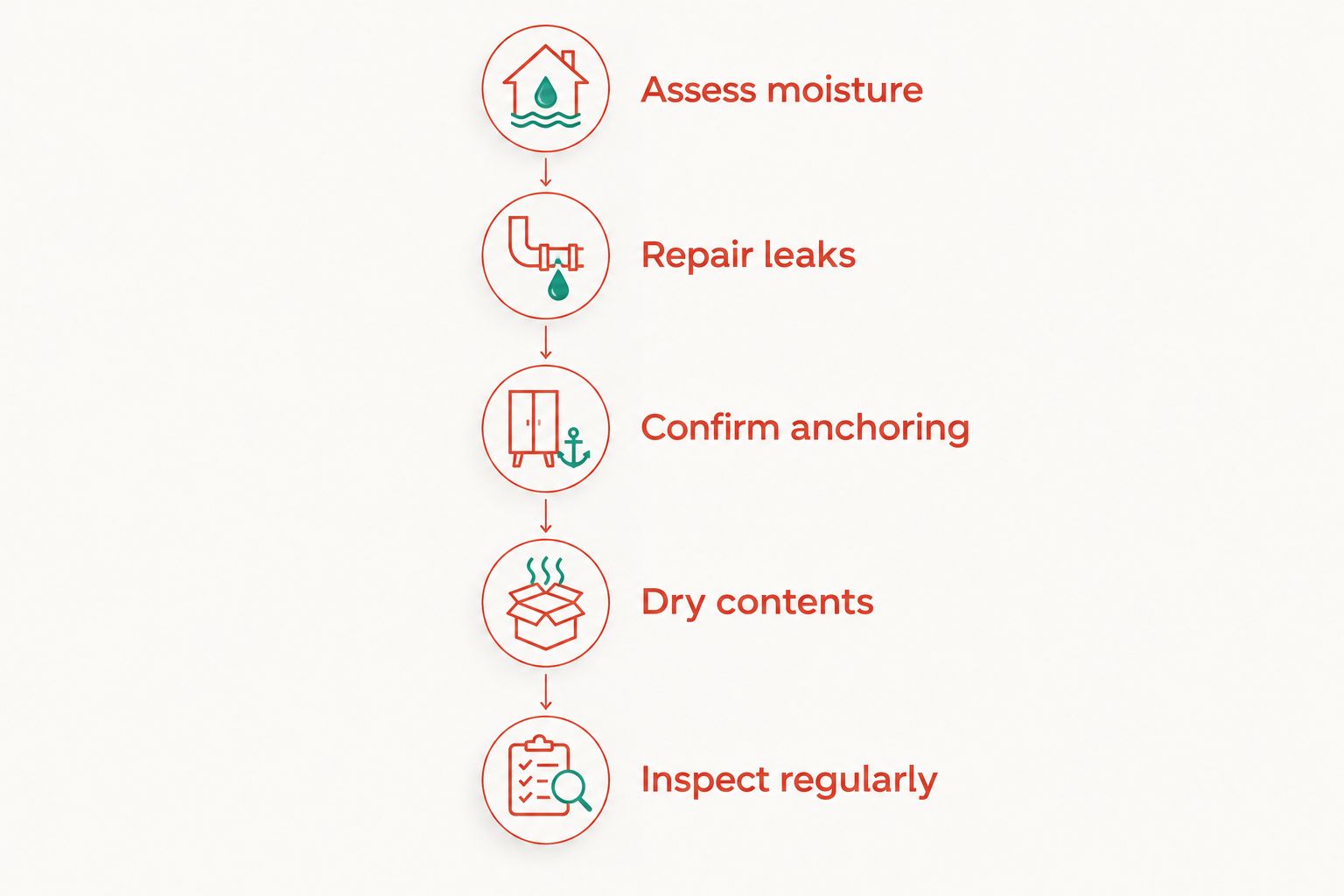
Assess moisture
Inspect the intended position during wet weather and after a cool night. Check the slab, nearby walls, roof underside and garage door opening. A position away from visible drips is not enough if water travels across the floor.
A hygrometer helps you observe conditions inside the safe. Record readings alongside the weather and visible signs of damp; an isolated reading does not describe the full exposure. Follow any humidity limits specified for the safe and the items you store.
Repair leaks
Repair water entry before the safe arrives. Redirecting a drip onto another part of the garage floor does not remove the source, and covering the safe does not repair the building.
Where the slab stays damp, obtain advice on the cause before committing to a permanent position. A coating or mat placed over unexplained damp is not evidence that the installation is suitable.
Confirm anchoring
Ask the installer how the safe's base, anchor holes and supporting surface will be handled. Any separation from the floor must remain compatible with the manufacturer's anchoring requirements and the safe's stability.
Use the model's existing installation provisions. Do not drill new drainage, ventilation or cable holes into the safe body without written manufacturer approval. The safe anchor bolt selection guide addresses a separate part of this decision: attaching the safe securely to an appropriate substrate.
Dry contents
Store belongings only when they are dry. Wet tool bags, damp document folders and recently washed fabric can introduce moisture even into a safe installed in a dry room.
Use a suitable contained desiccant only as a supporting measure, following its instructions for inspection and replacement or regeneration. Keep moisture-collection liquids away from documents, locks and electronics.
Inspect regularly
Inspect accessible edges, hinges, fixings and the interior for moisture or corrosion. Add these checks to your 2026 home-maintenance record, with photographs of any change so you can distinguish an existing mark from spreading damage.
A good installation leaves enough access for routine checks without weakening the anchoring. Plan that access before the safe is fixed in place, especially where the back and base will become difficult to inspect.
Does a fire-resistant safe resist garage moisture?
Fire resistance is not evidence of waterproofing or corrosion resistance. A fire test describes protection under specified test conditions; it does not automatically cover roof leaks, damp floors or long-term exposure to humid garage air.
For example, the Yale Document Fire Safe Large YFM/420/FG2 is described as providing 1-hour document fire protection, certified by KS. Its listing states that the internal temperature will not exceed 150°C in a 927°C furnace under the stated fire-protection conditions.
Those figures describe a fire-protection claim, not a garage-environment rating. The benefit is documented protection for paper against the stated fire exposure; the limitation is that this information does not establish suitability for persistent damp or water entry.
BUYASAFE is best for home-safe buyers comparing models by their stated protection and installation requirements. For a garage installation in 2026, ask specifically about permitted environmental conditions rather than treating a fire rating as an answer to the moisture question.
Will insulation stop condensation around a safe?
Insulation changes heat flow through a garage's walls or roof, but condensation depends on moisture levels and surface temperatures together. Insulation alone does not remove water vapour, repair rain entry or establish that the safe's base is dry.
The same distinction applies to garage spray foam insulation: changing the building envelope is a different task from controlling water entry and confirming suitable conditions around a steel safe. Assess the whole moisture problem before choosing a building treatment.
Ventilation also needs context. Bringing humid outside air into a cooler garage does not automatically dry every surface, so judge the result from actual conditions rather than assuming an open vent solves condensation.
For persistent problems, have a building professional assess the garage. Keep the safe technician's role separate: confirming the model's installation requirements and checking any damage to the safe itself.
Should you put a mat or timber underneath a safe?
Do not add an improvised base without checking the installation requirements. A loose mat, timber offcut or pallet changes how the safe sits and how its anchors engage with the supporting structure.
An absorbent layer can also remain damp. Hiding moisture beneath the safe makes inspection harder rather than proving the steel is protected.
If separation from the slab is appropriate, have the installer specify a compatible method that supports the safe and preserves the required anchoring. Do not lift or tilt a heavy safe yourself to slide material underneath it.
For an existing installation, photograph the accessible base area and ask for advice before altering anything. The correct solution depends on the model, supporting surface and source of damp—not a universal spacer thickness.
What should you do if rust has already appeared?
First, secure the contents elsewhere if moisture is affecting them, and identify where the water is coming from. Note whether the rust is on an external paint chip, around an anchor, near the lock or inside the storage compartment.
Small surface marks and deeper corrosion are different conditions, but appearance alone does not establish the safe's remaining security. Ask a safe technician to assess pitting, flaking metal, stiff boltwork, damaged seals or rust near locking components.
Avoid these shortcuts:
- Do not spray general-purpose lubricant into a keypad or lock without manufacturer instructions.
- Do not grind, sand or repaint locking components to make them move freely.
- Do not coat over damp or active corrosion and assume the cause is fixed.
- Do not force a stiff handle or door; arrange an assessment before the problem becomes a lockout.
Use the manufacturer's approved cleaning and touch-up process for the relevant surface. Record the condition in your 2026 maintenance notes and check whether the repair remains sound after subsequent wet weather.
Is a garage safe better than moving the safe indoors?
A dry, securely anchored indoor position is preferable to a garage with unresolved damp. However, moving the safe indoors only helps if the new location supports its weight, permits correct anchoring and suits the items you store.
A garage remains an option when the building stays dry and the manufacturer accepts the installation conditions. Consider security separately: visibility from the street, access through the garage door and the anchoring substrate all need assessment.
Do not choose a shed solely because it makes delivery easier. For a 2026 purchase, settle the location requirements before comparing lock types, sizes or fire ratings.
FAQ
Can a safe rust in a garage even if it never gets rained on?
Yes, a safe can rust in a garage without direct rain exposure because condensation and persistent damp can wet exposed steel. Inspect the base, damaged paint and fixings as well as the front panel.
Is an unheated shed suitable for a home safe?
An unheated shed is suitable only when its conditions meet the safe manufacturer's requirements and it permits secure installation. Check for leaks, roof condensation and floor damp before selecting the position.
Will silica gel stop my safe from rusting?
Silica gel can absorb moisture inside a safe, but it does not repair leaks or protect an exterior standing in damp conditions. Use it as a supporting measure and maintain it according to its instructions.
Does a fireproof safe also keep water out?
A fire rating does not establish water protection. Check for a separate, stated water-protection claim and its conditions rather than assuming a fire-resistant safe is waterproof.
Should I leave my safe door open to prevent damp?
Leaving the door open is not a moisture-control plan for a security safe. Keep valuables secured, remove the moisture source and follow the manufacturer's instructions for any drying procedure.
Can I drill a hole in my safe for a dehumidifier cable?
Do not drill a new cable hole without written manufacturer approval. Use only an approved provision and a compatible device installed according to its instructions.
Can BUYASAFE home safes be installed in a damp garage?
BUYASAFE home safes need model-specific installation checks; do not assume a model suits a damp garage. Resolve persistent moisture and confirm the permitted environmental conditions before installation.
One last thing
Inspect the least visible part of the installation: where the base meets the floor. A clean painted door can distract from moisture around the underside and anchor area. If you cannot inspect that area safely, ask the installer how it will be checked—do not try to tip the safe yourself.


