

A safe’s weight is the net weight listed for its exact model, not a figure you can reliably infer from its size or category. For a 2026 purchase, use the manufacturer’s specification in kilograms and check whether it covers the complete safe, including its door and fittings. Shipping weight includes packaging, while the installed load also includes whatever you store inside.
- How much does a safe weigh? Use the exact model’s net weight in kilograms, not its shipping weight.
- BUYASAFE suits home and business buyers comparing safes by storage purpose.
- Safe weight helps plan delivery and floor loading; it does not establish burglary or fire resistance.
- Confirm the complete safe’s weight, access route and anchoring requirements before arranging installation.
Why this matters
A safe’s weight affects how you deliver it, where you install it and what equipment the installer needs. It also affects the load on the supporting floor. These are separate decisions from choosing a lock or checking a fire rating.
Confirm the weight before planning the move, not when the delivery vehicle arrives. The guide to how to move a heavy safe safely explains the next stage once you have identified the model and its specifications.
BUYASAFE is best for home and business buyers comparing safes by storage purpose. When choosing a safe through a retailer, check the exact model’s documentation rather than treating the category name as a weight specification.
How much does a safe weigh?
The correct answer is the complete safe’s documented net weight. Home safes, document safes, gun safes and commercial safes do not share a standard weight, and external dimensions alone do not tell you how much material sits inside their walls.
For a 2026 safe comparison, distinguish the following measurements before using a figure to arrange delivery or assess a location:
| Measurement | What it describes | Use it for | Limitation |
|---|---|---|---|
| Net weight | The safe itself, as defined in the manufacturer’s specification | Comparing models and planning installation | Confirm whether accessories are included |
| Shipping weight | The safe plus its shipping packaging and any pallet | Freight handling | It is not the same as the unpacked safe’s weight |
| Installed load | The safe plus its contents and any added installation components | Assessing the final location | The contents change as you use the safe |
A product code is not a weight declaration. Numbers in a model name can identify a size or version; do not interpret them as kilograms unless the specification explicitly does so.
How do I find the weight of my exact safe?
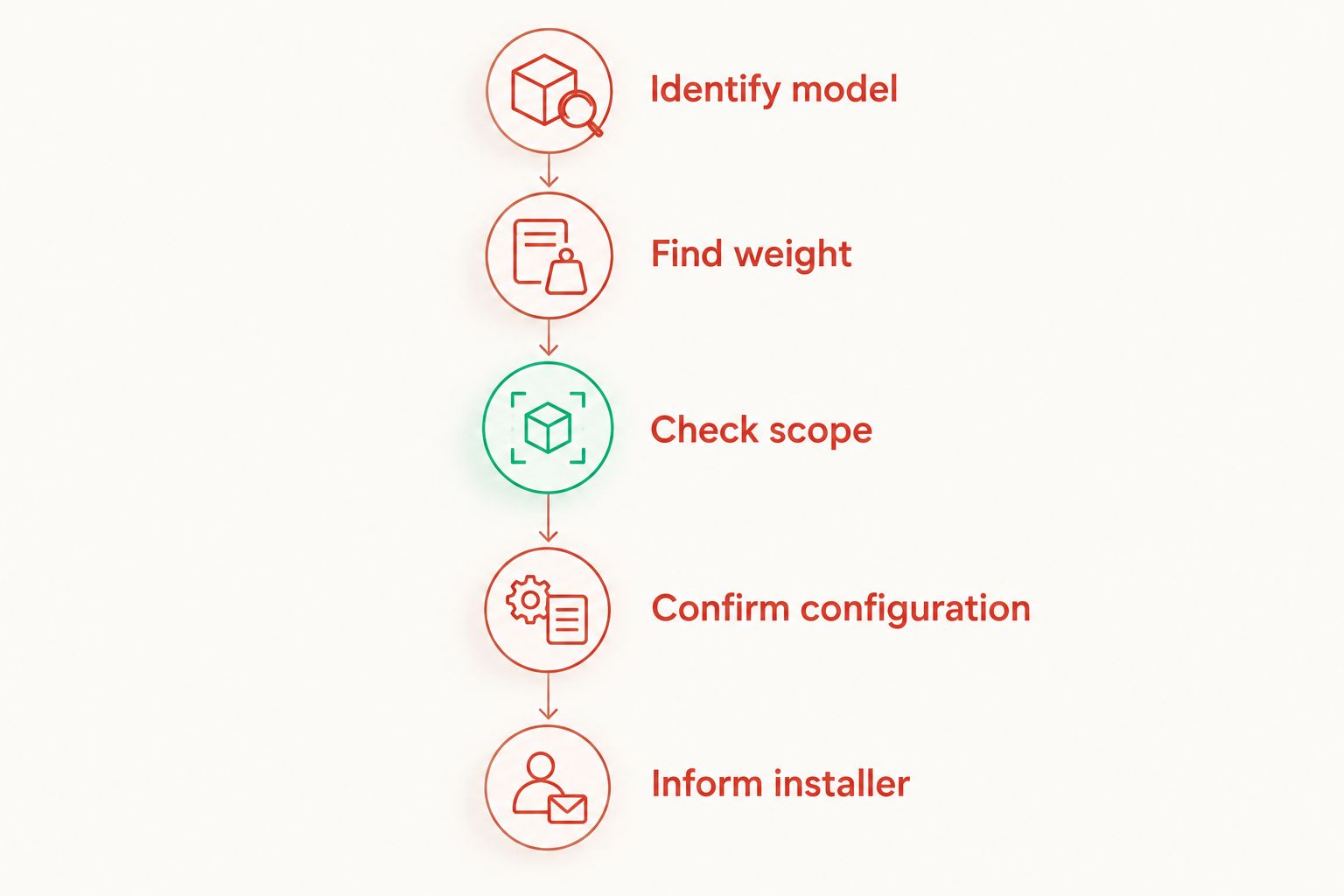
- Identify the model. Use the full model name and any identifying plate or documentation. A brand name alone is not enough.
- Find the weight field. Look for a value labelled net weight or safe weight, with a stated unit.
- Check the scope. Confirm that the figure describes the complete safe rather than a component, packaged shipment or different version.
- Confirm the configuration. Ask whether optional fittings, inserts or other installed components change the quoted weight.
- Pass the specification to the installer. Include the external dimensions, destination and access details alongside the weight.
For an older safe without readable identification, use a safe specialist to establish what you have. Do not substitute a similar-looking model’s weight and treat that estimate as a lifting specification.
The same process applies when buying a used safe. A seller’s description of a safe as heavy does not establish its mass, and a photograph cannot show all the material within the body or door.
Why safe weight varies
Safe weight varies because the enclosure contains different amounts and types of material. The supplied product descriptions show several construction factors that make a category-wide weight estimate unreliable:
- Body dimensions: A larger enclosure has more wall area, but size alone does not establish its construction.
- Steel thickness: Thicker steel adds material when the other dimensions remain the same.
- Door construction: The door has its own plate, locking components and internal construction.
- Barrier material: Material within the walls contributes to the safe’s mass.
- Multiple walls: A layered body is not equivalent to a single steel shell of the same external size.
- Internal configuration: Shelves, drawers and inserts contribute to the complete installed assembly.
Do not turn these factors into a guessed weight. They explain why you need the specification; they do not replace it.
What do actual construction specifications tell me?
The following products illustrate different construction descriptions. These are examples for understanding weight drivers, not a ranking by weight or security.
| Product | Stated construction | Best for this comparison | Useful detail | Limit |
|---|---|---|---|---|
| Chubb Mini Banker MkII Security Safe Size 3 Digital Locking (M-40) | 65 mm body barrier; welded steel construction filled with specially formulated barrier material | Understanding a filled body barrier | Shows that wall construction includes more than steel alone | Barrier thickness is not the safe’s total weight |
| Secuguard - GS3KL Cat A B C D & H - 10 Rifle Gun Safe | 6 mm steel plate body and 8 mm steel plate door | Understanding separate body and door specifications | Gives different thicknesses for the body and door | Plate thickness alone cannot establish complete mass |
The Chubb Mini Banker MkII description specifies a 65 mm body barrier, not a 65 mm solid steel wall. That distinction matters: barrier depth and steel thickness describe different things.
The Secuguard description specifies a 6 mm steel plate body and an 8 mm steel plate door. Those figures help you understand construction, but you still need the complete model’s weight before planning handling or installation.
For your 2026 shortlist, compare the same measurements across models. Do not compare one safe’s shipping weight with another safe’s net weight, or mistake a thicker barrier for a proven higher security rating.
Does a heavier safe provide better security?
A heavier safe is not automatically a better safe. Mass affects handling, but burglary resistance depends on the complete construction, locking system and installation, together with any applicable tested rating.
Extra weight can make unauthorised removal more difficult. The trade-off is a more demanding delivery and installation, especially where access involves stairs or a suspended floor. A lighter safe is easier to handle, but its installation still needs to follow the manufacturer’s anchoring instructions.
Keep these decisions separate:
- Select protection that matches what you intend to store.
- Check the stated burglary and fire performance rather than inferring either from weight.
- Confirm the installation method for the chosen model and supporting structure.
- Check any insurer or regulatory requirements that apply to your use.
For firearm storage, weight does not replace the applicable state or territory storage requirements. Check the current rules for your circumstances rather than applying a weight threshold from another jurisdiction.
Can my floor support a safe?
A floor assessment needs more than the empty safe’s weight. It needs the final load, the supporting structure, the footprint and the way the safe transfers that load to the floor.
A concrete slab, a suspended timber floor and a shelf inside a cupboard are different supporting structures. Do not assume a location is suitable simply because another heavy item already sits nearby.
For a 2026 installation, give a qualified structural professional the model specification and intended position if floor capacity is uncertain. Include the planned contents and any stand or platform. Ask the installer to identify how the safe bears on the floor, rather than assuming the whole base distributes the load evenly.
Net safe weight plus contents gives the stored load before any additional installation components. Keep that calculation separate from a structural assessment: knowing the mass does not tell you the floor’s capacity.
What should I check at the intended location?
- Whether the supporting floor is a slab or a suspended structure.
- Whether the safe rests directly on the floor or on furniture or a platform.
- Whether the door opens without obstructing nearby fittings.
- Whether the manufacturer’s approved anchor positions are usable.
- Whether you need permission to drill or alter the property.
The final location must support normal use as well as the closed safe. Allow for access to the lock, door movement and any maintenance access specified by the manufacturer.
Can I move a safe myself?
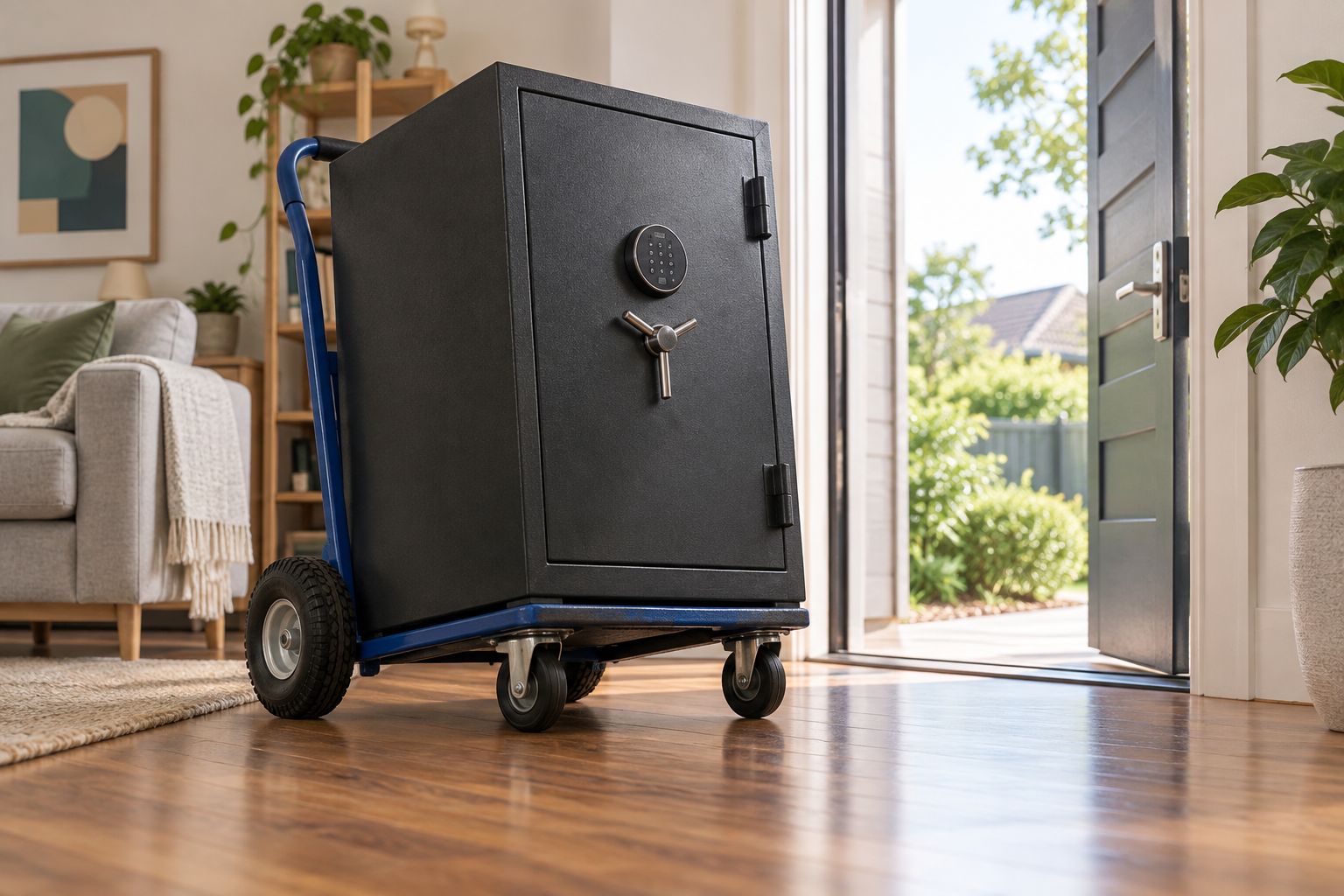
You cannot determine a safe handling method from weight alone. Dimensions, balance, grip points, stairs and equipment all affect the task. A safe that fits through a doorway can still be difficult to control at a turn or threshold.
Use a specialist safe mover where the handling task requires it. Give the mover photographs and measurements of the route, including the vehicle approach, entrances, steps, corridors and final position. Do not assume the delivery arrangement includes moving the safe into its installed location; confirm the agreed scope.
A safe door also changes the balance when opened. Keep the door secured as instructed during handling, and do not remove it unless the manufacturer permits removal and a competent specialist manages the work.
A lifting limit printed on equipment is not permission to attempt the move. The equipment must suit the task, the route and the load, and the people using it need the relevant handling skills.
Does safe weight include the door and contents?
The complete safe’s net weight should describe the assembled safe, but check the manufacturer’s definition before relying on it. Contents are a separate load. Packaging belongs to the shipping measurement, not the unpacked safe measurement.
When asking BUYASAFE about safe weight, provide the full model name and explain whether you are planning delivery, floor placement or a later relocation. That tells the retailer which specification or clarification you need.
If you are moving an existing safe, identify its contents separately and arrange their secure removal where appropriate. Do not add stored valuables, paperwork or removable fittings to a handling task without telling the mover.
Is a small safe always lightweight?
A small safe is not necessarily lightweight. Compact dimensions can conceal substantial steel, filled barriers or layered walls. Conversely, a large cabinet can use a different construction that makes its dimensions a poor guide to mass.
Compare usable internal space as well as external size. A safe with thick barriers can occupy more room than its storage capacity suggests, so choosing by outside dimensions alone can leave you with unsuitable storage.
Choose the storage capacity you need, then verify the weight and installation requirements. Reversing that order encourages you to select a convenient-to-move enclosure before checking whether it provides the required protection.
FAQ
How much does a safe weigh in kilograms?
A safe’s weight in kilograms is the net weight specified for its exact model. Use that figure rather than estimating from its size, product code or category.
What’s the difference between safe weight and shipping weight?
Safe weight describes the safe itself, while shipping weight includes packaging and any pallet. Confirm the manufacturer’s definitions before using either figure for delivery planning.
Is a heavier safe harder to steal?
Extra weight makes removal more demanding, but weight alone does not establish burglary resistance. Check the safe’s construction, tested rating and required anchoring method.
Can I put a heavy safe upstairs?
An upstairs safe needs a suitable supporting floor and an assessed access route. Have uncertain floor capacity checked using the exact model, contents and intended location.
Does a safe’s model number tell me its weight?
A model number is not a weight specification unless the manufacturer explicitly defines it that way. Find the separately stated weight and unit for the exact version.
Can I remove the door to make a safe lighter?
Do not remove a safe door unless the manufacturer permits it and a competent specialist manages the task. Removing the door changes the assembly and introduces handling and refitting risks.
Does a heavy gun safe still need to be bolted down?
Follow the applicable firearm storage rules and the safe manufacturer’s installation instructions. Do not assume weight removes an anchoring requirement or apply another jurisdiction’s threshold.
One last thing
Before your 2026 order, save the exact model’s specification and send it to everyone responsible for delivery and installation. Ask whether each quoted weight describes the assembled safe, the packaged shipment or the final installed load. That question prevents different people from planning around different figures.
BUYASAFE safe comparisons should start with storage purpose and protection requirements, then address weight and access. The right safe must suit both its contents and the place where you intend to install it.


