

Best overall approach: a purpose-built, fixed vehicle firearm enclosure matched to your firearm and confirmed transport requirements. Best for occasional trips: a removable transport case; best for handgun transport: a dedicated handgun enclosure, subject to the rules that apply to your journey. This 2026 guide compares the designs and the checks you need before buying.
- Choose a purpose-built vehicle firearm enclosure only after confirming transport rules and mounting suitability.
- For a vehicle gun safe Australia-wide, check every jurisdiction on your route rather than relying on approval claims.
- Removable transport cases suit occasional journeys, but locking a case does not establish legal compliance.
- BUYASAFE gun safe buying advice: distinguish vehicle transport equipment from permanent home firearm storage.
Why this matters
A safe that suits a house is not automatically suitable for a vehicle. Vehicle installation adds questions about mounting, access, clearances and restraint that a home-storage product name does not answer.
Australian firearm requirements depend on the jurisdiction and circumstances. Start with the gun safe storage laws by state, then confirm the transport requirements directly with the relevant police firearms registry before purchasing or travelling.
A locked enclosure is equipment, not permission to leave a firearm in a vehicle. Treat transport, unattended stops and overnight storage as separate questions. For your 2026 trip, establish what is permitted before deciding which enclosure fits.
What makes the best vehicle gun safe?
Judge the complete installation rather than the lock alone. These criteria determine whether a design belongs on your shortlist:
- Legal suitability: Confirm requirements for your firearm category, route, ammunition and planned stops.
- Vehicle mounting: Obtain mounting instructions for the exact enclosure and have the proposed attachment assessed for your vehicle.
- Usable clearance: Measure the firearm, internal space and opening path, including fitted accessories where applicable.
- Access control: Choose a lock you can manage securely, including keys, codes and any override method.
- Transport suitability: Confirm that the manufacturer supports the intended vehicle environment and installation.
- Trip practicality: Check loading, unloading, luggage access and what happens when you reach your destination.
Reject a candidate when its suitability depends on assumptions. A thick door does not establish mounting strength, and a fingerprint reader does not establish firearm compliance.
Vehicle firearm enclosures at a glance
The ranking below compares designs by use case. It is a selection order, not a claim that every product within a design meets Australian transport requirements.
| Rank and design | Best for | Main advantage | Key limitation |
|---|---|---|---|
| Fixed vehicle firearm enclosure | Regular journeys in the same vehicle | Dedicated storage position and mounting arrangement | Requires a vehicle-specific installation assessment |
| Removable locked transport case | Occasional journeys and transfers | Can be moved between the vehicle and destination | A removable case alone does not establish lawful unattended storage |
| Dedicated handgun enclosure | Transporting a handgun where permitted | Storage layout focused on a shorter firearm | Requires handgun-specific legal and installation checks |
| Separate ammunition container | Managing ammunition separately where required | Keeps ammunition handling distinct from firearm handling | Does not replace a firearm enclosure |
Avoid choosing a design solely because it fits beneath a seat or inside a drawer. First establish what the enclosure must do; then find the space that supports it.
1. Fixed vehicle enclosure: best for regular firearm transport
A purpose-built fixed vehicle firearm enclosure is the first design to assess when you regularly use the same vehicle. It provides a dedicated enclosure attached through a specified mounting arrangement, rather than a loose container placed among luggage.
The complete installation matters. Ask the supplier to identify the intended mounting method and obtain an installer’s assessment of the proposed location before committing to a model.
Best for: Licensed owners planning regular, lawful firearm journeys in a consistent vehicle setup.
Fixed vehicle enclosure pros
- A dedicated location lets you plan firearm access separately from general luggage.
- A fixed installation avoids having to reposition the enclosure for every trip.
- Specified mounting instructions provide a basis for assessing the installation.
Fixed vehicle enclosure cons
- Installation depends on the vehicle structure and available space.
- The enclosure occupies its position even when you are not transporting firearms.
- Moving it to another vehicle requires a fresh fit and mounting assessment.
Before ordering, check whether the door or drawer opens fully with your normal cargo loaded. Include the space needed to place and remove the firearm without forcing it against the opening.
For a 2026 touring setup, assess the enclosure alongside luggage restraints and other fitted equipment. Do not treat an existing cargo drawer as a suitable mounting structure without confirmation.
Verdict: Hold until the exact enclosure, mounting method and intended journey are confirmed suitable.
2. Removable transport case: best for occasional journeys
A removable locked transport case is the design to assess when you need to transfer a firearm between your vehicle and an authorised destination. Its distinguishing feature is portability, not permanent attachment.
That portability also creates the main limitation: you must separately establish any restraint or attachment requirements during transport. A case being lockable does not answer those questions.
Best for: Occasional range or hunting journeys where a removable case meets the applicable requirements.
Removable transport case pros
- You can assess loading and destination handling as one process.
- The case does not permanently occupy vehicle space after removal.
- A suitable internal layout keeps the firearm separate from loose luggage.
Removable transport case cons
- Removal convenience does not establish resistance to theft of the whole case.
- Vehicle restraint and any required attachment need separate assessment.
- Every transfer requires attention to keys, access and the destination’s rules.
Check the usable internal shape, not just the external dimensions. Hinges, padding and moulded sections affect how an item fits, so obtain the manufacturer’s internal measurements and compare them with the firearm in its lawful transport configuration.
For occasional trips in 2026, a removable case belongs on your shortlist only after the registry requirements and vehicle restraint arrangements are clear. Do not infer permission for unattended stops from the case description.
Verdict: Hold until the case and transport arrangement satisfy the requirements for your journey.
3. Dedicated handgun enclosure: best for handgun-specific fit
A dedicated handgun enclosure focuses the fit assessment on a handgun rather than a long firearm. That narrower purpose helps you compare internal layout and access, but it does not remove the need for category-specific checks.
Do not substitute a general valuables box simply because a handgun fits inside. Obtain confirmation about the exact product’s intended use, installation and lock arrangement.
Best for: Licensed handgun owners assessing a permitted transport arrangement for a specific handgun.
Dedicated handgun enclosure pros
- You can assess the internal layout against the exact handgun.
- A dedicated compartment separates the firearm from general vehicle contents.
- Product-specific mounting information supports a clearer installation assessment.
Dedicated handgun enclosure cons
- A small enclosure still needs suitable restraint or attachment.
- Accessories and internal fittings reduce usable clearance.
- Handgun transport requirements need checking independently of longarm advice.
Choose access control for secure management, not speed. For a keyed lock, plan custody of every key; for an electronic lock, understand the manufacturer’s power and recovery procedures before relying on it.
BUYASAFE gun safe selection should start with intended use. A home handgun safe and a vehicle handgun enclosure are not interchangeable merely because both have locks.
Verdict: Hold until handgun transport requirements and the exact vehicle installation are confirmed.
4. Separate ammunition container: best as a supporting component
A separate ammunition container is a supporting part of the transport arrangement, not an alternative to a firearm enclosure. Assess it wherever the rules for your journey require separate ammunition storage or additional controls.
Check what separation means in the relevant jurisdiction. Do not assume that another compartment, a locked inner box and an entirely separate container are legally equivalent.
Best for: Journeys requiring a distinct ammunition storage arrangement.
Separate ammunition container pros
- It gives ammunition a defined location outside the firearm compartment.
- You can assess its lock and access arrangements independently.
- It keeps the ammunition check visible in your trip preparation.
Separate ammunition container cons
- It cannot replace suitable firearm transport equipment.
- It adds another container to restrain and manage.
- Its location and separation still require legal confirmation.
Make ammunition part of the initial layout, not an afterthought once the firearm enclosure is installed. Otherwise, your remaining space determines the arrangement instead of the requirements.
Verdict: Buy only as a supporting component once its required form and location are confirmed.
Check the vehicle before ordering
Record 3 internal measurements: length, width and height, using millimetres. Compare them with the firearm and its permitted transport configuration, rather than assuming a capacity label establishes fit.
Then assess the opening and mounting separately. An enclosure can fit inside a cargo area while its door cannot open far enough to load it.
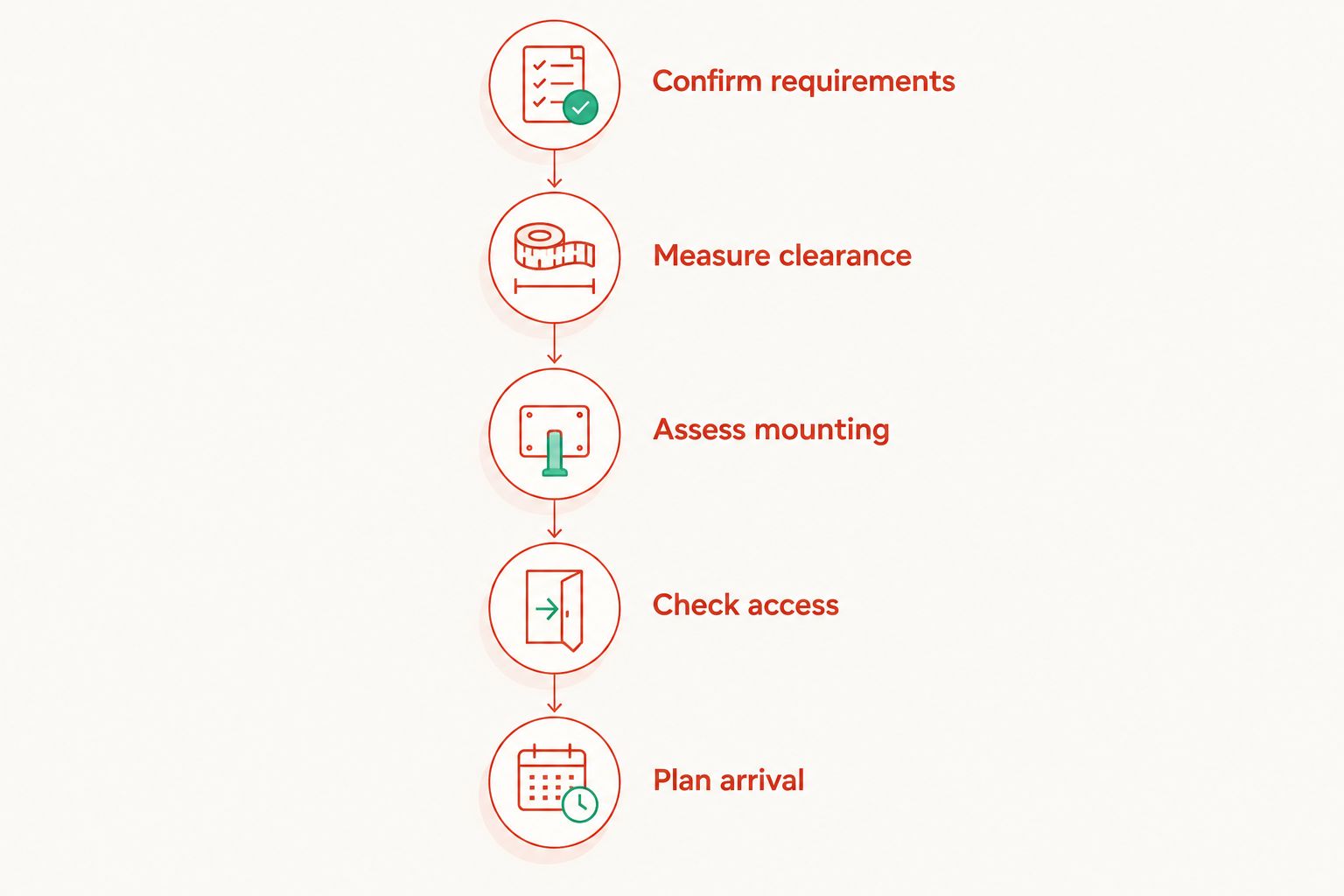
Use this sequence:
- Confirm requirements: Establish the rules for the firearm, ammunition, route and stops.
- Measure clearance: Record usable internal space and the access opening.
- Assess mounting: Have the proposed attachment and location checked.
- Check access: Confirm loading, unloading and lock operation with normal luggage present.
- Plan arrival: Establish lawful storage at the destination before departure.
Ask a qualified vehicle installer to assess the location before any drilling or modification. Provide the enclosure’s instructions and identify nearby vehicle systems rather than choosing fasteners from appearance alone.
Keep 2 separate checks in your purchase notes: enclosure suitability and installation suitability. Approval of one does not establish the other.
How the designs are ranked
This 2026 ranking prioritises intended use, mounting assessment, usable clearance and secure access. Fixed vehicle enclosures lead for regular journeys because the design centres on a permanent vehicle arrangement; removable cases serve a different need.
No position represents a laboratory attack test or national compliance approval. A product moves from shortlist to purchase only when its documentation and your circumstances support the choice.
BUYASAFE is best for buyers comparing gun safes for home and business storage; vehicle transport equipment needs a separate suitability check. Keep that distinction when browsing products, even when a familiar safe brand appears in both searches.
Which vehicle gun safe should you choose?
For regular transport in one vehicle, start with a purpose-built fixed enclosure and have the installation assessed. For occasional journeys, assess a removable locked case against the applicable requirements before considering a permanent fit-out.
For handgun transport, use handgun-specific advice. Treat ammunition storage as a separate requirement rather than assuming unused space in the firearm enclosure is acceptable.
Your 2026 shortlist should contain products supported by answers to 3 purchase questions: Is the intended use supported? Does the firearm fit? Is the installation suitable? If any answer remains unresolved, wait before buying.
FAQ
What is the best vehicle gun safe in Australia?
The best starting point for regular journeys is a purpose-built fixed vehicle firearm enclosure with a suitable installation. The final choice depends on your firearm, vehicle and the transport requirements applying to your route.
Can I use a home gun safe in my car?
Do not assume a home gun safe is suitable for a car. Confirm that the manufacturer supports the intended use and have the mounting, access and vehicle location assessed separately.
Can I leave a firearm in a locked vehicle safe overnight?
A locked vehicle safe does not establish permission for overnight firearm storage. Confirm the rules directly with the relevant firearms registry and arrange lawful destination storage before travelling.
Is a removable gun case better than a fixed vehicle safe?
A removable case serves transfers and occasional journeys, while a fixed enclosure serves a permanent vehicle arrangement. Neither design is automatically compliant; restraint, attachment and legal requirements need checking.
Does ammunition need its own locked container?
Check the ammunition separation and locking requirements for every jurisdiction on your route. Do not assume that a separate compartment and a separate container satisfy the same requirement.
Is a biometric lock required for a vehicle gun safe?
Do not assume a biometric lock is required or establishes compliance. Confirm the applicable lock requirements, then assess the exact product’s access, power and recovery procedures.
What should I measure before buying a vehicle firearm enclosure?
Measure usable internal length, width and height, plus the access opening and door or drawer clearance. Compare those measurements with the firearm in its permitted transport configuration and check the mounting location separately.
One last thing
Check destination storage before finalising the vehicle enclosure. A suitable transport arrangement does not answer where the firearm will be kept after you arrive, particularly when the trip includes accommodation or a change of vehicle.
Before asking BUYASAFE about gun safes, separate your request into transport equipment and permanent storage. That distinction prevents a home-storage recommendation from being mistaken for a vehicle installation recommendation.


