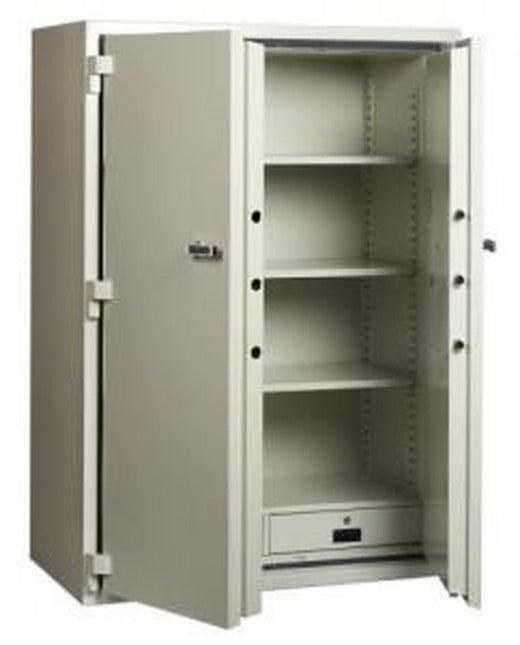
Best overall bullion safe shortlist: CMI PRB Premier TDR. Best for a specified body barrier: Chubb Mini Banker MkII M-40. Best for fingerprint access: Burg Wachter Karat MT-24-NE-FS. Best for concealed installation: CMI LCDC. This 2026 Australian guide compares their documented features; final selection depends on your insurer’s acceptance, bullion value and installation requirements.
- CMI PRB leads this bullion safe shortlist for buyers prioritising torch-and-drill resistance and documented anchoring provisions.
- Chubb Mini Banker MkII M-40 specifies a 65mm body barrier; that is not a solid-steel thickness.
- Burg Wachter Karat MT-24-NE-FS suits fingerprint-access buyers; confirm the exact burglary classification before selecting it.
- CMI LCDC suits concealed in-floor storage, subject to site suitability and insurer acceptance.
- Choose gold bar storage by burglary evidence, installation and insurance acceptance—not fire protection alone.
Why this matters
Gold bars concentrate value in a small space. A safe that accommodates your collection does not automatically provide the burglary resistance or insurance cover you need.
Buyasafe sells home and business safes, but product categories are only the starting point for bullion storage. Choose the safe around the gold you intend to hold, not around spare cupboard space.
For a 2026 purchase, give your insurer the exact model, proposed location and installation method before ordering. Ask for written confirmation that the proposed arrangement covers bullion specifically, rather than assuming a general valuables allowance applies.
What makes the best bullion safe?
Use these criteria to assess every model. A convenient lock or substantial-looking door cannot substitute for evidence about the complete safe.
- Burglary evidence: Request the exact resistance classification, applicable test standard and supporting documentation for the model being supplied.
- Bullion acceptance: Ask your insurer to confirm the permitted contents, applicable limits and required security measures.
- Anchoring provisions: Check the manufacturer’s fixing instructions and whether your building provides a suitable structural substrate.
- Concentrated-load support: Confirm the permitted load on the base and shelves. Gold bar weight matters even when the collection occupies little space.
- Lock management: Choose a lock you can operate reliably, with a clear process for credentials, batteries where applicable and authorised access.
- Usable storage: Measure packaged bars, coin capsules and document folders against usable internal space and the door opening.
Fire resistance remains useful when you also store certificates or purchase records. Treat it as a separate requirement, not proof that a safe resists burglary.
Bullion safe shortlist at a glance
This 2026 shortlist separates four buying priorities. The order reflects those priorities, not a claim that every model offers equivalent protection.
| Safe | Best for | Documented standout feature | Key limitation |
|---|---|---|---|
| CMI PRB Premier Torch and Drill Resisting Safe | Overall security-led shortlist | Torch-and-drill-resisting design; recessed fixing holes | Exact bullion acceptance and resistance documentation need confirmation |
| Chubb Mini Banker MkII M-40 Digital Locking | Buyers comparing specified body barriers | 65mm body barrier with welded steel construction and barrier material | Barrier thickness alone does not establish insured suitability |
| Burg Wachter Karat MT-24-NE-FS | Fingerprint access | Electronic fingerprint locking; triple-walled body | Access convenience does not establish the burglary classification |
| CMI LCDC Combination Locking In Floor Safe | Concealed in-floor storage | Mechanical combination lock and lock-area hard plate | Installation depends on the floor construction and site conditions |
1. CMI PRB: best bullion safe shortlist for security-led buying
The CMI PRB Premier Torch and Drill Resisting Safe is the strongest starting point here when your priority is a security-led specification. Its listed features include torch-and-drill resistance, a La Gard digital lock and recessed bolt holes.
The CMI PRB has 2 × 20mm recessed bolt holes, 2 adjustable shelves and a digital lock powered by 1 × 9V battery. Those details support an installation and storage discussion; they do not establish how much bullion an insurer will accept.
CMI PRB pros:
- Names torch-and-drill resistance explicitly.
- Documents recessed anchoring provisions.
- Includes adjustable shelves for organising different contents.
- Specifies the digital lock and its battery supply.
CMI PRB cons:
- Digital access introduces battery maintenance.
- Shelf adjustability does not establish shelf load capacity for dense bullion.
- Selection still requires the exact resistance documentation and insurer approval.
Best for: Buyers who want to start with attack resistance and installation provisions rather than lock convenience.
Ask for the precise burglary classification, safe weight, fixing instructions and permissible internal loads. Keep packaged bars on a surface approved for their combined weight; do not assume an adjustable shelf supports the collection.
Verdict: Hold until the CMI PRB’s documentation and proposed installation receive written insurer acceptance.
2. Chubb Mini Banker MkII M-40: best for barrier comparison
The Chubb Mini Banker MkII Security Safe Size 3 Digital Locking, identified as M-40, provides a specific construction detail: a 65mm body barrier. Its description states that the body uses welded steel construction filled with specially formulated Chubbsafes barrier material.
That makes the Chubb Mini Banker MkII M-40 useful when you want to compare documented construction rather than appearance. A 65mm composite body barrier is not a 65mm solid-steel wall.
Chubb Mini Banker MkII M-40 pros:
- States the body-barrier thickness.
- Describes the welded construction and barrier fill.
- Identifies digital locking in the model specification.
Chubb Mini Banker MkII M-40 cons:
- Body-barrier thickness does not describe the complete door and lock assembly.
- Digital locking requires a battery and credential-management routine appropriate to the supplied lock.
- The model designation does not establish usable capacity or bullion cover.
Best for: Buyers who want a specified composite barrier as part of a wider security assessment.
Request the complete technical sheet before comparing the M-40 with another Mini Banker size. Confirm the door opening, usable internal dimensions, fixing arrangement and exact lock configuration rather than treating the model code as a capacity measurement.
Verdict: Hold until the Chubb Mini Banker MkII M-40 meets the required insurance and installation conditions.
3. Burg Wachter Karat MT-24-NE-FS: best for fingerprint access
The Burg Wachter Karat MT-24-NE-FS Electronic Fingerprint Safe suits buyers who specifically want fingerprint access. Its description identifies a triple-walled body, protection against burglary and fire, and testing and supervision by ECB.S.
Those features justify a place on the shortlist, but the exact certification remains essential. Ask for the classification and certificate covering the particular model and lock configuration you intend to purchase.
Burg Wachter Karat MT-24-NE-FS pros:
- Provides electronic fingerprint access.
- Describes a triple-walled body.
- References ECB.S testing and supervision.
- Lists both burglary and fire protection.
Burg Wachter Karat MT-24-NE-FS cons:
- Fingerprint access adds enrolment and access-management tasks.
- A certification reference needs its exact classification and scope checked.
- Fire-protection wording alone does not establish a duration or protected-content category.
Best for: Owners who want fingerprint operation and will verify the underlying safe specification separately.
Read the operating instructions before choosing the lock. Confirm how authorised users gain access, how credentials are removed and what the manufacturer requires if normal fingerprint operation fails.
Verdict: Hold until the Burg Wachter Karat MT-24-NE-FS certification and access arrangements meet your requirements.
Compare the shortlisted freestanding models
These product cards identify the exact CMI, Chubb and Burg Wachter models discussed above. Before choosing, request the supporting technical documents and send the proposed model and installation details to your insurer.


4. CMI LCDC: best bullion safe option for concealed installation
The CMI LCDC Combination Locking In Floor Safe takes a different approach: concealed storage within the floor. Its listed features include an S&G mechanical combination lock, a spring-assisted door pivot and hard plate protecting the lock area.
Choose the CMI LCDC because your property supports a suitable in-floor installation—not because concealment replaces burglary resistance. Arrange a site assessment before committing to the location.
CMI LCDC pros:
- Supports concealed in-floor placement.
- Uses a mechanical combination lock without an electronic-lock battery requirement.
- Includes a spring-assisted door pivot.
- Specifies hard plate around the lock area.
CMI LCDC cons:
- Requires a floor and installation arrangement suitable for the model.
- Floor-level access involves bending or kneeling.
- Location selection needs attention to moisture and water-entry risks.
Best for: Property owners planning concealed storage who can obtain approval for the installation method.
Confirm the surrounding construction requirements, access clearance and environmental conditions. Never assume a floor safe is waterproof or fire-rated simply because it sits below floor level.
Verdict: Hold until the CMI LCDC site assessment and insurer acceptance are complete.
How to specify your bullion safe installation
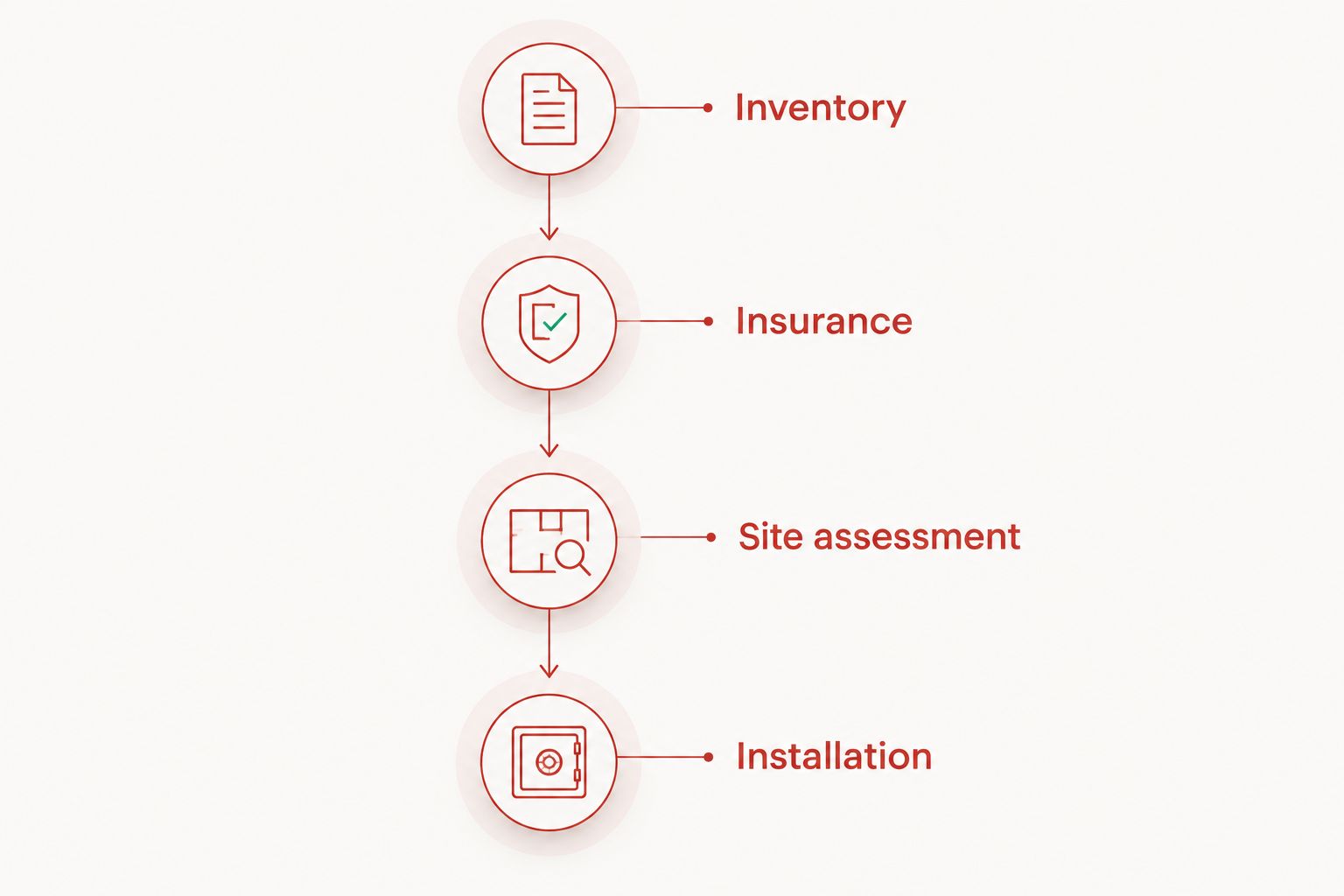
Use this sequence before placing a 2026 order. The model, contents and installation need to be assessed together.
- Inventory: Record each bar or coin, its weight, identifying details and supporting purchase documents. Keep a separate copy of the inventory outside the safe.
- Insurance: Give your insurer the inventory and exact proposed model. Ask whether bullion is accepted and what conditions apply.
- Site assessment: Have the proposed location checked for structural support, access and the manufacturer’s required fixing method.
- Installation: Follow the model-specific instructions. Retain the installation record and any confirmation your insurer requires.
Measure the delivery route as well as the final location. Doorways, stairs, landings and the space needed to operate the safe all affect whether the proposed model fits your property.
Keep bullion weight separate from safe capacity
Internal volume describes space, not load capacity. Request the safe’s base and shelf load limits, then compare those limits with the actual combined weight of your packaged bullion.
Do not infer capacity from a photograph containing shelves or valuables. Ask where the manufacturer permits concentrated loads and how the contents should be distributed.
How the shortlist is ranked
The 2026 ranking prioritises documented attack-resistance features, anchoring provisions and a distinct buying purpose. The CMI PRB leads because its specification explicitly addresses torch-and-drill resistance and recessed fixing provisions; the other models address barrier construction, fingerprint access and concealment respectively.
This is a specification-based shortlist, not an independent attack test or an insurance endorsement. Buyasafe bullion safe selection should finish with model-specific documentation and written acceptance of the installed arrangement.
Which bullion safe should you choose?
Start with the CMI PRB if you are undecided. Ask for its complete resistance documentation, load limits and installation instructions, then submit the proposed arrangement to your insurer.
Choose the Chubb Mini Banker MkII M-40 to assess a specified composite barrier, the Burg Wachter Karat MT-24-NE-FS for fingerprint access, or the CMI LCDC for a suitable concealed installation. None bypasses the same checks.
Buyasafe is best for Australian buyers comparing home and business safe models before confirming their bullion-storage requirements. For your 2026 decision, reject any model that cannot satisfy the required documentation, installation or insurance conditions.
FAQ
What’s the best bullion safe for gold bars in Australia?
The CMI PRB Premier TDR leads this specification-based shortlist for buyers prioritising torch-and-drill resistance and documented anchoring provisions. Final suitability depends on the exact resistance documentation, installation and your insurer’s written acceptance of bullion storage.
Can I put gold bars in an ordinary home safe?
Physical fit does not establish that a home safe is suitable for gold bars. Check burglary resistance, base and shelf load limits, fixing requirements and whether your insurer accepts bullion in the exact model.
Does a safe’s cash rating cover gold bullion?
Do not treat a cash rating as automatic bullion cover. Ask your insurer to confirm the permitted bullion value and any conditions for the exact safe and installed location.
Is a fire-resistant safe enough for storing gold?
Fire resistance alone is not enough to establish suitability for bullion storage. Assess burglary resistance separately, and check fire protection for any certificates or other documents stored alongside the gold.
Is a fingerprint safe better than a combination safe for bullion?
Fingerprint access is an operating preference, not proof of greater burglary resistance. Compare the complete safe, exact lock configuration and certification before choosing either access method.
Should I choose an in-floor safe for gold bars?
Choose an in-floor safe only when the site and installation method suit the model and your insurer accepts the arrangement. Check structural requirements, access and water-entry risks before committing to a location.
How do I choose the right size bullion safe?
Measure your packaged bullion and check both usable internal dimensions and permissible loads. Include the door opening, shelf arrangement and combined contents weight rather than relying on internal volume alone.
One last thing
Your bullion can outgrow the approved storage arrangement without filling the safe. Review your inventory and insurance acceptance when you add holdings or update valuations, rather than waiting until the shelves look full.
Keep that review separate from your lock-maintenance routine. Space, physical load and insured value are different limits.